Sights and Sounds
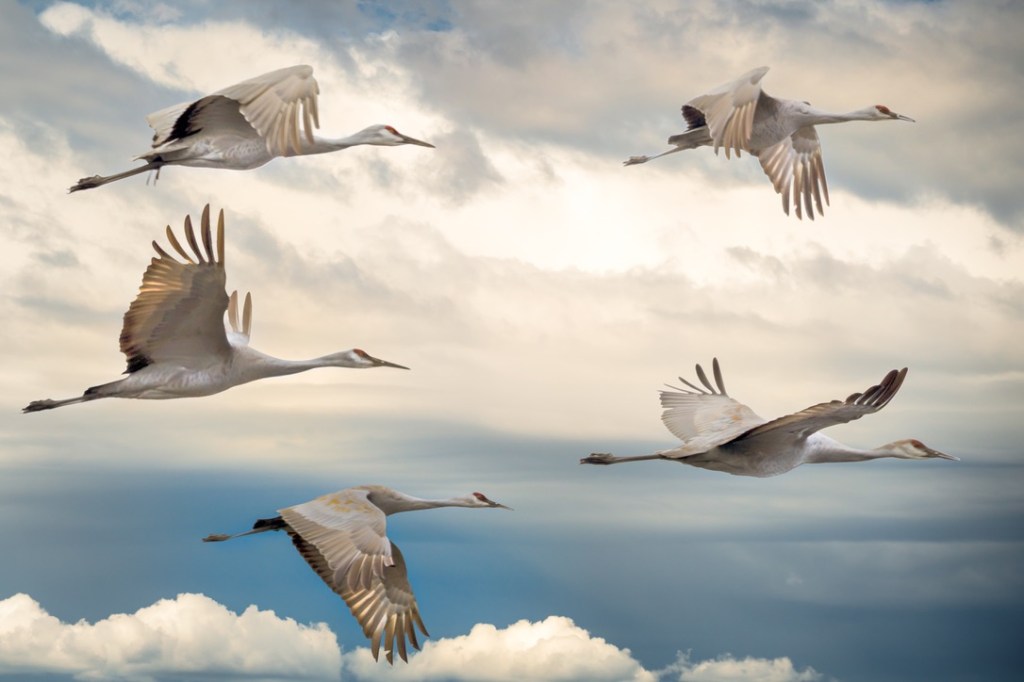
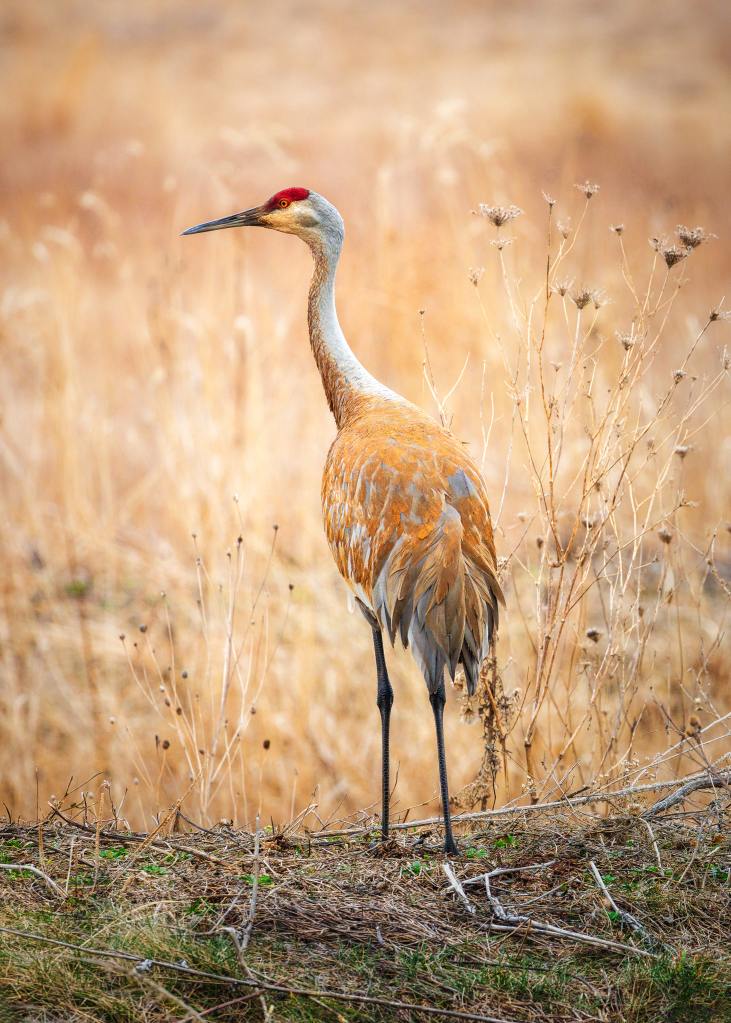
Sandhill cranes have been wintering recently in the Sacramento Delta region, drawn to the marshes and fields where they feed on waste grain from harvested crops. Standing up to four feet tall and with wingspans of up to seven feet, they’re known for their unique courtship dance and trumpet-like calls. The Woodbridge Ecological Preserve and the Cosumnes River Preserve in Lodi offer some of the best designated viewing spots around. A wide range of other birds can also be found there, including whooping cranes, double-crested cormorants, white pelicans, grebes, egrets, and various species of hawks, quail, geese, and ducks.
We received abundant snow and rainfall in California earlier this winter. In Yosemite, the falls are all flowing and accessible (some services may be limited due to COVID; for the latest information visit www.nps.gov.) In Mill Valley, the Cascade Falls are running again, and in Sunol Regional Wilderness, the scenic gorge of the Little Yosemite Area offers hikers the sight and sound of cascades spilling over boulders into swirling pools.
The increased rainfall has been a boon for spawning salmon. In Lagunitas Creek in Samuel P. Taylor State Park, female coho salmon can be seen preparing nests in the shallow waters while males compete for the best spots in the creek. (“A Good Year to See Coho Salmon Make Their Annual Return to Marin,” by Tara Duggin, SF Chronicle, January 4).
World of Wonders
I don’t know how I managed to miss this book. World of Wonders: In Praise of Fireflies, Whale Sharks, and Other Astonishments,” by Aimee Nezhukumatathil, was on the best seller lists for weeks. A review by James Rebanks in the NYTs (Sept. 11, 2020) offers that the author has written “a timely story about love, identity, and belonging (more accurately often about not belonging, because of racism and her family’s immigrant experience).” A poet with four collections to her credit, Nezhukumatathil, links her personal history with the natural world, focusing on the wonders of the catalpa tree, fireflies, and Narwhals, among other subjects. The result is an engaging and intimate memoir, and a wonder itself. It reminds me of some of the early writing of Gerald Durrell, though without the comic lens. With illustrations by Fumi Mini Nakamura (Milkweed Editions, 2020).
The Colors of Nature
This breakthrough anthology, edited by Alison Hawthorne Deming and Lauret Savoy, reveals how bias influences attitudes and policies about nature. In The Colors of Nature: Culture, Identity, and the Natural World, thirty writers of various backgrounds examine how conditioning can shape our awareness of the environment and how we write about it, and how important diversity is in our approach to planetary struggles. (Milkweed Editions, 2011).
Open Submissions
Terrain.org is an online journal seeking poetry, nonfiction, fiction, art, multi-media and mixed genre work that inspire “just and joyous relations with the planet and each other.” Since 1997, they’ve published award-winning literature, editorials, and case studies about place. Deadline is April 4, 2022 for the spring issue. Visit www.terrain.org for details.
About Place is an online journal published the Black Earth Institute. Dedicated to finding “pathways to peace” and to “cure what is wrongfully impacted by ecological destruction,” they seek poetry, fiction, essays, creative nonfiction, and audio/visual artwork. Open for submissions until March 10 Visit www.aboutplacejournal.org for details.
 Jerome Gagnon Blog