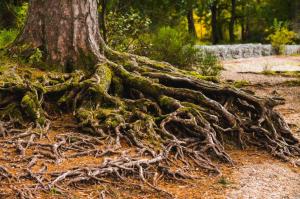
In Praise of the Natural World
Attention is the beginning of devotion.
– Mary Oliver
Praise seemed to come instinctively to Mary Oliver. One of the most popular late twentieth-century poets, Oliver’s attention was often focused on the woods, ponds, and beaches that she explored in forays around her home in Provincetown, Massachusetts. In Upstream (2016), a collection of essays on nature and literature, she notes that early on she “did not think of language as the means to self-description…” but as a way “to notice, to contemplate, to praise…” One of my favorite poems, from New and Selected Poems Volume One (winner of the National Book Award) is “Little Owl Who Lives in the Orchard.” It captures me from the first line and doesn’t let go until the last line. I could say the same for most of Oliver’s poems, but this one feels as if I’m right there in the orchard listening to a youngish owl “flutter down the little aluminum ladder of his scream.”
If “attention is the beginning of devotion,” as she wrote, then wonder may be the beginning of praise — for the fox “so quiet — he moves like a red rain,” for the hawk with “one exquisite foot” attached to a twig, even for “The cracked bones/of the owl’s most recent feast…” For Oliver, attention most often means being in the presence of, whether it’s the owl in the orchard, a hermit crab on the beach, a hummingbird in a trumpet vine, or egrets at the edge of a pond. This attention to wildlife and the environment alerts her to possibility — the possibility of danger, of beauty, of death, of life, or simply of nothing “but the cold creek moving/over the old pebbles…”
Unlike the narrative “I” of Whitman, who she considered a childhood “friend,” Oliver’s “I” enjoys a relative position in the background. From this vantage point, she offers observations rich with detail, color, and music. She’s not afraid to use a well-placed exclamation point occasionally, or just as often, a question mark. “Are you listening, death?” she asks in “The Rabbit.” These kinds of questions don’t always come with answers, of course, but reflect a sense of mystery that permeates her work, a respect for not knowing and for silence.

She had her darker moments, some of them probably attributable to childhood trauma. In “A Visitor,” she struggles to come to grips with her estrangement from her father, a subject she discussed frankly in her later years. In one of her most well-known poems, “Wild Geese,” she writes, “Tell me about despair, yours, and I will tell you mine./Meanwhile the world goes on.” If there’s a secret to her appeal, I think it’s that she comes to the poem with an inclusive love for the world in all its imperfections — that and a willingness to embrace it again and again.
Writing Prompt: Gratitude
For this prompt, make a list of ten things you’re grateful for. They might be ordinary items around you — just-picked tomatoes, a set of salt and pepper shakers, or a glass of water, for instance, or they might be something more personal such as a family member, pet, or a prized possession. After completing your list, select the most promising subject and write continuously about that for at least five minutes, or more. When you’ve run out of steam, take a look at what you’ve come up with. Is there a poem there, or more than one poem? After fine-tuning your work, let it sit for several days. Then go back and have a second look. If it’s redundant, remove the deadwood. If it feels incomplete, you may want to weave in some additional details, or consider posing a question and answering it.
Writing Opportunities
Poetry Northwest is accepting poetry submissions from October 1st to November 30th. https://www.poetrynw.org
The Colorado Prize for Poetry is open for submissions of full-length manuscripts (48-100 pages) from October 1st to January 14th. https://www.coloradoreview.colostate.edu
 Jerome Gagnon Blog