
Please see recent postings of “Shiki: Writing from Everyday Life,” “Haiku and Loss,” and “Senryu: Art or Attitude?” in the section, Haiku Notes.
Tag craft
News
In the Marketplace
 I remember running into poet Michael Palmer in San Francisco’s Civic Center Plaza one afternoon, back in the day when people weren’t glued to their cell phones and walking around the city like zombies. He was offering hand-written poems for a penny each. I wish I still had that poem, but like so many things, it disappeared into the biosphere from which it came. What remains for me, though, is the memory of a friendly street encounter, and the notion that poetry can be much more than a solitary pursuit.
Writing in the Atlantic, Bhavna Patel looks at street poetry around the country, noting that it can sometimes serve a therapeutic purpose (“A Verse to Go, Please: Poets and the Lives They Touch”). Patel tells the story of Neal Ewald, who asked poet Jacqueline Suskin for a poem at the Arcata Farmer’s Market in Northern California where she’d set up a folding chair and was balancing “a manual typewriter on her knees…. A small sign next to her read, ‘Poem Store — Your Subject, Your Price.’” What Ewald wanted was “a five-dollar poem about being underwater,” Suskin said. Rereading the impromptu poem while sitting in his car, memories of his late wife, Wendy, came “flooding” back to him, Patel writes. Eventually, he commissioned Suskin to write a longer poem to honor his wife’s memory.
San Francisco resident Mc Allen dedicates one day a month to “free-range poetry,” writes Caillie Millner in the San Francisco Chronicle (“Taking Time for a Line of Rhyme”). Standing at a favorite spot on Cole Street in front of the Reverie Café, Allen can be heard calling to passersby, “Would you like to hear a poem? It’s completely free.” One afternoon he read Tom Wayman’s, “Did I Miss Anything?” to a bicyclist and Mary Oliver’s “Humpbacks” to a group of “tech bros,” Millner notes. “I’d say that one in every dozen or so people will stop,” said Allen, who brings a trove of poetry books along with him in a toolbox and recites from a variety of poets. “You never know who needs a poem in their life at that moment.”
“Entangle”
“Sometimes I prefer not to untangle it,
I prefer it to remain disorganized,
because it’s richer that way,
like a certain shrubbery I pass each day…”
– Tony Hoagland
(1953 – 2018)
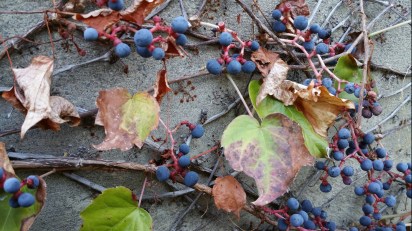
Plumbago, grape ivy, and morning glory vines have taken over a largely untended corner of the yard. At sundown, the blue flowers of the plumbago take on an electric glow against the faded violets and purples of the morning glories. When I consider this rampant mix, I think of the late Tony Hoagland’s poem, “Entangle,” which first appeared in the Paris Review. It’s a beautiful, wrenching work. It’s not just about the confluence of branches and flowers, of course, but memory and mortality, and our deep connections to each other. In his poem, “Lucky,” Hoagland” tells us… “If you are lucky in this life,/ you will get to help your enemy/the way I got to help my mother…you will get to raise the spoon /of pristine, frosty ice cream/ to the trusting mouth of your old enemy/because the taste buds at least are not broken/because there is a bond between you/and sweet is sweet in any language.” These are poems that draw you back for a closer look, to savor their details and the way they convey our foibles and frailty.
Calls for Poetry and More
Nowhere Magazine is sponsoring a travel writing contest for a poem, short story, or essay “that possesses a powerful sense of place.” The prize is $1,000 and publication. Submit online by December 31. http://www.nowheremag.com/contests
Quercus Review Press out of Modesto Junior College has announced their annual Poetry Book Award. The prize is $1,000, publication, and fifteen author copies. Deadline, December 28th. For details, visit http://www.quercusreviewpress.com
Willow Books is offering two prizes of $1,000 and publication for “a book of poetry and a book of fiction or creative nonfiction by writers of color.” Submit by December 15th. http://www.willowlit.net/willowbooks-literature-awards
Bayou Literary Magazine will award two prizes of $1,000 each for a poem and a short story. Submit by January 1st. http://www.bayoumagazine.org
Applications for the James Merrill House Writer-in-Residence Program in Stonington, Connecticut will be accepted until January 8th, 2019. Writers of all genres, including translators, are eligible for the four to six week residencies that come with a stipend. For more information, visit http://jamesmerrillhouse.org/residency/writer-in-reseidenceprogram
News
The Curlew, out of Wales, is a non-profit journal that supports conservation projects and offers “art, photographs, essays, poems, and short stories with a connection to the natural world.” My thanks to the editor, Dr. Lynn Parr, for selecting “Pulling Weeds” for the latest issue. www.the-curelew.com
In celebration of National Poetry Month, the Academy for American Poets is sponsoring a poster contest for grades 9 through 12. Opening September 1st, the contest will be judged by award-winning poet Naomi Shihab Nye and designer Debbie Millman. The winner will receive $500, and the winning poster will be distributed to approximately 100,000 schools, bookstores, and libraries across the U.S. www.academyforamericanpoets.org
I’ll be taking a hiatus from the blog for the rest of the year, returning in early 2019 with a new direction. This should give me time to finish up a couple of projects. I hope you’ll rejoin me then. Meanwhile, let me leave you with the last stanza from Martin Espada’s wonderful poem, “The Republic of Poetry”:
“In the republic of poetry,
the guard at the airport
will not allow you to leave the country
until you declaim a poem for her
and she says, Ah! Beautiful.”
News
I’m happy to announce that Rumors of Wisdom was selected for the Concrete Wolf Louis Book Award and is slated to be published early in 2019. My gratitude to the judge, Timons Esaias, and to Lana Hechtman Ayers, Managing Editor of Concrete Wolf Press, for their belief in this project (www.concretewolf.com). Named in honor of Ayers’ grandfather, who inspired her love of poetry, “the award is for a first full-length book by a poet age fifty or over.” Rumors was approximately three years in the making, although a few of the poems go back farther than that. It went through several versions and various titles, as I continued to revise and add new poems. In the process, I learned a lot about what makes a cohesive collection. Like Spell of the Ordinary, Rumors is essentially about mindfulness. It suggests that deep attention to the moment offers a portal into the “enduring mutable,” that nature and the human spirit are salvageable.
Just received my copy of Arts, jointly published by the United Theological Seminary of the Twin Cities and the University of St. Thomas. The visual arts are represented here by photographs, drawings, and paintings, along with in-depth articles that explore the work of Frida Kahlo, the making of mandalas, and art as ministry in an immigrant detention center. An article on The Mount Tabor Ecumenical Center for Art and Spirituality (Villa Via Sacra) in Barga, Italy, traces the Center’s origins and the connection between creativity and religious faith, while poetry and reviews round out the selections. This is an inspiring and visually inviting issue. www.societyarts.org
Standing at the Edge: Finding Freedom Where Fear and Courage Meet, by Joan Halifax (Flatiron Books, 2018), offers insight into the “bivalent qualities” of what she terms Edge States, including altruism, empathy, and engagement. Citing experiences from the Civil Rights and Antiwar movements, as well as from her work as a medical anthropologist and Buddhist leader, Halifax describes what can happen when good intentions lead to despair and burnout, and what we can do about it. Standing at the Edge is a wise and practical guide for navigating challenging times, and a valuable resource for teachers, caregivers, and those in the helping professions.
The Summer Writing Program at the Truro Center for the Arts on Cape Cod, Massachusetts, offers workshops in a variety of genres, including poetry, memoir, travel writing, and playwriting. Some of the poets scheduled to participate this year are Robert Pinksy, Lorna Blake, Rebecca Fost, and Peter Campion. Be sure to bring your sunscreen. www.info@castlehill.org
Hannah Aizenman, poetry coordinator for the New Yorker, addresses the questions: “From a craft standpoint, what causes you to accept a poem?” “What advice do you have for new poets who are submitting work?” and “How many rejections have you faced and how do you deal with them?” www.frontierpoetry.com
The Edith Wharton Writer-in-Residence Program offers residencies in March, 2019, to three women writers at Wharton’s former estate in Massachusetts, the Mount. Included are a stipend of $1,000, lodging, and work space. www.edithwharton.org/visit/the-edith-wharton-writer-in-residence-program
News
 “The Beat Goes On: Celebrating the Bay Poetry Collection” is the title of an exhibit at California State University East Bay (Hayward, CA), featuring publications from the library’s special collections. Highlighting the work of “Beat” luminaries such as Lawrence Ferlinghetti, Allen Ginsberg, and Gary Snyder, it traces the development of contemporary poetry in San Francisco and the Bay Area. While Ferlinghetti’s City Lights Publishing has played a pivotal role on the local literary scene since the early 1950’s, contributions by others such as Panjandrum Press and Sixteen Rivers Press are also featured. (Runs through December.)
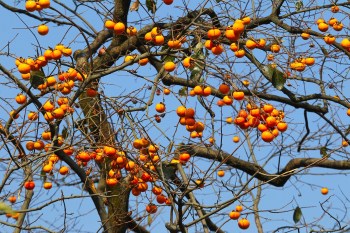
“Cherries, After,” a sense-memory poem that pulls together images from my visit to a small farm near Dartmouth, Massachusetts, was selected for the 2018 Robert Frost Poetry Prize, sponsored by the Frost Foundation. Many thanks to the judges for this honor, and my gratitude to Executive Director Jessica Sanchez and President Jim Knowles for their efforts in promoting this annual contest in celebration of Frost’s poetry. Like a lot of people, the first time I encountered his work was in a high school English class. We were studying “The Road Not Taken” and “Stopping by Woods on a Snowy Evening.” Although I admired both poems, it was “Snowy” that held me with its imagery, the resonance of its rhyme scheme, and the tinkle of harness bells.
Poet, translator, and founder of Copper Canyon Press, Sam Hamill, “died on April 14th at his home in Anacortes, Washington,” according to an obituary by Daniel E. Slotnik of the New York Times. He was seventy-four years old. As a teenager in Utah, Hamill ran away from an abusive environment and made his way to San Francisco where he met poet Kenneth Rexroth who “helped him give up drugs and taught him about poetry — kindnesses that Hamill said changed his life,” Slotnik wrote. Known for his sensitive translations of poets such as Wang Wei and Matsuo Basho, Hamill went on to publish several collections of his own poetry and initiated a national protest by poets and others against the Iraq war. In his poem, “True Peace,” he wrote, “Not for me, Nirvana./ This suffering world is mine,/ mine to suffer in it’s grief.” Recipient of PEN’s Freedom to Write First Amendment Award, among other honors, his most recent collection, After Morning Rain, will be published later this year by Tiger Bark Press, according to the Times.
“Longing has its own quiet place
in the human heart, but love
is sometimes rapturous, noisy,
almost uncivilized, and knows
no boundaries, no borders.”
from After Morning Rain,
by Sam Hamill
Headlands Center for the Arts is now accepting applications through June for residencies in 2019. Poets, fiction and creative nonfiction writers, and other artists are eligible. Located on the scenic coast of Marin County, CA, just outside of San Francisco, “Headlands” offers airfare for qualified applicants, a private room in a shared house, studio space, five meals per week, and a monthly stipend of $500. Residencies are for periods of from four to ten weeks. For details, visit www.headlands.org.
News
“Spell of the Ordinary” was mailed the first week of February, so everybody who ordered should have received their copies by now. Thanks, again, to Editor Christen Kincaid, the staff at Finishing Line Press, and to Tony and Mary Sanchez for their help with the cover and the blog.
Natalie Goldberg discusses haiku as a spiritual practice at https://www.upaya.org.
The Andres Montoya Poetry Prize for work by a Latinx poet offers $1,000 plus book publication. For more publishing opportunities, see https://entropymag.org.
News
Sent off the final galleys of “Spell of the Ordinary” to Finishing Line Press on January 11th. It looks good and I’m glad to have it under wraps. Well, almost. Word is that it’s being sent directly to the printer but will be delayed a few weeks. My guess is that it will be out sometime in February. I’m told that any questions or concerns about orders can be addressed to missingbookorders@finishinglinepress.com (please include the title, author name, purchase date, and your name and shipping address). My apologies to those of you who were kind enough to order. I’ll keep you posted on progress as I hear more.
My thanks to David Dragone, Editor of Crosswinds, for selecting “White Poppies” for their spring issue, to Richard Smyth, Editor of Albatross, for selecting “Looking out at the Stream” for an upcoming issue, and to Lynn Parr, Editor of Curlew (Wales, U.K.) for selecting “Pulling Weeds” for their June issue.
Appreciated Editor Jonathan Heinenen’s introductory note to the Fall 2017 issue of Crazyhorse (out of the College of Charleston in South Carolina). Commenting on the “fevered tempo” of bad news recently, he asks, “…how much making art matters when so much seems so grim.” His conclusion bears repeating: “Art isn’t some frivolous reflection or aimless escape. It’s a way for us to understand each other, to imagine experiences we would never have first hand, and empathize with someone other than ourselves. It’s something we need. It’s the light that shines so brilliantly and helps us make sense of the world we inhabit. It’s truth.” This is a remarkable issue with standout work by Gary Soto, Wendy Chen, Wesley Rothman, Emily Skaja, and others. I look forward to reading more.
News

“Scene from an Untended Garden,” “Christmas in the Yard,” and “December Mushrooms” appeared December 1st in Dodging the Rain (IE).
https://dodgingtherain.wordpress.com
“It’s impossible to consider the landscape of the last 50 years of American poetry without Kinnell,” Craig Teicher writes in the Los Angeles Times of Galway Kinnell’s posthumous “Collected Poems” (Houghton Mifflin Harcourt, 2017). Citing the well-known, “After Making Love We Hear Footsteps” and “Blackberry Eating,” Teicher says that, at their best, Kinnell’s poems evoke intimacy with nature, self, and other, yet he wonders if younger readers will accept such “secular spiritualisms” as the line, “everything flowers, from within, of self-blessing.” My guess is that many will, especially when such a line is read in context. Citing “When the Towers Fell” (regarding 9/11), Teicher suggests that we need more poems like this one “which ache to understand others’ suffering.”
Many of the selected poems in Mary Oliver’s “Devotions,” (Penguin Press, 2017) will be familiar to followers of her work. What I like about this volume is that the voice in the newer poems is informal, even conversational. “Do Stones Feel?” (from Felicity, 2015), for instance, has a lightheartedness to it, and yet it has depth, too. Like the koan, “Does a dog have Buddha nature or not?,” it invites the reader to go beyond the limitations of opposites and enter a world of delight. As Oliver writes in “Three Things to Remember”: “As long as you’re dancing, you can/ break the rules/ Sometimes breaking the rules is just extending the rules./ Sometimes there are no rules.”
Wishing you all the joys of the season, and a happy and healthy new year!
Words of Witness: Remembering Kay Boyle (1902 – 1992)
Although it was a few years ago, it feels like yesterday when I ran into Kay Boyle’s former secretary, David Ryan, while working at a bookstore on the edge of the Tenderloin in San Francisco. It was a happy reunion. He channeled her in a spot on impersonation that got me laughing and thinking back.
As a student at San Francisco State University, I was lucky enough to spend time with some amazing writing teachers. Kay was the most memorable of them. She was — for me, at least — larger than life, even though she was quite thin and in her early seventies when I met her. Having lived as an expatriate in Europe in the 1920s and 30s with the likes of James Joyce and Ernest Hemingway, she had stories to tell. When I expressed my admiration for the poet Hart Crane, she said, “Oh, yes, Hart,” and told me a story about one of his little-known escapades.
I remember a class I attended at her Victorian house on Frederick Street in the Haight Ashbury District. On the hall table was a surreal looking “tree of hands” that Jean Cocteau had bought for her at the Paris flea market. “It’s for holding calling cards,” she explained. But for me it was pure magic, evoking daydreams of Scott and Zelda Fitzgerald, Gertrude Stein and Alice B. Toklas. I got a sense of her mindset early on, though, when she responded to a student who complained that he didn’t have enough time to work on a story. “Andre Malraux found time to write, even when he was working with the French Resistance and helping Jewish children escape from the Nazis,” she said crisply. “If you’re serious about writing, you’ll find time.”
Boyle’s growth from an idealistic young writer to a savvy witness of political realities can be seen in her early novel, “Death of a Man,” which exposed the threat of fascism to a largely unsuspecting world. It can also be seen in her long story “The White Horses of Vienna” (winner of the O. Henry Award), which depicts the need for artists to engage in the political and social conditions around them. It’s a theme that shaped much of her poetry over the years, too. Her poem, “A Testament to My Students,” supports student demands for a Black Studies program and other reforms in the 1960s; “Dedicated to Terre Des Hommes” laments thwarted efforts to transport wounded Vietnamese children to European hospitals ” (Doubleday & Company, 1970).
A critic once faulted Boyle for a tendency toward romanticism, to which she responded with atypical indifference, “This may very well be true.” At its core, though, her work reminds us that people need to speak out, to stand against injustice in every era. The message couldn’t be timelier. The opening lines from “A Poem for the Teesto Dine’ of Arizona,” below, suggest that the source of Boyle’s commitment wasn’t simply anger, although that was part of it, but respect for others and a deep reverence for life. The complete poem can be found in “This is Not a Letter and Other Poems” (Sun & Moon Press, Los Angeles, 1985).
“The Mountain is old. They say she is a female mountain.
The women who know her are not young, yet they call her
The Mother. She stands tall against the sky, fragrant with herbs,
embellished by shrubs…”
“…She is The Mother who stands in silence
when the land is fettered and barbed with wire, when it is parched
to dust by the drought of uniformed men…”
– Kay Boyle
Two of my favorite books are Boyle’s memoir, “Being Geniuses Together, 1920 – 1930,” written with alternating chapters by Robert McAlmon, and her collection of short stories, “Nothing Ever Breaks Except the Heart.” Both evoke the world of pre- and post-war Europe through the voice of an insightful narrator who was ahead of her time.
 Jerome Gagnon Blog