News

Sights and Sounds

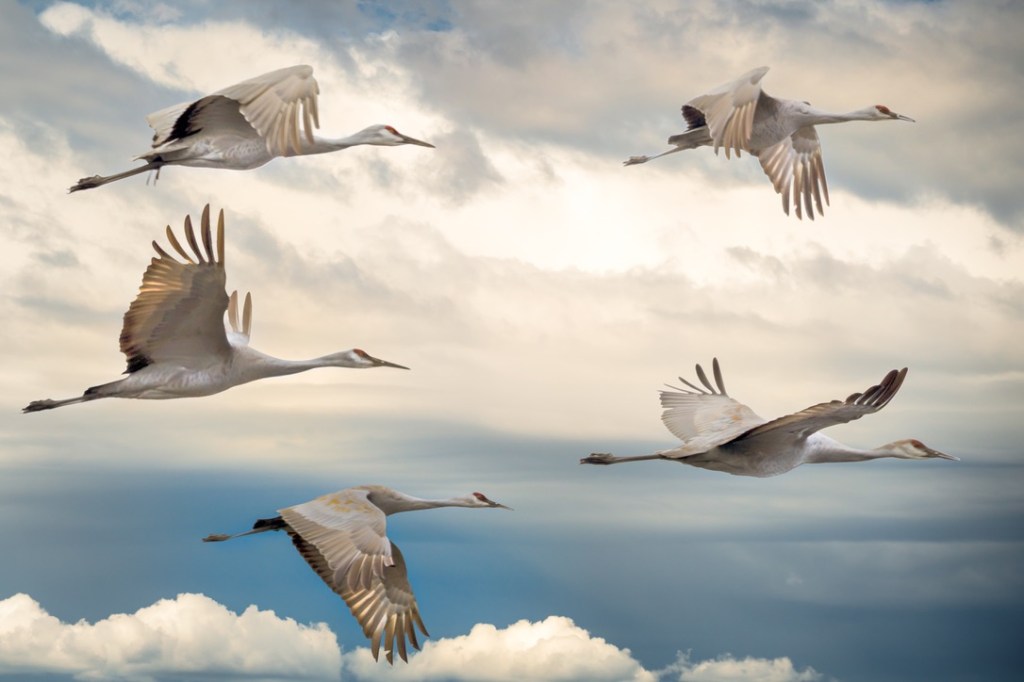
Sandhill cranes have been wintering recently in the Sacramento Delta region, drawn to the marshes and fields where they feed on waste grain from harvested crops. Standing up to four feet tall and with wingspans of up to seven feet, they’re known for their unique courtship dance and trumpet-like calls. The Woodbridge Ecological Preserve and the Cosumnes River Preserve in Lodi offer some of the best designated viewing spots around. A wide range of other birds can also be found there, including whooping cranes, double-crested cormorants, white pelicans, grebes, egrets, and various species of hawks, quail, geese, and ducks.

We received abundant snow and rainfall in California earlier this winter. In Yosemite, the falls are all flowing and accessible (some services may be limited due to COVID; for the latest information visit www.nps.gov.) In Mill Valley, the Cascade Falls are running again, and in Sunol Regional Wilderness, the scenic gorge of the Little Yosemite Area offers hikers the sight and sound of cascades spilling over boulders into swirling pools.

The increased rainfall has been a boon for spawning salmon. In Lagunitas Creek in Samuel P. Taylor State Park, female coho salmon can be seen preparing nests in the shallow waters while males compete for the best spots in the creek. (“A Good Year to See Coho Salmon Make Their Annual Return to Marin,” by Tara Duggin, SF Chronicle, January 4). 

World of Wonders
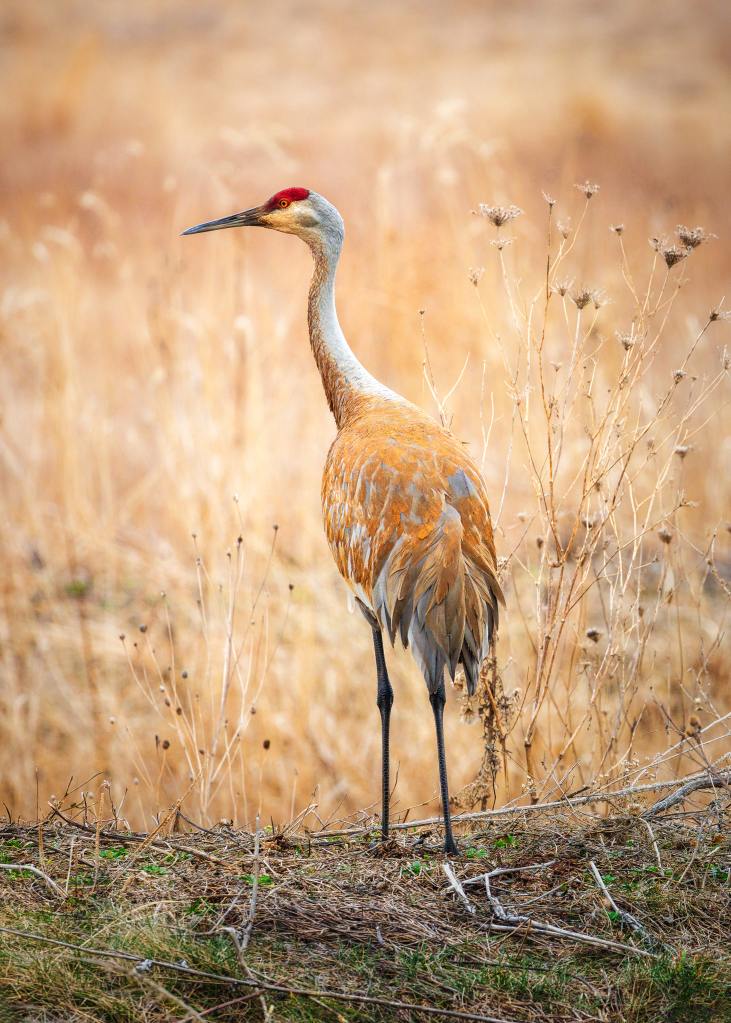
I don’t know how I managed to miss this book. World of Wonders: In Praise of Fireflies, Whale Sharks, and Other Astonishments,” by Aimee Nezhukumatathil, was on the best seller lists for weeks. A review by James Rebanks in the NYTs (Sept. 11, 2020) offers that the author has written “a timely story about love, identity, and belonging (more accurately often about not belonging, because of racism and her family’s immigrant experience).” A poet with four collections to her credit, Nezhukumatathil, links her personal history with the natural world, focusing on the wonders of the catalpa tree, fireflies, and Narwhals, among other subjects. The result is an engaging and intimate memoir, and a wonder itself. It reminds me of some of the early writing of Gerald Durrell, though without the comic lens. With illustrations by Fumi Mini Nakamura (Milkweed Editions, 2020). 

The Colors of Nature

This breakthrough anthology, edited by Alison Hawthorne Deming and Lauret Savoy, reveals how bias influences attitudes and policies about nature. In The Colors of Nature: Culture, Identity, and the Natural World, thirty writers of various backgrounds examine how conditioning can shape our awareness of the environment and how we write about it, and how important diversity is in our approach to planetary struggles. (Milkweed Editions, 2011).

Open Submissions

Terrain.org is an online journal seeking poetry, nonfiction, fiction, art, multi-media and mixed genre work that inspire “just and joyous relations with the planet and each other.” Since 1997, they’ve published award-winning literature, editorials, and case studies about place. Deadline is April 4, 2022 for the spring issue. Visit www.terrain.org for details.

About Place is an online journal published the Black Earth Institute. Dedicated to finding “pathways to peace” and to “cure what is wrongfully impacted by ecological destruction,” they seek poetry, fiction, essays, creative nonfiction, and audio/visual artwork. Open for submissions until March 10 Visit www.aboutplacejournal.org for details.

News

Books Noted

Kindest Regards, New and Selected Poems, by Ted Kooser (Copper Canyon Press, 2021), contains four decades of poetry in addition to recent work. The Pulitzer Prize winner, who hails from Nebraska and served as Poet Laureate to the Library of Congress from 2004 to 2006, is known for his short, imagistic poems that focus on everyday events and objects. Reflecting the landscape of Midwestern towns and farms (he lives on acreage in Garland, Nebraska), his poetry expresses universal experiences and the need for meaningful connection. He has said of his work that, “I want to show people how interesting the ordinary world can be if you pay attention.”

As the 23rd U.S. Poet Laureate, Joy Harjo gathered the poetry of Native peoples past and present in the 222-page An Anthology of First People’s Words: Living Nations, Living Words (W.W. Norton, 2021). Poets such as Natalie Diaz, Sherwin Bitsui, Ray Young Bear, and Santos Perez address themes of displacement, visibility, struggle, resistance, and other subjects here. The anthology demonstrates “that heritage is a living thing,” Harjo writes in the introduction, “and there can be no heritage without land and the relationships that outline our kinship.” A member of the Muscogee (Creek) Nation, she is the author of several poetry volumes and a memoir, “Crazy Brave.” 

Poet and teacher John Brehm’s The Dharma of Poetry: How Poems Can Deepen Your Spiritual Practice and Open You to Joy (Wisdom Publications, 2021) is geared toward poets and poetry lovers who practice meditation, but it’s a rich resource for readers and writers of any persuasion. Brehm presents poetry as a “powerful way to disrupt the habitual momentum of the mind, its automatic reactions and obsessive self-concerns.” His analysis of poems such as James Wright’s “A Blessing” and Ryokan’s “First Days of Spring” point out how these poems offer the reader an opportunity to pause while “full of imaginative engagement,” and invite us to enter “the timeless experience the poem describes.” The book also contains writing prompts and suggested meditations.

In Memoriam

Three of San Francisco’s former poet laureates died in 2021 — Lawrence Ferlinghetti (at age 101), Janice Mirikitani, and Jack Hirschman. In addition to their innovative literary output, each made a vital contribution to the city’s cultural life — Ferlinghetti as co-founder of City Lights Bookstore and publisher of the Beat poets, Mirikitani as ambassador of love (with her husband the Rev. Cecil Williams) and Hirschman as an outspoken writer who reminded us of the importance of politically relevant poetry. Other outstanding American poets who passed recently are: bell hooks, Stephen Dunn, Thomas Kinsella, Jean Breeze, and Robert Bly. May they all rest in peace.

Open Submissions

Split Rock Review, an independent online publication, is accepting submissions for Issue #18, including poetry, creative nonfiction, fiction, hybrid, photography, and art with an emphasis on place and the environment. Until Jan. 31st. www.rockreiew.org

The Emerson Review, out of Emerson College, is now open for submissions until February 1st for the spring issue, due to be published in April. Seeking poetry, fiction, nonfiction, photography and art. Selected pieces are nominated for a Pushcart Prize. www.emersonreview.submittable.com

Beloit Poetry Journal, a print publication, is open for poetry submissions in various forms and styles. Send up to five unpublished poems or one long poem by January 31st.  www.bpj.org

Haiku Notes

Chiyo-ni

Anybody who’s ever lived around morning glories knows that they often turn up in unexpected places — curled around a shovel or a ladder, growing around a drainpipe, or climbing up a fence post, to name a few. The haiku, below, reflects that trait*:

morning glories 

wrapped around the well bucket —

borrowing water

According to D.T. Suzuki, this haiku by Fukudo Chiyo-ni (1703-1755) conveys the experience of suchness, in which the speaker is “perfectly at one with reality” — so much so that she went to a neighbor to borrow water rather than disturb the scene she described. Chiyo-ni began writing haiku at the age of seven and by seventeen was well known throughout Japan as a follower of Basho’s style. Below is one of many haiku she wrote expressing evanescence*:

clear water

cool to the touch —

fireflies vanishing

Late in life, she became a nun in the Pure Land Buddhist tradition, while continuing to write haiku and renga. Here are a few more examples of her work*:

pampas grass,

made for this life

in the wind

from the heart of this one vine,

countless gourds

flickering

between maple leaves —

twilight

   *trans. jg 

Gratitude

As 2021 draws to a close, I’m reminded of Mary Oliver’s poem, “Gratitude,” from the collection, Thirst. It contains eight questions, any one of which might serve as a prompt for a poem:

– “What did you notice?”

– “What did you hear?”

– “When did you admire?”

– “What astonished you?”

– “What would you like to see again?”

– “What was most tender?”

– “What was most wonderful?”

– “What did you think was happening?”

For me, the question,“What was most tender?”, invites reflection. The tender moments we experience in life are often the ones that are imbued with love — the love of close relationships, the love for pets, for wildlife, or the beauties of nature. Which questions resonate with you? What are you most grateful for? 

Haiku Notes

…The Awakened One, a new anthology of Buddhist-themed haiku, is now available on Amazon and other platforms. Published by Poetry Chaikhana and edited by Adjei Agyei-Baah and Gabriel Rosenstock, the anthology features haikuists from around the world in dialog with Japanese masters such as Basho, Buson, and Issa. 

…The Haiku Apprentice: Memoirs of Writing Poetry in Japan, by Abagail Freidman with an introduction by Michael Dylan Welch (Stone Bridge Press, Berkeley, CA, 2006). Abigail Freidman was living in Japan as an American diplomat when she met haikuist Momoko Kuroda. At that time Kuroda was already a prominent teacher who had been featured in the anthology, Far Beyond the Field: Haiku by Japanese Women, by Makoto Uedo (the title comes from one of Kuroda’s haiku):*

greening the sky

far beyond the field —

lightning flash

Friedman, who was already studying calligraphy, joined Kuroda’s haiku group, Aoi Kaiku Kai, writing her first haiku in Japanese. She traces her learning curve here, offering passages on the significance of kigo and cutting words, and the value of working with a group. This lively account is as revealing for its intimate glimpses into Japanese culture as it is for its many insights into the practice of haiku.       

The Poems of Nakahara Chuya, translated by Paul Mackintosh and Maki Suglyama (Gracewing Publishing, 2017). One of Japan’s early 20th century poets, Nakahara Chuya was influenced by both Dada and French symbolism and has been referred to as the “Japanese Rimbaud.” He is known for his collections Yagi no Uta (Goat Songs, 1934) and Arishi Hi no Uta (Songs of Bygone Days, 1938).

*trans. jg

News

Books Noted

The Art and Craft of Poetry

In case anybody hasn’t heard, April was National Poetry Month, but any time is a good time to enjoy poetry in its various forms. Here are a few recent offerings:

Three Simple Lines: A Writers Pilgrimage into the Heart and Homeland of Haiku, by Natalie Goldberg (New World Library, 176 pages). Natalie Goldberg’s latest offering on the art and practice of writing takes her to Japan where she explores the origins of haiku among the country’s ancient temples and hidden gardens. Classic haiku by masters such as Basho, Buson, Issa, and Chiyo-ni appear in a narrative “as irresistible as a mountain stream…” says author Henry Shukman, “…and come alive in ways that still the mind, expand time, and open the heart.” As insightful as Goldberg’s Writing Down the Bones and Writing the Landscape of Your Mind, this book reminds us of what it means to be open to growth, and how the practice of writing — and haiku, in particular —lends itself to mindfulness.

How to Write a Form Poem, by Tanya Runyon (T.S. Poetry Press). Even poets who primarily write free verse are likely to find this this “how to” book useful. It contains instructions and prompts for writing ten traditional forms, such as sonnets, sestinas, villanelles, haiku, and pantoums. Included are dozens of examples from Runyon and other poets, among them Elizabeth Bishop, Natasha Trethewey, Frank O’Hara, Matsuo Basho, and Wallace Stevens. An author and teacher, Runyon has also written How to Read a Poem and How to Write a Poem, both of which are geared for use in classrooms. 

Accidental Gardens, by Rob Carney (Stormbird Press). This is Carney’s take on the contemplative Japanese form of haibun. First used by Basho in the 17th century, the term refers to a hybrid genre that combines haiku with prose — typically, observations such as travel logs, and sketches of people, activities, or landscapes. Basho’s Okku no Hosomichi (Narrow Road to the Interior) is probably the most well-known example of the form. Comprised of four sections — 42 haibun in all — each of the short ruminations in Accidental Gardens ends with a brief poem or compelling image. Focusing on the natural world and our reckless disregard for the environment, the collection reads as “a journey through the absurdity, tragedy, and black comedy of late-stage capitalist and consumerist America,” writes author Nick Hunt. A professor of English at Utah Valley University, Carney has published seven other poetry collections.  

News

Karumi

The quality of karumi, or lightness, can be found in Basho’s haiku as early as 1667. He was twenty-three years old when he wrote the following:*

cherry blossoms

in the breeze — breaking out

in laughter 

Haruo Shirane, Chair of East Asian Languages and Cultures at Columbia University, has described karumi as “a focus on everyday subject matter, on the use of ordinary language, and on a relaxed rhythmical, seemingly artless expression.” Here the traditional topic of cherry blossoms takes on an unusually welcome aspect. Rather than contrasting the beauty of the flowers with sadness at their brevity, for instance, Basho depicts the exuberance of the moment. Is it the blossoms that have broken out in laughter or the poet? Or both? In this case, ambiguity adds to the impact of the lines.

Much haiku is celebratory in nature. An exclamatory haiku such as the one above is a good example of this. Another approach, common to the Basho school of haiku, presents two juxtaposed images, offering up a view that embraces them both. Below, a view of the garden, written near the end of Basho’s life, evokes a minimalist yet wholistic response: 

morning dew —

muddy melons

on the ground

Here there’s no trace of poetic conceit, just the pristine scene as Basho found it. In that sense, karumi may be considered not only in its literal sense as “not heavy or dark” but as possessed of a light artistic touch, allowing the reader to bring to the scene what he or she will. Even on his deathbed, Basho found an unexpected lightness:

flies everywhere —

how lucky they are to meet up

with a sick man

In the 20th century, Nakagawa Soen was a lifelong practitioner of haiku. As a literature student at Tokyo Imperial University, he wrote his thesis on Basho and later became a Zen monk and teacher. This haiku, written in 1946, presents two images pointing to the connection of ordinary things:

small plums

and dewdrops —

alive together

Although penetrating, there’s nothing heavy about these lines. Instead there’s a clarity and freshness, and a sense of happiness at the simple pleasures. We, too, are alive together with the plums and the dewdrops. How wonderful! These are the primary characteristics of karumi.

*all versions by jg

Writing Prompt

This haiku prompt is aligned with the Basho school, using juxtaposed images. The purpose isn’t to create great haiku necessarily, but to gain flexibility in different ways of observing. Try juxtaposing an image of:

  • something large with something small
  • something animate with something inanimate
  • an experience of one sense perception with one of a different sense perception
  • nature with an emotion
  • something old with something new
  • something appealing with something unappealing

Then, play around with the lines, mixing and matching them to see what possibilities come up.

Poems, for Now

Last month I was invited to join with other poets for a Zoom reading sponsored by the River Heron Review out of Bucks County, PA. Hosted by co-founders Judith Lagana and Robbin Farr, it showcased work addressing the socio-political climate that appeared in the online venue Poems for Now. The reading provided a chance to see and hear poets from around the country and offered a refreshing change from the jingoistic language so prevalent today. Kudos to all those who participated and thanks to Judith and Robbin for making it all come together. www.riverheronreview.com

How to Haiku

Thanks to editor Bruce Ross for including the haiku, “sheltering in place” in the Fall/Winter edition of Autumn Moon Haiku Journal, out of Maine (www.autumnmoonhaiku.com). The author of How to Haiku, a Writer’s Guide to Haiku and Related Forms, Ross seeks selections that “express feeling connected to nature” and that “produce a haiku moment…”

Joy Harjo Reads

As part of the Poetry Society of America’s “Reading Through the Decades” series, U.S. Poet Laureate Joy Harjo reads How to make good baked salmon from the river, by Nora Marks Dauenhauer: https://poetrysociety.org/features/reading-through-the-decades/joy-harjo-reads-nora-marks-dauenhauer.

“On Grief in the Holidays…”

Tracy K. Smith, Pulitzer Prize-winning poet, speaks to Kat Chow on how she processes grief during the holidays and her rituals for the new year (NPR, 12/2/20). https://www.npr.org.

New Year Wishes

Here we are in December, wrapping up a rough year as the pandemic continues to take its toll. The light at the end of the tunnel, of course, is that there’s a vaccine on the horizon. It may not be a cure-all but it promises to save thousands of lives around the world. I’m grateful for that, and for the many gestures of generosity and courage I see and hear about every day. May this season bring hope and not just more hype, and may it be a time of light and healing as we move forward into the new year.            

News

On the Road with Basho

Few poets personify the archetype of the wanderer so much as the 17th century Japanese writer Matsuo Basho (1644-1694). He developed a hybrid form, haibun, to reflect both his inner and outer journeys, alternating prose passages with three brief lines that came to be known as haiku. His travels were a way for him to keep his work fresh while also giving him a freedom he wouldn’t otherwise have had as a civil servant, scholar, or monk. In 1687, he started a solo journey that’s reflected in his travelogue, Notes for My Knapsack (Oi no kabumi). Here he describes riding his horse during a storm and stopping beside rice fields*:

winter rice fields,

my horse and I — shadows

in the rain  

Rather than rely on literary allusions to cherished sites, Basho wanted to visit them in person, and this practice gives his work veracity and a sense of immediacy as in this haiku, dated 1688 and composed while on a stay at the temple of Zenko-ji, located below Mount Obasute:

dissolving all thoughts

of the four sects — moonlight

over Mount Obasute

(The reference to sects refers to the various schools of Buddhism.)

In 1689, he embarked on a five months long journey with his friend and student, Sora, and this trip is portrayed in his most well-known work, The Narrow Road to the North (Oku no hosomichi). Moved by the turn out of his pupils to see the pair off in their little boat, he composed these memorable lines: 

grasses are fading,

birds are chattering — and tears

blur the eyes of fishes

Early on, they paused at a grotto at Back View Falls (Urami-no-taki), where they sat in meditation behind the waterfall, still considered a sacred pilgrimage site today:

hearing water fall

from the inside out — entering

summer’s temple

In his final years he visited Ueno, Nara, Kyoto, Edo, and Osaka, among other places, meeting with students, and continuing to cultivate the notion of lightness, or karumi. In Osaka, he became ill and died there in the fall of 1694. These are among his last lines, reflecting his dedication to haiku, renga, and life on the road: 

on the vast way —

not tilling the same small plot

year after year

worn and ill —

this traveling heart lingers

in autumn fields

*all haiku versions by jg

New Poems and Haiku

Thanks to the editors of the River Heron Review’s Poems, for Now, for selecting an ekphrastic poem inspired by the early Chinese painting, Eighteen Songs of a Nomad Flute: The Story of Lady Wenji. The painted scroll (artist unknown) and poems by Lui Shang still resonate today with themes of war and its consequences.Thanks also to the editors of the upcoming Buddhist Haiku Anthology: The Awakened One, to the editors of Cattails, a journal from the United Haiku and Tanka Society, and to Wales Haiku Journal. 

The Fires

As I write this, over a million acres have burned on the west coast, several people have died, and thousands have evacuated. The scope of the devastation is almost incomprehensible. My prayers go out to the victims of this tragedy and their families, and to all those men and women who are working to save property and lives — firefighters, healthcare workers, law enforcement, and so many others — our prayers and gratitude for your service.

The fires aren’t limited to California, Oregon, and Washington. Conditions stemming from global warming have contributed to “climate fires” in other states such as Colorado, Idaho, and Alaska. There are currently 97 large fires “that have burned 4.7 million acres across several states,” according to the National Interagency Fire Center. In Oregon, which has been particularly hard hit, the Mayor of Ashland, John Stromberg, has set up a website for contributions to help the recovery process. It can be found at ashland.or.us/ashlandresponse.

News

Silence

We began to notice the silence in the first few days after the shutdown.  There was no longer the white noise of traffic from the nearby state highway, and the comings and goings of cars on our block had tapered off.  Something seemed different in the call of birds, too, as if they were testing this new quiet, listening to the resonance of their songs.

Walking to the local market yesterday, I found myself sauntering — a practice, and a word, that seems to have gone out of fashion.  It’s not so much about the need to hurry to my destination these days as it is about enjoying the scenery along the way.   The hills are still green.  A few horses graze below the ridge.  Roses are in bloom, and the scent of flowering citrus blossoms is in the air.  Does silence have a scent?  Well, no, not exactly.  But it permeates the scent, just as it permeates my thoughts.

I hope the current shutdown helps to “flatten the curve” of COVID infections — that we’ll all be back to work, again, soon, that schools can safely reopen, and business as usual will return to our communities.  But this may not happen as soon as we wish, at least not entirely.  So I also hope that something of this moment stays with us, something more than uncertainty and fear.  That we’ll listen for the silence that underscores political messaging, birdcalls, and the sound of our own breathing.

Writing Prompt: Settling in with Haiku

Haiku have a way of occurring out of the blue, but you may want to try a “haiku walk” in your neighborhood or in a local park to refresh your senses and mind to what’s going on around you — to nature “as it is,” minus the usual preoccupations.  In Japan, these walks are known as ginkoo (gin -singing, praising, poem-making; koo – walking).  You may want to take a notebook and pen along so that you can jot down a few key words about your experiences.  These may serve the basis of one or more haiku later.

If that’s not possible, list some of the memorable places you’ve visited.  What was the outstanding thing, event, or experience about your visit to each of them?  Compose a haiku about one or more of these places, incorporating a seasonal image, or possibly a reference to your feelings or state of mind at the time.

News

The Comfort of Haiku

The practice of haiku cultivates awareness of what is, and this awareness can offer a kind of psychological comfort for what ails us. Shiki, who suffered from tuberculosis, rarely addressed his condition directly in haiku.  Yet, his verses provided him with a more expansive lens with which to view his condition and the world, one that encompassed both light and dark.  I like this one:*

winter cold —

gulping medicine, saving

the tangerine for later

Here, the tangerine suggests a healing purpose as much as whatever formula Shiki was ingesting: beauty is medicine, too, and so is color, shape, and texture.  And then, what a comfort to hold a small, perfectly ripe tangerine, to peel it, expose the pulp, release the pungent scent, and taste the juicy tartness.  Even on his sickbed, Shiki noted the allure of all this.

African-American novelist Richard Wright (“Native Son”) was introduced to haiku through the translations of R. H. Blythe in 1959 and, during the last eighteen months of his life, he wrote hundreds of them.  Struggling to recover from amoebic dysentery and often bedridden, “he was never without his haiku binder under his arm,” writes his daughter, Julia, in the introduction to Wright’s collection, “Haiku, The Last Poems of an American Icon,” (Arcade, 2012).  “I believe his haiku were a self-developed antidote against illness, and that breaking down words into syllables matched the shortness of his breath…”, she observes.  Others have suggested that his passion for haiku was something more than therapeutic, that it offered the structure (and brevity) for deep contemplation, and for transcending the political and racial boundaries of his work.  I think that both of these suggestions are probably true — that writing haiku kept the streams of Wright’s creative imagination alive during a time of stress and suffering, and helped to allieve that suffering, as well.

*version by j.g.