
Poets on the Pandemic
A new anthology, Together in this Sudden Strangeness, edited by Alice Quinn and due as an ebook by Knopf in June, collects the work of over eighty poets who express their anxieties about life and writing during the pandemic. Ada Limon, among those featured in the collection, observes that she initially felt “flattened and silenced” by the shutdown, according to a report on the site www.https://voalearningenglish.com. In her recent poem, “The End of Poetry,” (New Yorker, April 27, 2020), she lists a series of subjects that she found “she could no longer access” during these uncertain times (see “Writing Prompts”). Some of the other poets included in the new book are Major Jackson, Amit Majmudar, Billy Collins, Jane Hirshfield, Jenny Xie, and Julia Guez. Poems cover topics such as parenting, grief, and the loneliness of social distancing.
Pandemic Haiku: Volume One, an anthology initiated by a haiku posted on Facebook by Iowa writer and therapist Robin Schinnow, is one of the best-selling books on Amazon in its category, according to a May 16th article in the Des Moines Register. “People’s feelings, questions, and support are an important part of recording this event,” said editorial coordinator Cathie Gebhart, who helped produce the book containing over 100 haiku. All proceeds from sales go to the Outreach Program of Des Moines, Iowa.
Native American Poetry Anthologies
Joy Harjo has been appointed to a second term as U.S. Poet Laureate. An enrolled member of the Muscogee Creek Nation, she’s working on an anthology of Native American poetry along with an online resource featuring biographies and recordings of Native poets, entitled, “Living Nations, Living Words: A Map of First Peoples’ Poetry.”
The first anthology in thirty years of Native poets “exclusively from the United States,” New Poets of Native Nations (Greywolf Press, 2018) contains the work of twenty-one indigenous authors. Edited by Heid E. Erdich, an Ojibwe writer and scholar enrolled at Turtle Mountain, it won the American Book Award and has been described by The Washington Post as “A wonderful introduction to the diverse landscape of native voices.”
Michael McClure (1932–2020)
Michael McClure, who participated in the legendary San Francisco Six Gallery reading in 1955 that helped launch the west coast literary movement of the Beat Poets, died May 4th at the age of 87. A former Playwright in Residence at San Francisco’s Magic Theater, McClure is the author of the controversial play, “The Beard,” as well as thirty books, and is co-author of the song, “Mercedes Benz,” popularized by Janis Joplin. (A selection of his haiku can be found online at Terebess Asia Online). Robert Creeley said of his work that he “shares a place with the great William Blake, with the visionary Shelley, with the passionate D. H. Lawrence,” to which might also be added the names of Basho and Chuang Tzu. In her recent tribute, “Remembering Michael McClure, Poet, Teacher, Friend,” historian Rebecca Solnit writes, “He helped transform the culture. He was an opener of doors and a builder of bridges.” www.https://lithub.com
Buddhism and the Beats
Buddhism was the primary philosophical foundation for several of the Beats, a term coined to describe the free-spirited literary innovators who came into prominence in the mid-1950s. Jack Kerouac studied Buddhism and wrote about it in “Some of the Dharma,” Gary Snyder lived as a Zen monk in Japan, Michael McClure practiced tantric yoga and Zen, Allen Ginsberg and Diane Di Prima embraced both Zen and Tibetan Buddhism, Bob Kaufman converted in his later years, and Philip Whalen was ordained as a Zen Priest in the Soto school, serving as Abbot of the Hartford Street Zen Center in San Francisco. Despite being initially disparaged by some (but not all) in the literary establishment, the work of the Beats helped to introduce the principles of Buddhism into mainstream American culture and broadened the range and style of American poetry — notably, linking it to the breath in free verse and haiku.
Philip Whalen is one of the lesser known figures of the Beats. A participant in the landmark Six Gallery poetry reading in 1955 (along with Michael McClure, Allen Ginsberg, Philip Lamantia, and Gary Snyder), he lived for a time as a monk in Kyoto, Japan, at the San Francisco Zen Center, and later as head monk of Dharma Sangha in Santa Fe, New Mexico. By the early 1990s he was nearly blind, but that didn’t stop him from welcoming practitioners to the Hartford Street meditation hall. His poetry appeared in The New American Poetry 1945 – 1960, edited by Donald Allen (Grove Press, NY, 1999), in Overtime: Selected Poems by Philip Whalen (Penguin, NY, 1999), and in The Collected Poems of Philip Whalen (Wesleyan University Press, Conn, 2007). Many of his poems function as a form of quasi-meditation, honoring the moments of everyday life while framing that within the larger historical and philosophical context of Buddhism. A selection of his work that appeared posthumously in Lion’s Roar illustrates this point (Poems & Zen Talks of Philip Whalen). David Kherdian puts it this way: “Whalen has managed to espouse the religious principles of Zen Buddhism without renouncing the world around him, retaining a humorous, whimsical balance in his poems, and mixing the pleasures of California life with contemplation…” (Six Poets of the San Francisco Renaissance: Portraits and Checklists).
English romantic poets such as Wordsworth and Shelley, American Transcendentalists Emerson, Whitman, and Thoreau, and early Asian writers such as Han Shan, Du Fu, and Dogen, were the literary forebears of Whalen and his contemporaries, notably Gary Snyder. In Riprap and Cold Mountain Poems, Snyder’s translations of the work of Han Shan marry the spirit of the originals with his background as a scholar, monk, mountain climber, fire lookout, and trail builder. Reflecting a deep connection to nature, his poetry and essays bring the principle of reverence for life (ahimsa or non-harming) into the ecological movement. Recipient of the Pulitzer Prize for his 1974 collection, Turtle Island (New Directions), he has written that, “One of the major challenges facing our large current human populations is what role we should play in regard to the many thousands of other living beings we share the planet with.” Now aged 90, Snyder is a long-time resident of the Sierra foothills in California, near Nevada City.
The late Michael McClure’s work also reflects a profound awareness of nature, especially animal nature, and this was evident early on when he presented his poem For the Death of 100 Whales at the Six Gallery reading (he was 22 at the time). The author of fourteen volumes of poetry, more than twenty plays, two novels, and four collections of essays, his poetry “combined spontaneity, typographical experimentation, Buddhist practice, and “body language” to merge the ecstatic and the corporeal,” according to the Poetry Foundation. In an interview with Rebecca Foresmen in the New Yorker (January 14, 2013), he mentions that he “practiced tantric yoga in my early life, and now practice Zen to Hua-Yen, or Flower Garden Buddhism…a practice intended to elucidate the actual moment of Buddha’s enlightenment.” Many of his Zen poems can be found in the volume, Touching the Edge, Dharma Devotions from the Hummingbird Sangha (Shambala Publications, 1999). A recipient of the Obie Award for Best Play (The Beard) and the Alfred Jarry Award, he co-authored the song, Mercedes Benz, with Janis Joplin.
Known primarily for his novels, Jack Kerouac was also a poet, haikuist, and Buddhist scholar. With the publication in 1957 of his second novel, On the Road, he became an “overnight sensation” and the key figure of the Beats. This was followed two years later by The Dharma Bums, which was dedicated to Han Shan, hermit poet of the Tang dynasty. Another semi-autobiographical tale, this one centered on his quest for spiritual awakening while on a mountain climbing trip with Gary Snyder. According to Allen Ginsberg (Negative Capability: Kerouac’s Buddhist Ethic, Tricycle, Fall, 1992), Kerouac was introduced to Buddhism through A Buddhist Bible, a collection of Buddhist sutras translated by Dwight Goddard that presents the Four Noble Truths and the three “marks” of existence: suffering, impermanence, and anatman or “no permanent self.” This was the impetus for Kerouac’s collection of meditations, Some of the Dharma, begun in 1953 and published by Viking in 1997. He was awarded a posthumous honorary degree in 2007 by the University of Massachusetts Lowell (his hometown) and his Collected Poems was published in 2012 by Library of America.
Besides Jack Kerouac of On the Road fame, Allen Ginsberg is probably the most recognizable of the Beat writers. Born in Newark, New Jersey, he attended Columbia University in the 1940s, studying briefly with critic and teacher Lionel Trilling. While living in Manhattan, he met Kerouac, William Burroughs (Naked Lunch), and Gregory Corso (Gasoline Alley), who also came to be associated with the Beats. Relocating to San Francisco in the mid-1950s with his life partner Peter Orlovsky, Ginsberg read his declamatory poem, Howl, at the Six Gallery event to much acclaim. Poet and publisher Lawrence Ferlinghetti, who was present at the reading, recognized Ginsberg’s potential, sending him a telegram the following day that read: “I greet you at the beginning of a great career” (echoing Emerson’s words to Walt Whitman). When Ferlinghetti went on to publish Howl in 1956 as a paperback under his City Lights imprint, the publicity from the subsequent obscenity trial (which exonerated Ferlinghetti) all but assured Ginsberg’s role as one of the main voices for an alternative literature movement. His interest in Eastern religion prompted travel to India, where he met His Holiness The Dalai Lama and His Holiness Dudjom Rinpoche. On his return, he became a student of Tibetan teacher Chogyam Trungpa Rinpoche at the Naropa Institute in Boulder, Colorado. He also served on the board of Maitri, an Aids hospice in San Francisco. Although Ginsberg was shunned by some in the east coast literary establishment, his collection, The Fall of America, won the National Book Award and he was inducted into the American Academy of Arts and Letters.
Diane Di Prima attended Swathmore College but dropped out to pursue writing in Manhattan in the late 1950s, editing the newspaper The Floating Bear (with LeRoi Jones) and co-founding the New York Poet’s Theater. Her first volume of poetry, This Kind of Bird Flies Backward was published by Totem Press in 1958. Relocating to the West Coast in the early 1960s, she studied with Suzuki Roshi at the San Francisco Zen Center and, upon his death, with Chogyam Trungpa in Boulder, where she taught for several years at the Jack Kerouac School of Disembodied Poetics. In the 1990s, she became a student of Lama Tarchin Rinpoche, the late Tibetan Dzochen master. Her poetry blends political, personal, and spiritual themes in an intimate, stream-of-consciousness mode. “I wanted everything — very earnestly and totally,” she has said. “I wanted everything that was possible to a woman in a female body…” A fictionalized story of her early life, Memoirs of a Beatnik, was published by Olympia Press in 1969, and her selected poems, Pieces of a Song, was published by City Lights in 1990. This was followed by a memoir, Recollections of My Life as a Woman: The New York Years, published by Viking in 2001. A recipient of the Fred Cody Award for Lifetime Achievement (2006) and a former Poet Laureate of San Francisco (2009), Di Prima has lived in the city for over thirty years. Now 85, she continues to write and has taken up watercolor painting.
Bob Kaufman was one of the finest poets — and one of the least known — to come out of the Beat movement. Regarded as the “Black Rimbaud” in France, his work exemplifies the ideal of free-flowing spontaneity valued by Kerouac and others, in part because much of his poetry was composed orally to jazz accompaniment and later written down. Born and raised in Louisiana (one of thirteen children), he attended the New School in New York City, moving to San Francisco in 1958. A convert to Buddhism and a founder of the influential poetry publication “Beatitude” with Allen Ginsberg and others, he published three volumes of poetry in his lifetime: Solitudes Crowded with Loneliness (New Directions, 1965), The Golden Sardine (City Lights Books, 1967), and Ancient Rain: Poems, 1956-1978 (New Directions, 1981). Following the assassination of John F. Kennedy, he took a vow of silence, not speaking until the end of the Vietnam War (Poetry Foundation).
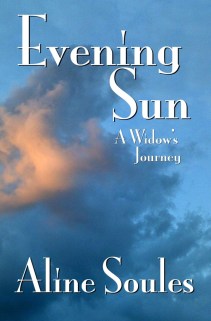
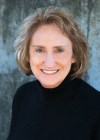 Find Aline Soules online at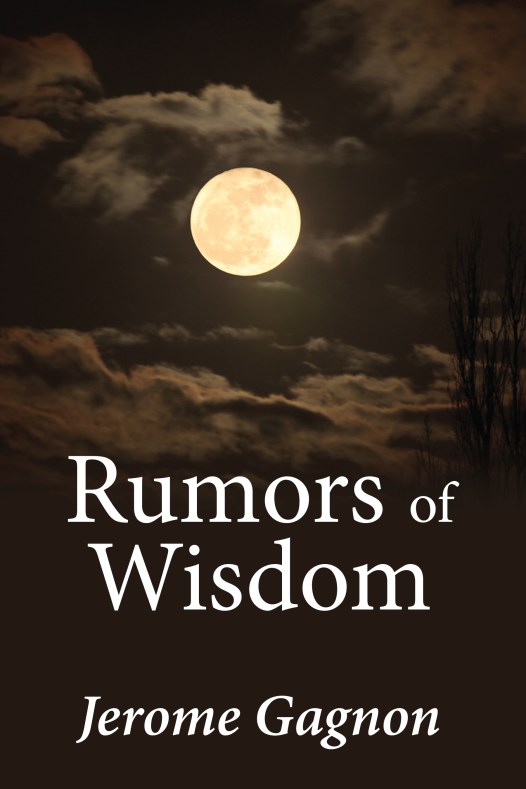
 Jerome Gagnon Blog