New poems are scheduled to appear in theSanta Clara Review, a publication of Santa Clara University, and the upcoming anthology, A New Season: Poems from a World in Flux. Edited by Vallejo co-Poets Laureate Jacalyn Eyvonne and Kathleen Herrmann, the anthology will highlight San Francisco Bay Area voices but “welcomes poets from all regions…” Due around the end of January.
Revision
In the last year or two, especially, I’ve come to enjoy the process of revision. There’s a certain perspective gained in seeing how a poem develops from point A to point B, and beyond. Of course, it helps if you’re not attached too much to the status quo. Case in point, I recently observed as one troublesome word changed from “rising” to “meandering” to “wilding” to “rewilding.” Of course that last change was what it should have been all along. Sometimes you just have to sit down in the chair at your computer or your writing pad and put in the time.
Those Winter Sundays
Born and raised in Detroit, Robert Hayden (1913-1980) “was the first Black American to be appointed as consultant in poetry to the Library of Congress (later, U.S. poet laureate),” according to poets.org. One of his most memorable poems, “Those Winter Sundays,” evokes a “tumultuous” childhood but it also speaks of love’s austere presence. It appeared in A Ballad of Remembrance, Paul Bremen, 1962, and can also be found at www.poets.org.
Contests and Submissions
Ninth Letter, a print journal from the University of Illinois, Urbana-Champaign, is currently accepting both experimental and traditional forms of prose and poetry. www.ninthletter.com
Publication in Booth Magazine and $1,000 will be awarded to the winner of the Susan Neville Poetry Prize. Submit up to three unpublished poems stories through December 31, 2025. www.booth.submittable.com
Ecotheo Collective accepts all forms of literary and visual expression for their print and website issues. They seek work that reflects “questions of ecology and spirituality from within and outside all religious traditions.” Publishes four times a year. www.ecotheo.org
Wishing you peace and joy now and in the New Year!
This was the wettest summer on record in San Francisco and the coldest July in over forty years. The fog has returned with a vengeance, but here in the burbs we’ve had a mild summer so far with many days in the mid-seventies — just right for working in the garden. It’s mostly clean-up here to cut back and remove debris. As usual, the bamboo is a mess and the morning glories have sent out their runners all over the place, but there are also layers of dried weeds. I do everything with hand tools, so it’s a quiet practice for the most part, interrupted by the sound of bamboo stalks cracking and branches coming down.
A garden is never finished — an ongoing process full of little surprises. I like coming through the gate in spring to see the nectarine tree in blossom. Or, in summer, finding the first bunch of fruit hidden in the leaves. I can gaze at an empty space, imagining what might grow there, examine an overgrown patch to figure what should be removed. It’s a lot like reviewing a poem and seeing something I didn’t see before, an implied metaphor that could be developed or a few words that should be omitted. A “they” that might to be changed to a “we”.
The Wild Iris
In Louise Gluck’s Pulitzer Prize winning collection, The Wild Iris (1992), the title poem and others are spoken in the voice of a flower reflecting on the mysteries of this world and the “hidden” world beyond. I remember reading this book, or trying to read it, for the first time. At first, the poems were largely opaque — I just wasn’t used to thinking about flowers as having a voice, much less a philosophical one. And then something clicked. Suddenly I suspended my disbelief and the poems came alive, although they weren’t always transparent. Some of them may be deliberately ambiguous, which allows for multiple interpretations. Writing in The New Republic, Helen Vendler observed that The Wild Iris “…wagers everything on the poetic energy remaining in the old troubadour image of the spring, the Biblical lilies of the field, natural resurrection.” Like nature, it revolves as much around winter and oblivion as it does around renewal, and these images evoke trauma. As Gluck writes in her title poem, “…whatever returns from oblivion returns to find a voice.” It’s this voice that appears “like a great fountain” in the closing lines and resonates page after page with a hard-won wisdom.
Opportunities
The Fourth River, a print and online publication of Chatham University’s MFA in Creative Writing, is seeking submissions of poetry, fiction, and nonfiction until September 15th, and then from November 15th to January 15th. They want to see writing that “explores the relationship between humans and their environment, both natural and built, urban, rural, or wild.” The current theme is “innovation.” See www.4thriversubmittable.com for details.
Modern Haiku is open to submissions of haiku, senryu, and haibun year round with cut-off dates on March 15th, July 15th, and November15th. Regarding the content of haiku submissions, their perspective is that “syllable and line count are not vital in English-language haiku” while seasonal references, concrete images, and a lack “views or values” characterize the best examples. Submissions may be made by mail or email, and are free. For details visit www.modernhakiu.org.
Finishing Line Press is now accepting entries for the 2025 New Women’s Voices Chapbook Competition. The competition offers publication and a prize of $1,500 for a writer who “identifies as a woman and has not yet published a full-length collection,” according to their website. Ten finalists will also be selected for the chapbook series. Contest ends October 15, 2025. www.finishinglinepress.submittable.com
Born in 1905, Pulitzer Prize winning poet Stanley Kunitz lived to be 100 years old. His later poems, beginning with The Testing Tree in 1971, were less philosophical and more personal than his early efforts. Some of my favorites from this period include “My Mother’s Pears,” “Halley’s Comet,” “Snakes of September,” and “Days of Foreboding,” but there are many more; in “The Unquiet Ones” he addresses the deaths of his parents and in “The Round,” expresses his love of gardening, poetry, and life. Kunitz wasn’t averse to confronting the shadow side of the personality or the dark side of history — his father committed suicide before he was born and he commented that the Holocaust was “the basic subtext of much of his work.” Twenty-five years after its publication, The Collected Poems remains relevant in today’s polycrisis for its penetrating gaze at beauty, love, and loss. “What do we know beyond the rapture and the dread?” he asked. (The Collected Poems, Stanley Kunitz, W.W. Norton & Co., 2000)
Rewilding the River Basin
Thousands of native wildflower seeds, hand collected and planted by Yurok tribe members and volunteers, are thriving along the Klamath River after a spectacular show of color this spring. Over 2,200 acres, submerged for decades by four recently removed dams, are part of an ongoing restoration project along the river basin. Some of the flowers that can be found there are California poppies, lupine, buttercups, tiger lilies, asters, larkspur, and orchids. www.oregonstater.org, www.oregonstate.edu
Opportunities
Blessing the Boats Selections, sponsored by BOA Editions, is offering a $1500 prize and publication for a full-length collection of poetry by a woman of color who lives in the US. Named after Lucille Clifton’s award-winning collection, the series will be judged this year by Evie Shockley. Manuscripts must be at least 65 pages in length. (There’s no entry fee.) www.boaeditions.org
Stony Brook Southhampton is sponsoring a short fiction prize for undergraduates. The winner will receive a prize of $1,000, a scholarship to the Southampton Writer’s conference, and possible publication in the Southhampton Review. The contest is open to undergrads in the US and Canada. (There’s no entry fee.) www.stonybrook.edu
Palette Poetry, an online journal, is open for submissions year round for its Featured Poet category. Payment is $50-150 per poem. Aiming for diversity, they welcome “new and emerging” poets. (There’s no fee for this category.) www.palettepoetry.com
Assembling a Poetry Collection
For tips on assembling a poetry collection, see “Putting a Full-Length Collection Together,” June 6, 2021 and July 26, 2021, on this blog.
I’ve been dipping in and out of You Are the Future: Living the Questions with Rainer Maria Rilke (Monkfish, 2024).Written by translator and scholar Mark S. Burrows and best-selling author Stephanie Dowrick, it reaches into the heart of Rilke’s poetry, stressing the value of living “the deep questions of our day.” The Austrian poet’s work was inspired by his mystical leanings and a need to come to terms with the suffering wreaked by WWI. “I am the stillness between two notes/that don’t easily harmonize,” Rilke wrote, and as Burrows observes, he “sensed that polarities are always with us, and within us — light and dark; good and bad; right and wrong — and that our work was that of integrating them.”
The poet’s yearning for wholeness is common to many people and it’s not likely to be fulfilled by outer means such as self-help fixes. It is, instead, “a call to open ourselves to what is real,” “to enter deeply into the soulful depths of your own life,” Burrows says. This isn’t so much about transcendence as it is a process of transformation, says Dowrick, a former psychotherapist, who cites this passage from Rilke’s Letters to a Young Poet: “Don’t search now for the answers; they can’t be given to you because you couldn’t yet live them. And what matters is to live everything. Live the questions now. Perhaps on some future day you’ll find yourself, slowly and imperceptibly, living into the answer…” Rich with insight and references, this is a book to savor. Not only is it a good resource for understanding Rilke’s writing and the context of his life, it also shows how poetry, in general, can nurture “soul work.”
April is National Poetry Month
Launched in 1996 by The Academy of American Poets, National Poetry Month celebrates poetry with a series of special in-person and virtual events. This year, “Mindful Poetry Moments” offers “a chance to pause and reflect on poetry’s ability to encounter ourselves, the world, and the mystery of each other,” according to the AAP website. On Wednesday, April 9th, from 3-4pm EST, participants will gather virtually to write and share their experiences based on Mary Oliver’s “Wild Geese.” For a full description with a link to register for this free event, and for a complete schedule, visit www.poets.org.
Power Lines
The Poetry Foundation honors the 25th anniversary of the Midwest anthology Power Lines this month with a series of readings, exhibitions, and performances. Dubbed “POWER LINES: Lineage as a Source of Collective Power,” the series focuses on “an energetic current connecting us to the past, fueling us toward the futures of our imaginations.” For a complete schedule visit www.poetryfoundation.org.
Contemplating Kinship
“Contemplating Kinship,” a free multi-media event sponsored by The Poet’s Corner of Maine, will take place on Zoom April 13th at 4:00 pm, EST. Exploring our connections with each other, nature, and the world, the event will feature writers Claire Milliken, Jane Pirone, Mikhu Paul, and David Baker. To register and to learn about other programs and opportunities sponsored by The Poet’s Corner, visit www.thepoetscornermaine.org.
Examples of reciprocity in nature are at the heart of indigenous wisdom, according to author and scientist Robin Wall Kimmamer . In The Serviceberry: Abundance and Reciprocity in the Natural World (Scribner, 2024), she writes that “to replenish the possibility of mutual flourishing…we need an economy that shares the gifts of the earth, following the lead of our oldest teachers, the plants.” An enrolled member of the Citizen Potawatomi Nation, Kimmamer is the best-selling author of Braiding Sweetgrass and a SUNY Distinguished Teaching Professor of Environmental Biology. Pointing to the Serviceberry tree as a model, she observes that “Materials move through ecosystems in a circular economy and are constantly transformed.” The leaves of the tree draw carbon dioxide, which becomes sugar in the berry, which becomes food for the Cedar Waxwings, which animate their songs and colors their feathers, which become food for beetles, and so on. In this clear and concisely written book, Kimmamer spells out the risks of current practices based on profit alone and invites readers to “consider how you can reciprocate the gifts of the Earth in your own way.” Illustrations by John Burgoyne
Burningword Literary Journal
My thanks to the editors of Burningword for accepting the poem, “Lost Places” for their January issue. Established in June 2000, this is a quarterly publication featuring an array of poetry, short fiction, nonfiction, and visual art, according to their website. Issues are published in January, April, July, and October; selected work is included in an annual “best of” issue and nominations are submitted for both the Pushcart and Best of Net awards. www.burningword.com
“In an age of distraction, nothing can feel more luxurious than paying attention.” – Pico Iyer, The Art of Stillness: Adventures in Going Nowhere
Poetry Open Submissions
Frontier Poetry is currently accepting online poetry submissions in their New Voices category and welcomes “underrepresented and marginalized voices.” They also offer an optional editorial letter with one to two pages of feedback. Payment is from $50 to $150 per poem. www.frontierpoetry.com
About Place Journal is now accepting “artistic collaborations” of poetry and other genres that explore the experience of cooperative work. Until March 10th. www.aboutplacejournal.org
The Lascaux Review is open for submissions of poetry and other work (up to five poems) and will consider previously published material. They’re seeking accessible poetry “that can be appreciated without notation.” www.lascauxreview.com
Contests
The Harold Morton Landon Translation Award is for “a poetry collection translated from any language into English and published in the previous calendar year.” Submissions are accepted through February 15th. www.poets.org
The Center for African American Poetry and Poetics and Autumn House Press are co-sponsoring a contest for a first or second poetry/hybrid collection. The prize is $3,000 and publication; submissions will be accepted through February 15th. www.caapp.pitt.edu
Arts and Letters is now accepting submissions (up to four poems) for the Rumi Poetry Prize. The award is $1,000 and publication on their website. (They “prefer” that entries not be simultaneously submitted.) Through February 20th. www.artsandletters.submittable.com
As a friend of mine sometimes says, “The good news is that there is good news.” May we find it all around us in the beauty of nature, in the wonder of ordinary things and everyday activities. May peace prevail in the coming year and may love light our way forward.
Recent Poems
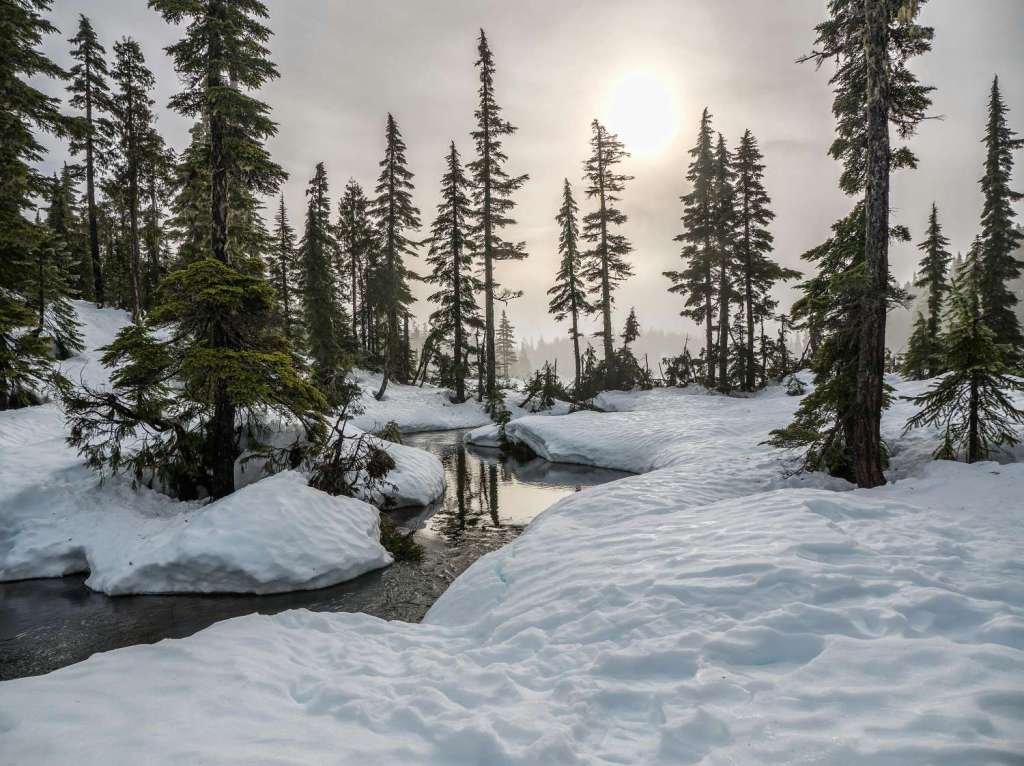
Gathering poems together recently for a “new and selected” volume gave me an opportunity to discover some recurring themes, as well as to reconsider work I’d forgotten about. Spanning over forty years, the new collection is underscored by a belief that we share with nature a “wise fecundity” for growth and healing. Two recent poems, Light of Day and Winter Pine, will appear in the next issue of EcoTheo Review (www.ecotheo.org > review).
Poem of the Day
You can receive a poem every day in your in-box just by signing up with the Poetry Foundation. Poems are selected by their editors from a 47,000-plus poetry archive and represent a diverse array of voices. (www.poetryfoundation.org)
A Selection from Refuge for Cranes
Eye of the Heart
1
Say you draw a circle around yourself
and walk freely there, surrounded by love.
Say you expand this circle,
farther than you’ve ever been.
2
The way a seed fulfills itself and fallen things
replenish the world — here now,
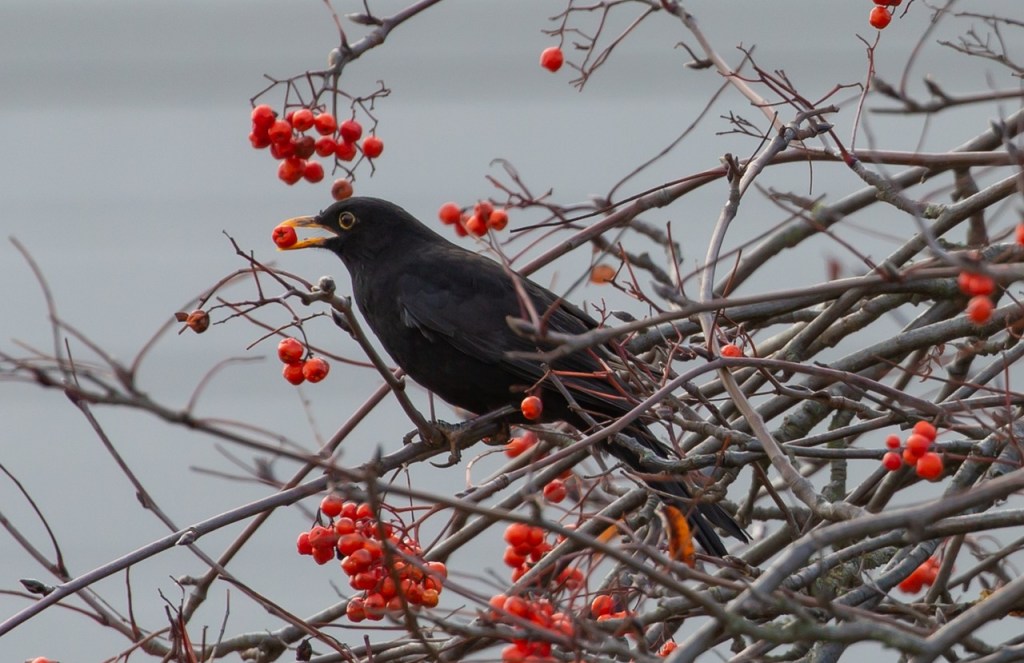
the ends of branches are bright with berries
and ripe for the feasting of blackbirds.
3
May you find yourself in a clearing after a light rain.
Refuge for Cranes, the title poem from the 2023 Wildhouse publication, appeared in the fall issue of Avocet, a Journal of Nature Poetry.
One Bright Pearl appeared in Braided Way (online) September 6, 2024.
darting ahead (haiku) appeared in Under the Basho, Fall/Winter, 2024
Deep Imagery
In the poem “A Blessing,” by James Wright, the language suggests a kind of magic is afoot as “Twilight bounds softly forth on the grass…” and two Indian ponies “come gladly out of the willows…” I don’t often reread this poem, but when I do, it’s always with a certain amount of anticipation. The music is low-keyed, the rhyme subtle, and by the time the last line arrives I’m completely under its spell. Critic James Seay, writing in the Georgia Review, commented on Wright’s work that, “I cannot recall experiencing anything like that keen sense of discovery which I felt in reading The Branch Will Not Break…” and…“what makes Wright’s poetry special…” is that “he has the gift of using language in a way that the human spirit is awakened and alerted to its own possibilities.”
The opening of another one of his celebrated poems, “The Jewel,” is also memorable: “There is this cave/ In the air behind my body/ That nobody is going to touch:/ A cloister, a silence/ Closing around a blossom of fire.” Known for the striking “deep images” of his work, this “blossom of fire” was no doubt hard won. “Poetry can keep life itself alive,” he has written. “You can endure almost anything as long as you can sing about it.” Winner of the Yale Younger Poet’s Prize, the Ohio- born poet (1927-1980) attended Kenyon College and the University of Washington where he studied with Theodore Roethke. Above the River: The Complete Poems was published posthumously in 1990 and won the Pulitzer Prize.
Connecting With Mystery
Poet Ada Limon observed in an interview recently that, “The connection between poetry and nature is that they both give us a moment to recognize what we’re going through. They give us space. They give us breath. They return us to ourselves” (Outsider, August 1, 2024). As part of her signature project as U.S. Poet Laureate, Limon has conceived of a coast-to-coast exhibit of poems engraved on picnic tables in seven national parks, including Mount Rainer in Washington State where visitors can ponder A.R. Ammons’ poem, “Uppermost.” On the east coast, Mary Oliver’s poem “Can You Imagine?” is engraved on a table located in Beech Forest, near Provincetown, Massachusetts. Limon invites everyone, poet or not, to share their responses to the poems and the landscape around them with the hashtag #youareherepoetry. “Poetry is a place that holds so much mystery…” “So often we stand in a forest and think, Oh there are no words, and that’s enough,” she said.
Opening of the River
An historic project to remove four outdated hydroelectric dams along the Klamath River was completed late this summer, allowing it to flow freely in its original channel for the first time in over a century. It’s hoped that restoration of the river, which runs for 257 miles from Central Oregon to Northern California’s Lost Coast, will enable endangered chinook and coho salmon to return to their original spawning grounds. According to water rights specialist Brad Parrish, it’s vital to reconnect “the features on the landscape that allow water throughout the basin to function naturally…” (“A Geography of Hope,” Earth Island Journal, August 8, 2024).
In Case You Missed It
In the article “Building Another Kind of Peace: How Poetry Can Help Calm Our Tumultuous Spirits” LitHub, September 4, 2024), teacher and writer Megan Pinto describes poetry as both a mindful and literary practice.
Contests
The Steve Kowit Poetry Prize offers $1,000 and publication in the San Diego Poetry Annual for a single poem. Judged by Ellen Bass, the deadline is October 15th.
The North American Review will award $1,000 and publication for a single poem. All entries will be considered for publication. Deadline is November 1st.
Mad Creek Books, of Ohio State University Press, will award $2,500 and publication for a poetry collection of at least 48 pages. Judged by Marcus Jackson, the deadline is October 9th.
“Wild” Exhibit
A year-long exhibit entitled “Wild” opened in June, 2024, at the U.K.’s Manchester Museum showcasing projects from around the world that have revived natural landscapes and saved wildlife from extinction. Curated by David Gelsthorpe, it includes films, photographs, text, and objects that tell the story of “some of the ways people are rewilding landscapes…” and “gives glimpses of how nature can thrive when given the opportunity,” Gelsthorpe has written in The Conversation (www.theconversation.com, June 4, 2024).
About Craft
I was up early looking at a poem I’d written the day before, instant coffee beside me at the laptop. I knew it wasn’t right and I wondered if I could fix it with a bit of cutting, some revising. Maybe get a whole new poem out of it. No such luck. This was one of those poems that needed more than revising and a few quick fixes. I saved what was left of it and moved it to another file, with some regret. But also with an appreciation for the process. I confess I love poems that write themselves, but most of them require attention, and really, that’s the whole point of poetry, isn’t it? Looking closely at our view of the world and self through the lens of language. This is how poetry saves us, I think. It teaches us to look deeply and with patience, and in doing so we open to uncertainty, to the messiness of the process, to disappointment, to loss. Here, I find a hint of the objectivity I could use more of, an appreciation for poetry and life as creative movement, as change.
Spotting the Redstart
As birder Dominik Mosur wandered around Pine Lake Park in San Francisco one day recently, he heard what sounded like the tick of a warbler. Peering through the foliage, he caught a glimpse of the red belly and black feathers of a slate-throated redstart. Commonly found in the southern hemisphere, from Mexico to Bolivia, this was the first such sighting in California, according to an article in SF Gate (“Mysterious bird never seen in California draws crowds to San Francisco park,” Amanda Bartlett, Aug. 6, 2024). Birders and biologists have offered various reasons the redstart might have ventured so far north, including global warming, monsoons in Northern Mexico that may have disoriented it, and the instinct to seek out new territory.
Into the Clear Blue Sky
July 22, 2024 was the hottest day on record on earth, according to NASA, caused in part by human activity and the proliferation of greenhouse gasses. Climate Scientist Rob Jackson’s new book, Into the Clear Blue Sky: The Path to Restoring Our Atmosphere (Scribner, 2024) presents an attainable vision for the future, pointing out that while cutting harmful emissions is essential, we also need to reduce carbon dioxide and methane to pre-industrial levels by such means as “direct-air capture” and “enhanced weathering.” Chair of the Global Carbon Project and a Senior Fellow at Stanford’s Woods Institute for the Environment, Jackson believes that this goal can be accomplished in a lifetime with the help of nature and technology, and it’s our moral duty to attempt to do so. Publisher’s Weekly calls Into the Clear Blue Sky “an exceptional inquiry into the fight against global warming.” Kirkus sees it as “A useful handbook for reducing one’s carbon footprint and encouraging neighbors and communities to do the same.” (Jackson is also a well-published poet, with poems in the Atlanta Review, Cold Mountain Review, LitHub, and elsewhere.)
I’ll be reading selections from Refuge for Cranes in tandem with guitarist Jos van der Wilk on Saturday, April 20th from 2 to 3 p.m. at “Books on B,” 1014 B Street, Hayward, CA. Please join us for this impromptu event in celebration of Earth Day and Poetry Month. (You can place an order or sign up for updates at http://www.booksonb.com/)
On Spiritual Verse: A Seminar with Kaveh Akbar. This online Zoom event will take place on two Wednesdays, April 17 and May 1 from 7 to 9pm, Eastern Time. Registration is required. Akbar is an award-winning poet and editor of the anthology, The Penguin Books of Spiritual Verse: 110 Poets on the Divine. https://www.poetrysociety.org
Goddess Art and Poetry, a program dedicated to “poetry lovers who appreciate the goddess archetype, as well as the gifts and stories that women bring,” will take place Saturday, May 18 from 4 to 6pm, Pacific Time. To apply to be a reader or for more information about this online event contact author and organizer Georgia Reash at https://www.georgiareash.wixsite.com
Haiku Notes
A new haiku (first line: “night jasmine,”) will appear in the spring/summer edition of Frogpond, the journal of the Haiku Society of America https://www.hsa-haiku.org.
A haiku on the theme of “transforming paths” was recently selected by the 2024 Golden Haiku annual competition (https://www.goldentriangledc.com). It will be displayed along with others on signage in a 44 block area of the Golden Triangle neighborhood of Washington, D.C. through April and on the website (first line: “lifting a stone,” haiku #73/142).
Books
The Poetry Home Repair Manual
The Poetry Home Repair Manual: Practical Advice for Beginning Poets, by Ted Kooser (University of Nebraska)uses examples from the former U.S. Poet Laureate’s own work and that of others to demystify the process of writing and revising. There’s also some helpful life advice here and a dose of good humor. My only quibble is with the title; this book isn’t just for beginners, but seasoned poets and readers, as well.
Writer’s Conferences
The 42nd annual Napa Valley Writer’s Conference will take place July 21 – 26, featuring poets Jane Hirshfield, Jan Beatty, C. Dale Young, and more. The application deadline is April 22nd. https://www.napawritersconference.org
The Las Vegas Writer’s Conference, from April 1 – 13, is notable for being all virtual and features writing sessions, Q & A opportunities, agent and editor sessions, and tips from industry experts. For more information visit https://www.vegaswritersconference.com.



 Jerome Gagnon Blog