Special Feature
Working in Multiple Genres: an Interview with Aline Soules
Interviewed by Jerome Gagnon
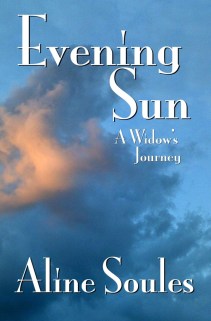
It’s a privilege to have poet and historical fiction writer Aline Soules as my guest today. Author of Meditation on Woman (bit.ly/meditationonwoman) and Evening Sun: A Widow’s Journey (bit.ly/evening-sun), her poetry has appeared in such publications as Kenyon Review, Houston Literary Review, Poetry Midwest, and the Galway Review. I thought it would be interesting to see what she’s up to these days and, in particular, to ask about her experience working in multiple genres.
Q. I know you’re a fairly voracious reader. What are you reading these days? Do you read more for information, amusement, or some other thing?
A. Answer to your last question first: Yes, yes, and yes—information, amusement, fun, the cereal box, I don’t care. I read all the time and have several books going at once, depending on where I’m reading—my comfy chair, my outdoor chaise longue, in bed. Right now, I’m reading the following: The Secret History of SOE, by William Mackenzie and Code Name: Lise: the true story of the woman who became WWII’s most highly decorated spy, by Larry Loftis, both as research for my novel; Lovers and Dancers, by Heather Ingman, for fun; some of the Collected poems of Louis Macneice (always read poetry); conversations with W. S. Merwin, by Michael Wutz and Hal Crimmel (so sad—no more poems from him). As you can see, anything goes.
Q. Can you share with us some of your favorite poets and novelists? What’s the appeal for you?
A. So many poets. I’ll start with Seamus Heaney, not just for his famous poems, like “The Field,” but also for Beowulf. I’ve noticed that, in “English” classes, students are often presented with the Iliad or the Odyssey. That’s fine, but why not our English classic, Beowulf? Heaney’s version is accessible and wonderful. Gerard Manley Hopkins—I go back to him all the time. The language, the imagery stun me. Many women poets, like Adrienne Rich, Carolyn Forché, May Sarton, Linda Gregerson, Rita Dove, Lucille Clifton, Elizabeth Bishop, Wislawa Szymborska—I could go on. But I also like “dead white males,” which isn’t the popular choice these days. I remember the controversy over Robert Bly’s Iron John: a Book about Men, yet it’s proved to be one of his most enduring works, an international best seller and a start to the Mythopoetic men’s movement in the U.S. There’s a danger in deciding that one’s ethnicity or gender has made one biased, thereby missing out on great language and thought, whether I agree with it all or not. Today, we have new writers—Ocean Vuong, Sherman Alexie, Amber Tamblyn, Kei Miller, Morgan Parker. I’m trying to understand the appeal of Rupi Kaur, the “Instapoet,” but I admit to struggling with her work.
Q. You’ve written poetry in the past and now you’re working on an historical novel. Do you find that any of the skills for writing poetry apply to fiction, or are they very different?
A. Great question. I use my poetry skills (if “skills” is the right word) in everything I write. Poetic language is key anywhere—the ability to come up with the right words, the right image, the best phrase to convey a feeling or a thought in a way that resonates with readers and makes what you write memorable. Writing is an endless struggle (why do we do this, again?), but, somehow, a struggle that’s worthwhile to me. In my current novel, I’m still not at the point of going through my work to struggle with the final language and phrasing, but, when I do (soon), it will be one of the more pleasurable parts of novel writing. I should add that poetry has also helped in all my writing. During my academic career, I wrote many articles and book chapters, all of which were improved by my poetry practice. In fact, I start all my writing days with poetry, unless I have a pressing deadline.
Q. In an interview, I think Ocean Vuong said that his new novel (On Earth, We’re Briefly Gorgeous) was written, in part, as a letter to his mother. How do you go about finding the right form (or forms) for a novel, or does it find you?
A. Forms are organic, I think, particularly in poetry, but also in other writing forms.
Even academic writing, with its introduction, method, results, and discussion/conclusion sections enables organic form within the structure. My novel is historical fiction and I’ve discovered that it’s like a jigsaw puzzle in some ways. I’ve written a full draft (more than once) and I still find myself cutting up the summary of each chapter and moving the pieces around on my table to decide the best order for the story. I may have a linear approach in my first draft (what happens? what happens next? etc.), but I won’t end up with that.
Q. Are you continuing to write poetry even as you work on a prose project? If so, do you have any advice for writers on how to balance these two disciplines?
A. I do write poetry—all the time. As mentioned above, I start with poetry when I sit down to write. It might be ten minutes or two hours, depending on how the work develops. Then I turn to my novel. I have no advice for writers on balancing multiple disciplines, other than to suggest that each writer must find his/her/eir path through the process. When I also wrote academic articles and book chapters, I interspersed those with poetry, too. I’m sure that some writers practice one or the other at any
given time, rather than engaging with more than one at the same time, but starting with poetry gets me in my writing frame. I’ve also noticed that when I’m “on a roll” with poetry, everything else is “on a roll,” too. The converse is also true.
Q. A sense of Time with a capital “T” seems to be all important in novels. Even if they’re written conventionally in the past tense, they’re generally supposed to represent the present — or, in the case of historical novels, the “distant” present. Where is your narrator located in terms of time? Have you encountered any challenges and/or benefits in exploring the notion of time in fiction?
A. My novel is written in close third, past tense. I’ve tried other points of view and other tenses, but have decided on this approach. The idea of “representing the present” is really the idea of engaging the reader so that he/she/ey feels “present” with the main character. I say character (singular) because I’m working in close third and the story unfolds from her point of view. I’ve never tried omniscient point of view, although the greats in the past used it all the time (Dickens, Thackeray, Trollope). As for the notion of time in fiction, I’ve never explored this directly, but Alan Lightman has. I particularly love Einstein’s Dream, which I re-read periodically, but any of his books are fabulous. He engages with physics principles, such as time. After all, who better? As a physicist and a writer, he’s worked at Harvard and MIT, where he’s currently professor of the practice of the humanities.
Q. Some writers advise that, once you have an outline, you should write straight through your first draft and not stop for anything, no editing or rewriting at all. How do you feel about this, and what’s your approach?
A. Ah, the pantser vs. plotter theme. The pantser, e.g., Ellen Sussman, goes for what happens? what happens next? and next? and next? (no outline). After that, she spends a year or two revising. The plotter, e.g., John Grisham, goes for plot everything out before he writes a single word. After that, he writes. I like a combination. I start with a form of the pantser method, where I write scenes about what comes to me but, not too far into what happens, I make a rough outline. After that, I move back and forth. If I wake up with an idea that excites me, I write the scene while it’s “hot,” whether it’s next in line or not. Otherwise, I follow and develop my outline and my scenes together.
In the end, what’s important about any method is that your reader makes “discoveries” along with you; otherwise, the reader won’t be engaged. The action may be too predictable. Of course, some readers like predictability (e.g., romance novels), but, I want surprises. The pantser method leads me to discoveries that surprise me and those are key for my novel because the reader will be surprised, too. I’m also endlessly amazed at how my characters tell me what to do. They go off on tangents I don’t expect — surprises. And that’s the joy of the written word, isn’t it? To be surprised, expanded, given an emotional journey as well as intellectual stimulation. Reading and writing and the book itself — what a great trio. What a wonderful world.
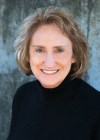 Find Aline Soules online at http://allinesoules.com,@aline elisabeth, https://www.facebook/com/alinesoulesauthor, and https://www.linkedin.com/in/alinesoules/.
For Aline’s Q & A with me, Writing Contemplative Poetry, please visit her blog or the Interview section on this site (see main menu).
(Note: I’ll be on hiatus from the blog through August, resuming in mid-September. I hope you’ll join me then.)
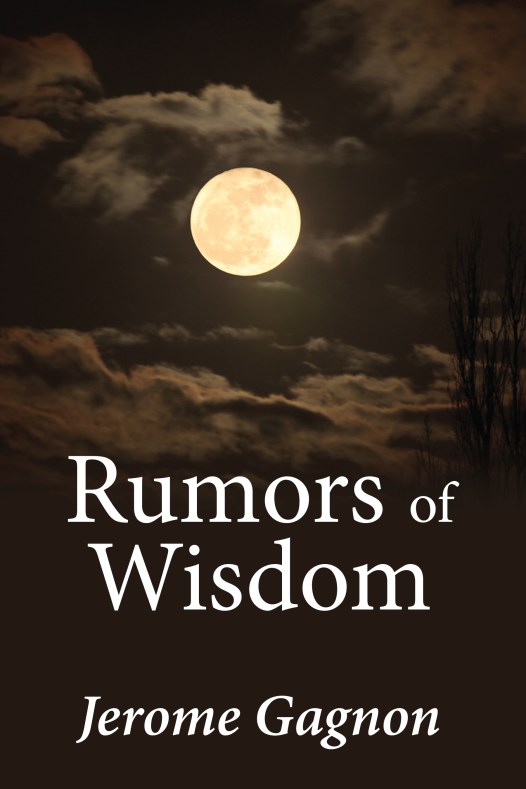
 Jerome Gagnon Blog