Season’s Greetings

As a friend of mine sometimes says, “The good news is that there is good news.” May we find it all around us in the beauty of nature, in the wonder of ordinary things and everyday activities. May peace prevail in the coming year and may love light our way forward.

Recent Poems

Gathering poems together recently for a “new and selected” volume gave me an opportunity to discover some recurring themes, as well as to reconsider work I’d forgotten about. Spanning over forty years, the new collection is underscored by a belief that we share with nature a “wise fecundity” for growth and healing. Two recent poems, Light of Day and Winter Pine, will appear in the next issue of EcoTheo Review (www.ecotheo.org > review).

Poem of the Day

You can receive a poem every day in your in-box just by signing up with the Poetry Foundation. Poems are selected by their editors from a 47,000-plus poetry archive and represent a diverse array of voices. (www.poetryfoundation.org)

A Selection from Refuge for Cranes

Eye of the Heart

1

Say you draw a circle around yourself

and walk freely there, surrounded by love.

Say you expand this circle,

farther than you’ve ever been.

2

The way a seed fulfills itself and fallen things

replenish the world — here now,

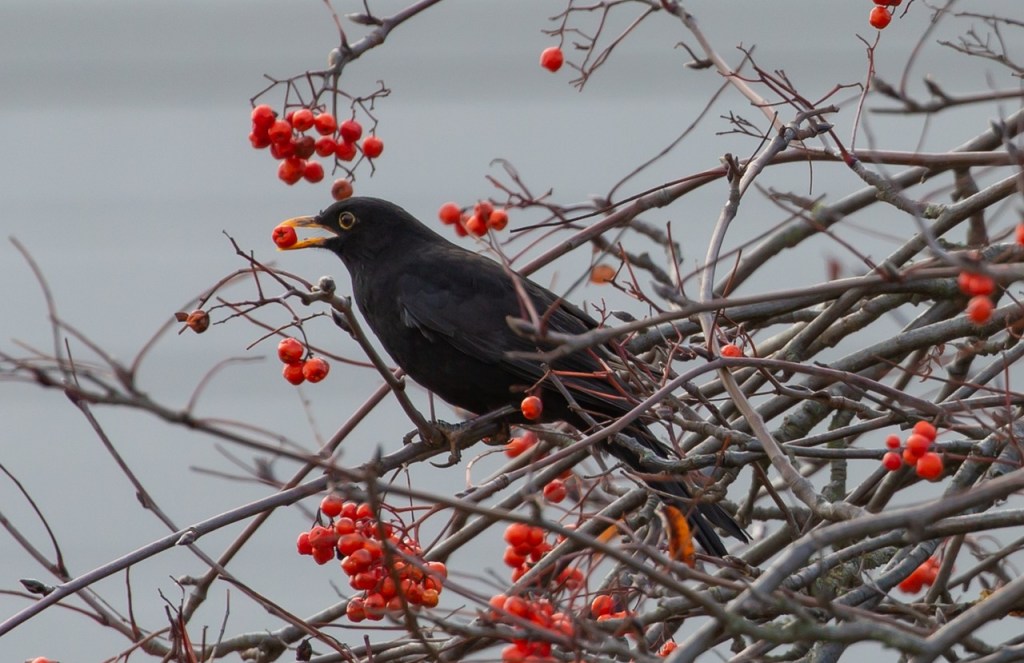
the ends of branches are bright with berries

and ripe for the feasting of blackbirds.

3

May you find yourself in a clearing after a light rain.

May you enter a spacious house

and be welcomed at the table.

May all your troubles vanish.

                                             – Jerome Gagnon

copyright, 2023

Poetry Events

I’ll be reading selections from Refuge for Cranes in tandem with guitarist Jos van der Wilk on Saturday, April 20th from 2 to 3 p.m. at “Books on B,” 1014 B Street, Hayward, CA. Please join us for this impromptu event in celebration of Earth Day and Poetry Month. (You can place an order or sign up for updates at http://www.booksonb.com/)

On Spiritual Verse: A Seminar with Kaveh Akbar. This online Zoom event will take place on two Wednesdays, April 17 and May 1 from 7 to 9pm, Eastern Time. Registration is required. Akbar is an award-winning poet and editor of the anthology, The Penguin Books of Spiritual Verse: 110 Poets on the Divine. https://www.poetrysociety.org

Goddess Art and Poetry, a program dedicated to “poetry lovers who appreciate the goddess archetype, as well as the gifts and stories that women bring,” will take place Saturday, May 18 from 4 to 6pm, Pacific Time. To apply to be a reader or for more information about this online event contact author and organizer Georgia Reash at https://www.georgiareash.wixsite.com

Haiku Notes

A new haiku (first line: “night jasmine,”) will appear in the spring/summer edition of Frogpond, the journal of the Haiku Society of America https://www.hsa-haiku.org.

A haiku on the theme of “transforming paths” was recently selected by the 2024 Golden Haiku annual competition (https://www.goldentriangledc.com). It will be displayed along with others on signage in a 44 block area of the Golden Triangle neighborhood of Washington, D.C. through April and on the website (first line: “lifting a stone,” haiku #73/142).

Books

The Poetry Home Repair Manual

The Poetry Home Repair Manual: Practical Advice for Beginning Poets, by Ted Kooser (University of Nebraska)uses examples from the former U.S. Poet Laureate’s own work and that of others to demystify the process of writing and revising. There’s also some helpful life advice here and a dose of good humor. My only quibble is with the title; this book isn’t just for beginners, but seasoned poets and readers, as well.

Writer’s Conferences

The 42nd annual Napa Valley Writer’s Conference will take place July 21 – 26, featuring poets Jane Hirshfield, Jan Beatty, C. Dale Young, and more. The application deadline is April 22nd. https://www.napawritersconference.org

The Las Vegas Writer’s Conference, from April 1 – 13, is notable for being all virtual and features writing sessions, Q & A opportunities, agent and editor sessions, and tips from industry experts. For more information visit https://www.vegaswritersconference.com.

Ada Limon Named 24th U.S. Poet Laureate

Ada Limon, author of six poetry collections and winner of the National Book Critics Circle Award, was recently named the new U.S. Poet Laureate, taking over the position held for three years bv Joy Harjo. A professor in the MFA program at Queens University of Charlotte, Limon called her appointment “an incredible honor” and the shock of a lifetime.” https://www.npr.org

Rumi’s Little Book of the Heart

This inspiring little book, with translations by Maryam Mafi and Azima Melita Kolin, offers an excellent introduction to the life and poetry of 13th-century Sufi poet Mowlana Jallaledin Mohamad Rumi (Hampton Roads, 2016). Born in Persia on September 30th, 1207 (in what is now Afghanistan), Rumi was the son of a renowned Islamic teacher/theologian, a role Rumi himself later assumed. But it wasn’t until the age of thirty-six when he met Shams of Tabriz, a wandering Sufi mystic, that Rumi’s spiritual genius blossomed, notably in the form of his ecstatic, voluminous poetry. In poem after poem he reveals an overwhelming experience of love that “appears on the wings of grace,” and questions, “How can one remain sober drinking Your wine?” Working from Forouzanfar’s edition of Rumi’s The Divan, Mafi and Kolin have created a lively collection that respects it source yet still feels contemporary. Interspersed among the poems are samples of Persian calligraphy by Hassan Behras Shayjani and Rumi’s signature emblem by Nutan Gungorencan. 

The Essential Rumi

At a conference in 1976, Robert Bly handed Coleman Barks some dated translations of the 13th-century Sufi poet Rumi, with the comment that, “These poems need to be released from their cages.” This was the beginning of a lifelong commitment for the former University of Georgia professor, now 85, whose streamlined versions of the great Rumi have now sold well over two million copies.

To say the poems in Barks’s The Essential Rumi (Harper One, 2004) are spiritual may be somewhat misleading. They don’t deal in hope or certainties, or conventional notions of good and bad. What they offer is clarity, openness, and an invitation to share in Rumi’s generous spirit. But there’s also the grief of separation and longing for the beloved — for union, for ecstasy, for the meeting of heaven and earth. In its mature phase, Rumi tells, us, love becomes “oceanic” and “begins to move with the whole” and (there is) “No better love than love with no object.”

Rumi was the son of a Moslem theologian and served in the same capacity for many years, but his poetry isn’t doctrinaire. It stems from a wide knowledge of religion and deep insight into the “living marrow” of being. Coleman Barks’s translations in The Essential Rumi (2004)containnot only Moslem references, but several Christian, Hebrew, Buddhist, and Sufi references, as well. In one poem, “How Finite Minds Most Want to Be,” Jesus, Joseph, and Moses are referenced; in another, “The Well of Sacred Text,” both the Qur’an and the Bible are mentioned in the same line. There are several other examples that demonstrate a kinship of faiths and Rumi’s fluency with their stories. In “A Pilgrimage to a Person,” he says, “Be a pilgrim to the kaaba inside a human being,/and Mecca will rise on its own.” To be “inside the majesty,” to “become a lover,” this was Rumi’s message and the heart of his realization.

I think of these poems almost as living things, as scrapings of DNA from the life of an extraordinary teacher/poet, one whose songs go beyond belief and provide a direct view into “the radiant depth of the self,” as Barks has put it. Jacob Needleman summed up the importance of these translations: “Through Coleman Barks’s inspired renderings, we tired, modern people have come not only to love Rumi, but even — a little — to love who and what Rumi himself loved.” In addition to the poems, which are themselves teaching devices, the introductory comments at the beginning of each section in The Essential Rumi are an education — in culture, history, religion, the use and limits of metaphor, and the fluidity of identity. And if that’s not enough, the volume closes with several savory sounding recipes. Like the poems, they’re guides for living a nourishing life.

Interviews

This interview with poet John Silbey Williams by the editors of the River Heron Review (https://www.riverheronreview.com, July 6, 2022) focuses on craft and offers some of the most practical advice I’ve ever heard from a writer. The author of nine books of poetry and winner of multiple awards, Williams also serves as editor of the Inflectionist Review.

Nicole Vassell interviews poet and playwright Claudia Rankin for The Independent (https://www.independent.co.uk), June 24, 2022.  The author of Citizen, An American Lyric, called one of the most influential poetic works of the 21st century, Rankin speaks candidly here about racism and her new play, The White Card

Writing Opportunities

New Women’s Voices Chapbook Contest, sponsored by Finishing Line Press, is now accepting poetry manuscripts “by a writer who identifies as a woman and has not yet published a full-length manuscript.” Open until September 15th, the contest offers publication and a prize of $1500.

Blue Mountain Review, an online journal out of Athens, Georgia, is currently accepting poetry, fiction, and visual arts (no simultaneous submissions) “What we sing saves the soul,” reads the introduction to their website. https://www.bluemountainreview.submittable.com/submit

Next time: The poetry of Japanese Zen poet Ikkyu (Crazy Cloud), and more.
News

Amanda Gorman Shines as the Sixth, and Youngest, U.S. Inaugural Poet 

During the inaugural ceremony in Washington D.C. last month, twenty-two year old Amanda Gorman delivered her poem “The Hill We Climb” just days after the deadly insurrection there. Describing herself as “a skinny black girl, descended from slaves, and raised by a single mother,” her poem aspires to “envision a way in which our country can still come together and still heal,” she said in an article by Alexandra Alter in the New York Times. Gorman, a recent Harvard graduate, was raised in Los Angeles where she sang in the youth choir and recited her poetry at St. Brigid Catholic Church in South Central L.A. “Í think a lot of times in cultures we think of the ways we can cleanse ourselves with water. I think of the ways we can cleanse ourselves with words, meaning that the poem was an opportunity to kind of resanctify, repurify, and reclaim, not just the Capitol Building, but American democracy and what it stands for,” she told Trevor Noah of the Daily Show. Inspiring and polished, Gorman’s performance was just about as good as it gets, at any age.

The focus on healing is shared by Richard Blanco, an openly gay Latino, who read his poem “One Today” at President Barack Obama’s second inaugural in 2013. Speaking to NBC’s Sandra Tulley, he suggested that “Poetry uses language to make us feel and think in new ways. That’s how it can help heal us — by asking questions we aren’t asking of ourselves and others, and by changing the conversation, the rhetoric, the discourse, so that we can see beyond the abstract language of sociopolitical jargon and arrive at greater truths,” said Blanco, who aims to “build bridges of empathy” with his poetry.

Maya Angelou was already a best-selling author with her candid memoir, “I Know Why the Caged Bird Sings” when she served as inaugural poet at the swearing in of President Bill Clinton in 1993.  Her recitation of “On the Pulse of Morning,” with its themes of inclusion and responsibility, was stirringly theatrical, calling on her training as an actor and speaker, and echoing the oral tradition of African Americans such as Martin Luther King, Jr. and Frederick Douglas. At least one critic has suggested that Angelou’s greatness is attributable to that poem, but her enduring message may be in her life as much as in those words, in her role as a black woman writer, teacher, activist, and humanitarian.

The tradition of the inaugural poem is relatively recent in U.S. history. In 1961, President John F. Kennedy was the first of four presidents to select a poet to compose and read an original poem for the inauguration. His choice of Robert Frost resulted in one of the most memorable images from that time. Standing at the podium, sunlight reflecting off his untamed white hair and the snow on the ground, Frost recited his poem, “The Gift Outright” — completely from memory. But that wasn’t the poem he’d planned on delivering. Glare from the snow prevented him from reading his original text, “Dedication, For John Kennedy His Inauguration,” composed for the occasion. Both works can be found in “The Poetry of Robert Frost” (Holt, Rhinehart, & Winston, 1969). More recently, Miller Williams and Elizabeth Alexander have also served with distinction as inaugural poets for the second terms of Clinton and Obama. For more on this, see “Inaugural Poems in History,” www.poets.org.

News

A Rare Voice

Diane di Prima (1934-2020)

Poet, memoirist, and activist Diane di Prima, who was born in Brooklyn and launched her writing career in New York City’s Greenwich Village, died October 25th in San Francisco where she had lived and worked for over fifty years. She was 86. The author of This Bird Flies Backward (her first book) and Memoirs of a Beatnik, she penned over 40 books of poetry and prose, including the best-selling Recollections of My Life as a Woman: The New York Years. One of the few women writers associated with the Beat Movement, she co-founded the New York Poets Theater and the newsletter The Floating Bear with playwright LeRoi Jones (Amira Baraka), was befriended by Jack Kerouac and Allen Ginsberg, and published by Lawrence Ferlinghetti’s City Lights imprint. Although suffering from Parkinson’s and arthritis in her later years, she managed to write up until a few weeks before her death by using a cell phone or dictating her work, her long-time partner, Sheppard Powell, told the L.A. Times (10/28/20).    

I remember the first time I heard her read from her poetry. It was in the early 1970s at a small publishing venue, Panjandrum Press, a few blocks from where I was living in San Francisco. I loved her presentation — confident, clear, and soft spoken. After hearing her read, I felt that we, the audience, had been gifted in the way that we’re gifted by the elemental sounds of a running stream or wind in the trees. There was nothing pretentious about her or her work, nothing felt forced or unnatural. I wouldn’t see her again until the early 80s, this time at the San Francisco Zen Center where she was teaching a one day workshop. Here, the class was down on the floor, practicing automatic writing and, as I remember, cutting up poems to rearrange them in unexpected ways. Later, in the 90s I heard her read once again, at City Lights Bookstore in North Beach. The room was packed and we were lucky to get seats. The occasion was the publication of her collection, Pieces of a Song (City Lights, 1990). Ferlinghetti was there, his blue eyes happily taking it all in, the crowd, the energy. Each poem was just right, belying the work that went into them, and they rolled off her tongue as if she was uttering them extemporaneously. I saw her a few more times after that, greeting people at a bookstore in San Rafael where a series of Tibetan Buddhist teachers was appearing. “You’re just an old hippie, aren’t you?” she asked me once, and I laugh thinking of that, now. How easy it was for her to break through the walls and find common ground, which is exactly what her poetry does. 

She took poetry out of the halls of academe and into the streets, the coffee houses, and the bookstores. Yet her work is informed by a wide range of knowledge and interests, including metaphysics, Sanskrit, and Buddhist philosophy (she was a practicing Buddhist), as well as her early study of Keats and Pound (she sought out Pound as a mentor while he was confined to St. Elizabeth’s Hospital). In 2009, as Poet Laureate of San Francisco, she read from her poem, “First Draft,” which still resonates today:

my vow is:

to remind us all

to celebrate

there is no time

too desperate

no season

that is not

A Season of Song

The New York Times has described Diane di Prima as “…a rare female voice in a male world…” while NPR has referred to her as “one of the most prominent voices of the Beat Generation.” She taught in the poetics programs at the Naropa Institute, the California College of Arts and Crafts, and the New College of California. Among her honors are the National Poetry Association’s Lifetime Achievement Award and an honorary doctorate from St. Lawrence University. Her most recent book, The Poetry Deal, was published by City Lights Foundation in 2014. In his review of that book in Poetry Flash, Brue Isaacson wrote that, “In principle and poetry, di Prima is all about people — loved ones, family, social observations of simple interactions that show larger truths.” Besides her husband, Sheppard Powell, she is survived by five children, four grandchildren, three great grandchildren, and two brothers, according to the L.A. Times.   

News

On the Road with Basho

Few poets personify the archetype of the wanderer so much as the 17th century Japanese writer Matsuo Basho (1644-1694). He developed a hybrid form, haibun, to reflect both his inner and outer journeys, alternating prose passages with three brief lines that came to be known as haiku. His travels were a way for him to keep his work fresh while also giving him a freedom he wouldn’t otherwise have had as a civil servant, scholar, or monk. In 1687, he started a solo journey that’s reflected in his travelogue, Notes for My Knapsack (Oi no kabumi). Here he describes riding his horse during a storm and stopping beside rice fields*:

winter rice fields,

my horse and I — shadows

in the rain  

Rather than rely on literary allusions to cherished sites, Basho wanted to visit them in person, and this practice gives his work veracity and a sense of immediacy as in this haiku, dated 1688 and composed while on a stay at the temple of Zenko-ji, located below Mount Obasute:

dissolving all thoughts

of the four sects — moonlight

over Mount Obasute

(The reference to sects refers to the various schools of Buddhism.)

In 1689, he embarked on a five months long journey with his friend and student, Sora, and this trip is portrayed in his most well-known work, The Narrow Road to the North (Oku no hosomichi). Moved by the turn out of his pupils to see the pair off in their little boat, he composed these memorable lines: 

grasses are fading,

birds are chattering — and tears

blur the eyes of fishes

Early on, they paused at a grotto at Back View Falls (Urami-no-taki), where they sat in meditation behind the waterfall, still considered a sacred pilgrimage site today:

hearing water fall

from the inside out — entering

summer’s temple

In his final years he visited Ueno, Nara, Kyoto, Edo, and Osaka, among other places, meeting with students, and continuing to cultivate the notion of lightness, or karumi. In Osaka, he became ill and died there in the fall of 1694. These are among his last lines, reflecting his dedication to haiku, renga, and life on the road: 

on the vast way —

not tilling the same small plot

year after year

worn and ill —

this traveling heart lingers

in autumn fields

*all haiku versions by jg

New Poems and Haiku

Thanks to the editors of the River Heron Review’s Poems, for Now, for selecting an ekphrastic poem inspired by the early Chinese painting, Eighteen Songs of a Nomad Flute: The Story of Lady Wenji. The painted scroll (artist unknown) and poems by Lui Shang still resonate today with themes of war and its consequences.Thanks also to the editors of the upcoming Buddhist Haiku Anthology: The Awakened One, to the editors of Cattails, a journal from the United Haiku and Tanka Society, and to Wales Haiku Journal. 

The Fires

As I write this, over a million acres have burned on the west coast, several people have died, and thousands have evacuated. The scope of the devastation is almost incomprehensible. My prayers go out to the victims of this tragedy and their families, and to all those men and women who are working to save property and lives — firefighters, healthcare workers, law enforcement, and so many others — our prayers and gratitude for your service.

The fires aren’t limited to California, Oregon, and Washington. Conditions stemming from global warming have contributed to “climate fires” in other states such as Colorado, Idaho, and Alaska. There are currently 97 large fires “that have burned 4.7 million acres across several states,” according to the National Interagency Fire Center. In Oregon, which has been particularly hard hit, the Mayor of Ashland, John Stromberg, has set up a website for contributions to help the recovery process. It can be found at ashland.or.us/ashlandresponse.

News

In the Marketplace

img_0182-2.jpgI remember running into poet Michael Palmer in San Francisco’s Civic Center Plaza one afternoon, back in the day when people weren’t glued to their cell phones and walking around the city like zombies. He was offering hand-written poems for a penny each. I wish I still had that poem, but like so many things, it disappeared into the biosphere from which it came. What remains for me, though, is the memory of a friendly street encounter, and the notion that poetry can be much more than a solitary pursuit.

Writing in the Atlantic, Bhavna Patel looks at street poetry around the country, noting that it can sometimes serve a therapeutic purpose (“A Verse to Go, Please: Poets and the Lives They Touch”). Patel tells the story of Neal Ewald, who asked poet Jacqueline Suskin for a poem at the Arcata Farmer’s Market in Northern California where she’d set up a folding chair and was balancing “a manual typewriter on her knees…. A small sign next to her read, ‘Poem Store — Your Subject, Your Price.’” What Ewald wanted was “a five-dollar poem about being underwater,” Suskin said. Rereading the impromptu poem while sitting in his car, memories of his late wife, Wendy, came “flooding” back to him, Patel writes. Eventually, he commissioned Suskin to write a longer poem to honor his wife’s memory.

San Francisco resident Mc Allen dedicates one day a month to “free-range poetry,” writes Caillie Millner in the San Francisco Chronicle (“Taking Time for a Line of Rhyme”). Standing at a favorite spot on Cole Street in front of the Reverie Café, Allen can be heard calling to passersby, “Would you like to hear a poem? It’s completely free.” One afternoon he read Tom Wayman’s, “Did I Miss Anything?” to a bicyclist and Mary Oliver’s “Humpbacks” to a group of “tech bros,” Millner notes. “I’d say that one in every dozen or so people will stop,” said Allen, who brings a trove of poetry books along with him in a toolbox and recites from a variety of poets. “You never know who needs a poem in their life at that moment.”

“Entangle”

“Sometimes I prefer not to untangle it,

I prefer it to remain disorganized,

because it’s richer that way,

like a certain shrubbery I pass each day…”

– Tony Hoagland

(1953 – 2018)

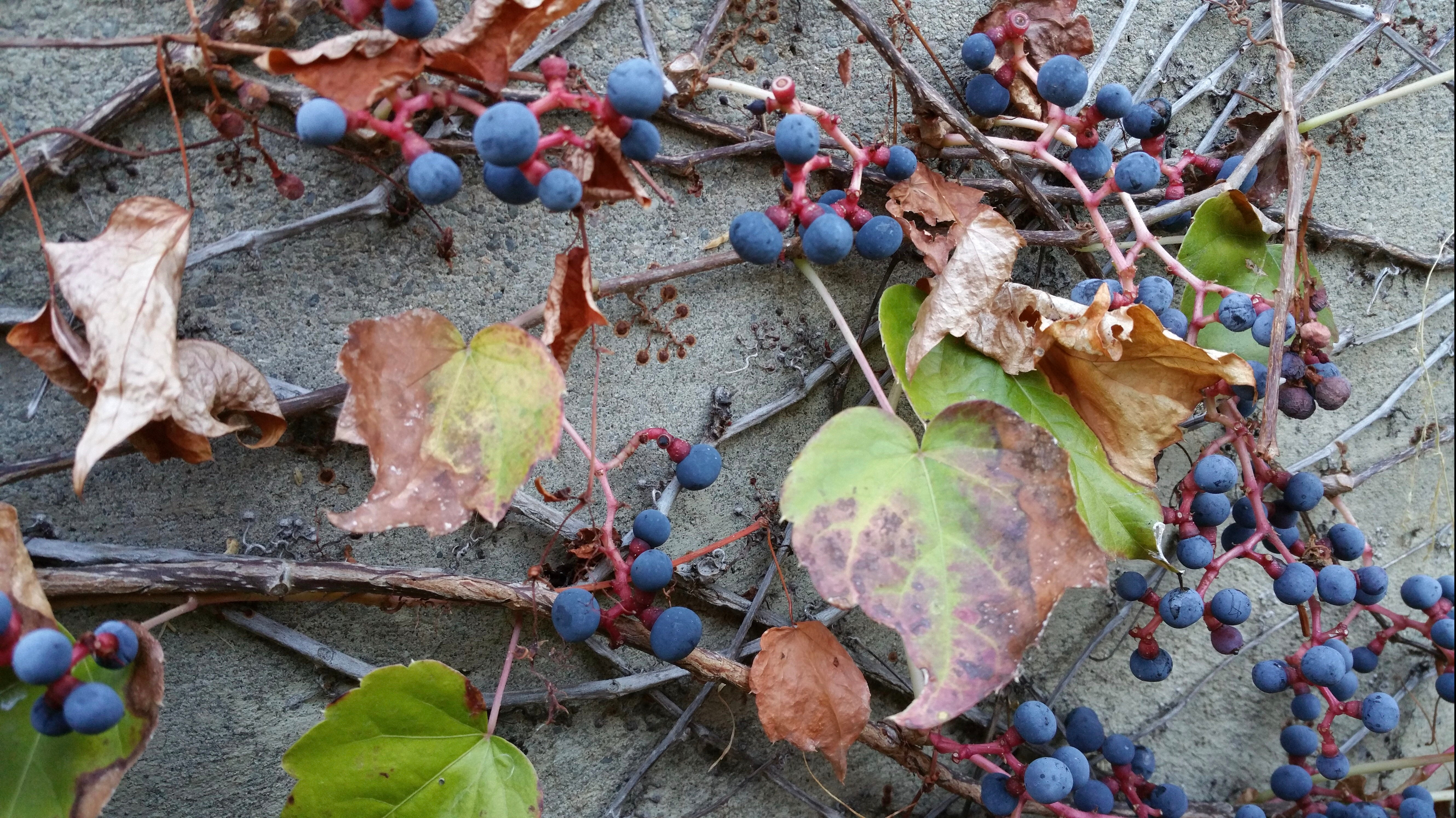
Plumbago, grape ivy, and morning glory vines have taken over a largely untended corner of the yard. At sundown, the blue flowers of the plumbago take on an electric glow against the faded violets and purples of the morning glories. When I consider this rampant mix, I think of the late Tony Hoagland’s poem, “Entangle,” which first appeared in the Paris Review. It’s a beautiful, wrenching work. It’s not just about the confluence of branches and flowers, of course, but memory and mortality, and our deep connections to each other. In his poem, “Lucky,” Hoagland” tells us… “If you are lucky in this life,/ you will get to help your enemy/the way I got to help my mother…you will get to raise the spoon /of pristine, frosty ice cream/ to the trusting mouth of your old enemy/because the taste buds at least are not broken/because there is a bond between you/and sweet is sweet in any language.” These are poems that draw you back for a closer look, to savor their details and the way they convey our foibles and frailty.

Calls for Poetry and More

Nowhere Magazine is sponsoring a travel writing contest for a poem, short story, or essay “that possesses a powerful sense of place.” The prize is $1,000 and publication. Submit online by December 31. http://www.nowheremag.com/contests

Quercus Review Press out of Modesto Junior College has announced their annual Poetry Book Award. The prize is $1,000, publication, and fifteen author copies. Deadline, December 28th. For details, visit http://www.quercusreviewpress.com

Willow Books is offering two prizes of $1,000 and publication for “a book of poetry and a book of fiction or creative nonfiction by writers of color.” Submit by December 15th. http://www.willowlit.net/willowbooks-literature-awards

Bayou Literary Magazine will award two prizes of $1,000 each for a poem and a short story. Submit by January 1st. http://www.bayoumagazine.org

Applications for the James Merrill House Writer-in-Residence Program in Stonington, Connecticut will be accepted until January 8th, 2019. Writers of all genres, including translators, are eligible for the four to six week residencies that come with a stipend. For more information, visit http://jamesmerrillhouse.org/residency/writer-in-reseidenceprogram

News

old-rustic-shed-1636419_1920

The latest issue from Poet Lore arrived and it was well worth the wait. Have been dipping in and out of “The Poetics of Liquid,” by Terrance Hayes, “Mysterious Me, a Brief Meditation on Personae,” by Leah Souffrant, and “Making it Real in the Time of Trump,” by Annie Kantar. These thoughtful essays explore the personal and public aspects of writing poetry, of living in an uncertain world. Not to be missed, Robert Schreur’s “Leaving Baltimore” and Barb Reynolds’ “March 10, 2016.” Grateful that my poem, “Pieces, Some Blue,” was included here.

Dodging the Rain is an innovative “blogazine” out of Galway, Ireland with quality writing and some amazing visuals. If you haven’t seen it yet, visit https://dodgingtherain.wordpress.com. “November Turning” appeared November 1st.

The Creative Writing Department at San Francisco State University recently established the Kay Boyle Poetry of Witness Award. A longtime writing professor at SFSU (and two-time O. Henry Award winner), Boyle was active for many years in Amnesty, while much of her fiction and poetry focused on the need for political awareness. Available to students of SFSU, the award offers a prize of $500. For writing contests open to the general public, see https://pw.org.

Each of the twenty-two poems in Ted Kooser’s final volume, “At Home” (The Comstock Writers Group, 2017), demonstrates his finely-honed powers of observation. “That Kooser often sees things we do not would be delight enough, but more amazing is exactly what he sees. Nothing escapes him; everything is illuminated,” says the Library Journal. Selections reflect the Nebraska farm life he knew and loved — a squirrel’s nest, a meteor shower, a barn door, a bat, a croquet ball, an owl, a milk jug — and each reveals the universal in the particular. Describing the cracks around an aged croquet ball as “rings on a planet,” he suggests, “…perhaps it is a planet, and not even one of the lesser ones, but something worth our full attention…”  Kooser’s poetry offers nothing less.