Putting a Full-length Collection Together: Part 1

Getting Started

There are a lot of articles out there about how to put a full-length collection of poems together and some of them are of the “ten easy steps” variety. But the truth is, it’s more complicated than that. The process calls on intuition, trial and error, and a good deal of rewriting and editing. A full-length collection can take three years or more of reworking and polishing before it’s ready to be published. Teaming with an experienced editor may speed up the process, but the time it takes to turn a manuscript into a book is valuable, even precious, to a poet’s growth. Why rush it?

Like writing a poem, assembling a collection of poetry is a non-linear process that invites deep immersion. Through close observation you begin to recognize the shape and purpose of the work. You note its weak points and its strengths. You go over it multiple times with various lenses, looking for connections and commonalities. You sink into the mystery of it, not looking for answers necessarily, but alert to questions.

In her article, “How Do You Pick and Arrange the Poems for a Poetry Collection?” poet and blogger Christina M. Ward, author of the collection “organic,” stresses the importance of cohesiveness (www.https:medium.com): “When I say plan a theme, I don’t mean that each poem needs to be about one topic, but the book as a whole needs to have a definable “purpose” or “theme” or “feel,” she says, suggesting that poets think of this as the “vision” of the book. It helps if a book is about something but not every collection needs a specific theme to be cohesive.

Selecting, Sectioning, and Sequencing

Once you’ve identified your vision for the book, you’re ready to begin selecting the poems that are most aligned with that vision. In assembling my second collection, I began by separating poems into two stacks, those that worked or had the potential to work, and those that clearly didn’t. At that point I had about thirty-five poems and knew I needed more. Searching what I laughingly call “my files” — a couple of drawers full of loose papers and others in manila folders — I found a few more possibilities, bringing the total to fifty-one, just enough for a full-length collection. I wasn’t exactly off and running, but there was a glimmer of a hope that I might find a book in there someplace. 

One way to jump-start your collection is to divide the manuscript into sections. This will let you zone in on specific areas and can make it feel more manageable. It also offers visual breaks, along with an opportunity to add section titles and related inscriptions that can help to transition the reader from one thematic focus, or mood, to the next. But like everything else in the process, these details are apt to change. For me, those changes are a sign that I’m beginning to hone in on the finer details. At some point, sections and inscriptions may appear superfluous or even interrupt the flow — if so, it’s okay to let them go. They will have served their purpose like scaffolding on a building site. 

One of the most challenging tasks in putting a collection together is sequencing. Phoebe Stuckes, a former Foyle Young Poet and author of Platinum Blonde (www.https:poetryarchive.org), compares the process to stand-up comedy, in which you “tell your second best joke at the start of your stand-up set and your best joke at the end.”  She suggests printing out your manuscript so you can physically try out various sequences until you find the right one. I’d compare this stage to putting an album of songs together; you want some ballads and some up tempo numbers, some highs and lows, some short numbers and some longer ones. These variations will add texture and interest. Avoiding repetition is key. If you have two poems that are both on the same topic and use much the same vocabulary, you’ll need to rework one or drop it. Feel free to experiment. Playing with different formats such as prose poems and concrete poems can reap unexpected benefits, not only in the way the poems look on the page, but in how they “mean,” and can open the work up in unexpected directions. If you decide later that an experimental poem doesn’t make the grade, you can always pull it.   

Having an accurate table of contents early on is an advantage if you decide to submit the manuscript on the spur of the moment or if you want to share it with a trusted reader for their input. Yes, it’s going to change a lot over the course of the project, but the benefit is that you can scan it from time to time to get a sense of how the “narrative line” is evolving (more on this later). It’s also a good place to enter any notes about what you think might be missing. Do you want a title poem? If so, where do you think it ought to go? Scanning the table of contents will help you decide. Granted, it can be tedious to update page numbers as you shift sections or shuffle poems around, but I’ve found that it’s worth it. This is the uninspiring part of the work, the busy work you might call it, that nevertheless helps to bring a sense of structure to the chaos. (Next time: Looking at structural models and selecting a title.) 
News

Writers Walking

I’ve always enjoyed walking, maybe never so much as in my student days when I took to the streets and stairways of San Francisco, and I was always happy when others joined me. On one of my favorite walks we’d start at Grace Cathedral, not far from where I lived, heading up to Ina Coolbrith Park on Russian Hill, and then descending via Macondray Lane to North Beach for a much needed breather and cappuccinos. On another walk, I’d climb one or another of the narrow stairways above Mill Valley, following an old fire road for a surprising view of the bay in the distance. Now, during the renewed shutdown, walking turns out to be a good way to social distance and keep active.

There’s just something about it that’s relaxing and invigorating at the same time. More than that, it can be inspirational, as attested by several writers over the years. Of the 19th century romantic poets, William Wordsworth swore by his “rambles” through the Lake District in northern England, extended walks that resulted in the “spontaneous overflow of powerful feelings” in poems such as Tintern Abbey. His sister, Dorothy Wordsworth, wrote of her sibling that “starlight walks and winter winds are his delight.”

Henry David Thoreau and Ralph Waldo Emerson were both inveterate walkers. “Me thinks that the moment my legs begin to move, my thoughts begin to flow,” Thoreau observed, while Emerson advised that, “Few people know how to take a walk. The qualifications are endurance, plain clothes, old shoes, an eye for nature, good humor, vast curiosity, good speech, good silence, and nothing too much.”

In the 20th century, Virginia Woolf, Ernest Hemingway, and Richard Wright all walked as a way to relax and promote creativity.  Novelist Jack Kerouac’s semi-autobiographical novel, The Dharma Bums, described a hiking trip he took with poet Gary Snyder in the Sierra Nevada Mountains in the early 1950s. Known today as much for his environmentalism as his poetry, Snyder has written that, “Walking is the great adventure, the first meditation, a practice of heartiness and soul primary to humankind. Walking is the exact balance between spirit and humility” (The Practice of the Wild, Counterpoint Press).

For myself, I generally prefer walking in tamer environs, say on a sidewalk at the edge of a park where I don’t have to worry too much about falling off a cliff or encountering a dangerous critter, as poet Mary Oliver once did on a Florida sojourn. (She came uncomfortably close to an alligator.) Then, my mind is naturally free from nagging thoughts and I start to pay attention to the world around me. Sometimes these walks prompt a poem or a haiku, sometimes not. In either case, I feel better for it.

Why is walking such a balm? A study in the British Journal of Sports Medicine found that, “those who adhered to a walking program showed significant improvements in blood pressure, slowing of resting heart rate, reduction of body fat and body weight, reduced cholesterol, improved depression scores with better quality of life and increased measure of endurance.” If that’s not enough, a recent study from Stanford University found that “walking boosts creative output by 60 percent…” Research suggests that, because walking utilizes both the left and right sides of the body, it enhances communication between the two hemispheres of the brain. That can translate to feeling more relaxed, more in tune with body and mind, and more open to inspiration.  Contemporary essayist Rebecca Solnit puts it this way: “Walking, ideally, is a state in which the mind, the body, and the world are aligned, as though they were three characters finally in conversation together, three notes suddenly making a chord” (Wanderlust: a History of Walking, Granta Publications.)

If you’re planning an outing, you may want to check out these guides: Walking San Francisco, by Tom Downs, Wilderness Press; Stairway Walks in San Francisco, by Adah Bakalinsky, Wilderness Press; Walking San Francisco’s 49-Mile Scenic Drive, by Kristine Poggioli and Carolyn Eidson, Craven Street Books. If you’re feeling more adventurous, consider Moon 101 Great Hikes of the San Francisco Bay Area, by Ann Marie Brown, Moon Travel, or 100 Hikes in the San Francisco Bay Area, by Mark Soars, Mountaineers Books.

Ruth Weiss

“Original,” “innovative,” and “a trailblazer” are all words that have been used to describe poet Ruth Weiss, sometimes referred to as the mother of the Beats. “I don’t quite like the term Beat, bohemian would be more appropriate for me,” she once said. One of the few women poets performing on the San Francisco scene in the 1950s, Weiss died July 31 at her home in Mendocino County, California. She was 92 years old. She was the first to read her work with live jazz accompaniment and created “a whole new performance art,” according to Jerry Cimino, founder of the Beat Museum in North Beach. It was a move that was soon adopted by others, including poet and publisher, Lawrence Ferlinghetti. As a child, Weiss fled Nazi Germany with her family, emigrating to the United States where they settled in Chicago. The author of twenty books and a contributor to numerous anthologies, including A Different Beat: Writings by Women of the Beat Generation (1997), she also appeared in several films, including  Luminous Procuress (1971), directed by Steven Arnold. An award-winning documentary, ruth weiss, the beat goddess, directed by Melody C. Miller was released last year and, just recently, Weiss was awarded the 2020 Maverick Spirit Award from the Cinequest Film Festival.

Poetry in the Schools 

Poet and critic Kadish Morris tells how “poetry saved me” and why denying it to students is a mistake, particularly for speakers of English as a second or other language. (August 9, 2020, www.theguardian.com.)


News

Recent Books

Urgency and Tradition in Jericho Brown’s Latest Collection

One of the traditions referred to in Jericho Brown’s Pulitzer Prize-winning collection, The Tradition (Copper Canyon Press, 2019), is poetical — he’s writing in the lyric tradition, short poems that express intense feelings about his experiences as a black, gay man from the south.  (He’s currently an Associate Professor and Director of Creative Writing at Emory University in Atlanta.)  Another is political, echoing those writers before him who have depicted the pain and injustice African Americans have experienced in this country for hundreds of years.  In their citation for the Pulitzer, the judges stated that his lyrics “combine delicacy with historical urgency in their loving evocation of bodies vulnerable to hostility and violence.”  This is especially apparent in the title poem, which compares the lives of at-risk black men to the brief lives of flowers, and in Bullet Points, both of which have been widely circulated since the violent deaths of George Floyd and others at the hands of police.  Bullet Points “was not born out of a sense of protest from me.  It’s a poem born out of a sense of desperation that comes from a fact in my life.  I don’t want anybody saying that I killed myself if I’m ever in police custody,” Brown has said (The Guardian, June 5, 2020).  Demonstrating that the personal is the political, these poems “question why and how we’ve become accustomed to terror in the bedroom, the classroom, the workplace, and the movie theater…”, the publishers have written.  “Brown interrupts complacency by locating each emergency in the garden of the body, where living things grow and wither — or survive.”  The Academy of American Poets offers lesson plans for poems about social justice, including The Tradition; for more information, visit their site at www.poets.org.

In the Lateness of the World, by Carolyn Forche’

In Against Forgetting: Twentieth-Century Poetry of Witness (Norton, 1993), poet Carolyn Forche’ gathered the work of more than 140 twentieth-century poets who bear witness to war, imprisonment, torture, censorship, or exile, defending “the individual against illegitimate forms of coercion” (Mason Gazette).  The landmark anthology appeared twelve years after the second collection of her own poetry, The Country Between Us (Jonathan Cape, 1981), which was based on her experiences in El Salvador in the 1970s with Amnesty International.  Writing in the Los Angeles Times Book Review, Art Seidenbaum observed that those poems “chronicle the awakening of a political consciousness and are themselves acts of commitment: to concepts and persons, to responsibility, to action.”  The 1981 Lamont Poetry Selection, it was also the winner of the James Laughlin Award.  Now, in her most recent volume, In the Lateness of the World (Penguin Press, 2020), Forche’s unflinching gaze takes in landscapes from five continents, scarred by the effects of violence and environmental degradation.  In The Museum of Stones, the first poem in the collection, the poet gathers images of stones from “ruins of choirs and shipyards…from temples and tombs…stone from the tunnel lined with bones…stones where the bells had fallen, where the bridges were blown…”, curating them on the page with the dedication of an anthropologist.  Contemplative and elegiac, the poems invite us “to consider the sometimes unrecognized, though always felt, ways in which power inserts itself into our lives and to think about how we can move forward with what we know,” writes Hilton Als in the New Yorker.  A selection of Forche’s poems can be found on the website of The Academy of American Poets, along with lesson plans; for more information, visit www.poets.org.

Behind the Mask: New Poetry Anthology by Humboldt Poets

News stories about the pandemic that cite the alarming rise of cases around the country can leave you feeling depressed, if not hopeless.  An abundance of facts and figures often leaves out the human element.  A new anthology of poetry: Behind the Mask, 40 Quarantine Poems from Humboldt County, edited by David Holper and Anne Fricke, addresses that gap.  Holper, who is Poet Laureate of Eureka, CA, says that “the book captures the range of emotions that many people are feeling during this time,” according to an article from The Lost Coast Outpost (www.lostcoastoutpost.com).  The new book evolved from a Facebook group, “Poetry on the Edge.”  After the site had accumulated over 100 poems, Holper thought it would be a good idea to collect them in a book and solicited further submissions, asking poet Anne Fricke to help with the project.  “It’s frightening— the virus, the economics — some people are depressed by it,” he said.  “I think you’ll see that in some of the poems.  But some are also whimsical.  We tried to include a range.”  Behind the Mask is available to purchase in print or can be downloaded free from the above site.

News

Silence

We began to notice the silence in the first few days after the shutdown.  There was no longer the white noise of traffic from the nearby state highway, and the comings and goings of cars on our block had tapered off.  Something seemed different in the call of birds, too, as if they were testing this new quiet, listening to the resonance of their songs.

Walking to the local market yesterday, I found myself sauntering — a practice, and a word, that seems to have gone out of fashion.  It’s not so much about the need to hurry to my destination these days as it is about enjoying the scenery along the way.   The hills are still green.  A few horses graze below the ridge.  Roses are in bloom, and the scent of flowering citrus blossoms is in the air.  Does silence have a scent?  Well, no, not exactly.  But it permeates the scent, just as it permeates my thoughts.

I hope the current shutdown helps to “flatten the curve” of COVID infections — that we’ll all be back to work, again, soon, that schools can safely reopen, and business as usual will return to our communities.  But this may not happen as soon as we wish, at least not entirely.  So I also hope that something of this moment stays with us, something more than uncertainty and fear.  That we’ll listen for the silence that underscores political messaging, birdcalls, and the sound of our own breathing.

Writing Prompt: Settling in with Haiku

Haiku have a way of occurring out of the blue, but you may want to try a “haiku walk” in your neighborhood or in a local park to refresh your senses and mind to what’s going on around you — to nature “as it is,” minus the usual preoccupations.  In Japan, these walks are known as ginkoo (gin -singing, praising, poem-making; koo – walking).  You may want to take a notebook and pen along so that you can jot down a few key words about your experiences.  These may serve the basis of one or more haiku later.

If that’s not possible, list some of the memorable places you’ve visited.  What was the outstanding thing, event, or experience about your visit to each of them?  Compose a haiku about one or more of these places, incorporating a seasonal image, or possibly a reference to your feelings or state of mind at the time.

News

The Comfort of Haiku

The practice of haiku cultivates awareness of what is, and this awareness can offer a kind of psychological comfort for what ails us. Shiki, who suffered from tuberculosis, rarely addressed his condition directly in haiku.  Yet, his verses provided him with a more expansive lens with which to view his condition and the world, one that encompassed both light and dark.  I like this one:*

winter cold —

gulping medicine, saving

the tangerine for later

Here, the tangerine suggests a healing purpose as much as whatever formula Shiki was ingesting: beauty is medicine, too, and so is color, shape, and texture.  And then, what a comfort to hold a small, perfectly ripe tangerine, to peel it, expose the pulp, release the pungent scent, and taste the juicy tartness.  Even on his sickbed, Shiki noted the allure of all this.

African-American novelist Richard Wright (“Native Son”) was introduced to haiku through the translations of R. H. Blythe in 1959 and, during the last eighteen months of his life, he wrote hundreds of them.  Struggling to recover from amoebic dysentery and often bedridden, “he was never without his haiku binder under his arm,” writes his daughter, Julia, in the introduction to Wright’s collection, “Haiku, The Last Poems of an American Icon,” (Arcade, 2012).  “I believe his haiku were a self-developed antidote against illness, and that breaking down words into syllables matched the shortness of his breath…”, she observes.  Others have suggested that his passion for haiku was something more than therapeutic, that it offered the structure (and brevity) for deep contemplation, and for transcending the political and racial boundaries of his work.  I think that both of these suggestions are probably true — that writing haiku kept the streams of Wright’s creative imagination alive during a time of stress and suffering, and helped to allieve that suffering, as well.

*version by j.g.

News

Reading and Writing Haiku: A Brief Introduction

The basics of haiku are straightforward, making it accessible to just about everyone.  In English, haiku are traditionally written in the present tense in a format of three lines; the first line is composed of five syllables, the middle line of seven, and the last line of five, for a total of seventeen syllables.  But modern examples often vary from this 5/7/5 format.  The pronoun “I” is generally excluded, as are rhyme and metaphor; punctuation is often unconventional or nonexistent, with dashes or ellipses sometimes serving as breaks between images.

These norms evolved from an earlier poetry form, the renga, a linked, collaborative effort that begins with a three-line verse called hokku.  The great renga master, Matsuo Basho (1644-1694), also practiced writing hokku apart from renga, and is now recognized as the “father of haiku.”  But it wasn’t until poet and critic Masaoka Shiki (1867-1902) advocated calling these compact verses “haiku” that it was formally acknowledged as an independent literary form.

The main purpose is to express a slice of life and, in so doing, enhance awareness of ourselves and the world.  Mitsu Suzuki, author of A White Tea Bowl: 100 Haiku from 100 Years of Life (Rodmell Press, 2008), has observed that haiku is “a practice of meditation and life…” that “helps us penetrate deeply into ourselves and cleanse ourselves.”

Probably the most well-known example is by Basho:

The old pond.

A frog jumps in —

Plop!

(trans. R.H. Blythe)

In this version of the Japanese original, the fundamental event is depicted through two primary images and an aural cue: out of the waters of stillness comes life, movement, and sound.  The emphasis here is on direct perception — the verse invites the reader to share the essence of the moment, without an obvious authorial persona.  As authors William J. Higginson and Penny Harter point out in The Haiku Handbook (Kodansha USA, 2013), the ideal of the Basho School-haiku is that “both the language of the poem and the mind of the poet should be transparent to the reader….”  Much has been written about these three lines, yet there’s a playful, even celebratory aspect to them that’s often overlooked, and this aspect presages Basho’s later work which stresses karumi, or “lightness of tone.”

While haiku generally doesn’t use the pronoun “I,” it nevertheless recognizes the person and the richness of human feeling — from wonder, ebullience and laughter to loneliness, anger, and sorrow.  Here’s one by Issa that’s somewhere in between the poles:

blossoms everywhere

this New Year’s Day — yet something

remains unopened

(version by j.g.)

A more thorough introduction to the subject would include reading a few anthologies and browsing through a handful of dedicated journals.  Or, you may want to start by reading the “four greats” — Basho, Buson, Issa, and Shiki.  As you do, you‘ll notice that their work often contains a reference to the season.  This practice stems from the hokku which traditionally contained an image to date it (cherry blossoms in early spring, for instance).  Many haikuists today continue to evoke nature through the use of official “kigo,” words that allude to the seasons and affirm our deep connection to the elements, and to plant, animal, and insect life.

Among the many Japanese poets who expanded the scope of nature-focused haiku is Keneko Tohta (1919-2018), who incorporated his WWII experiences as well as surrealist-like images akin to imagist poetry.  Americans such as Richard Wright, Jack Kerouac, Jane Reichhold, Nick Virgilio, and Elizabeth Searle Lamb continued to broaden the scope so that, now, it’s hard to imagine many topics that would be out of bounds.  Reading old and new haiku from around the world provides an opening into a dialogue that spans time and cultures.  Writing and sharing it with others, both in person at haiku meetings and in print and online journals, we can cultivate that dialogue within ourselves and our communities.

Suggested Reading

Seeds from a Birch Tree, Clark Strand, Hyperion, NY, 1997

Haiku Mind: 108 Poems to Cultivate Awareness and Open Your Heart, Patricia Donegan, Shambala, 2008

The Essential Haiku: Versions of Basho, Buson, and Issa: edited by Robert Hass, The Ecco Press, NJ, 1994

The Genius of Haiku: Readings from R.H. Blythe on Poetry, Life, and Zen: The British Haiku Society, Hokuseido Press, 1995

The Haiku Handbook: How to Write, Teach, and Appreciate Haiku: by William J. Higginson and Penny Harter, Kodansha USA, 1985

A Zen Wave: Basho’s Haiku and Zen: Robert Aitken, Weatherhill, 1978

A White Tea Bowl: 100 Haiku from 100 Years of Life, by Mitsu Suzuki, edited by Kazuaki Tanahashi and Norman Fischer (Rodmell Press, 2008)

Resources

Haiku North America sponsors biennial conferences on haiku that include readings, panels, workshops, and more.  www.haikunorthamerica.com

Haiku Poets of Northern California sponsors an annual reading that’s open to the public, and a members only anthology.  www.hpnc.org

The Haiku Society of America promotes “the writing and appreciation of haiku and haiku related forms in English” and publishes the journal Frogpond.  www.hsa-haiku.org

Journals

Frogpond

Wales Haiku Journal

Hedgerow

Bottle Rockets

The Heron’s Nest

Modern Haiku 

Presence

Dodging the Rain

Mayfly

News

Poetry Contests: Pros and Cons

Every other small magazine seems to have a poetry contest of one kind or another, whether it’s an “editor’s choice” for an individual poem or group of poems, a themed contest, or a competition offering publication for a chapbook or a full-length manuscript.  It’s one way for editors to drum up interest in the magazine and cultivate new subscribers.  Obviously, contests are also an alternative for new poets to attract the attention of editors and get their work published.  From my experience, I’d say that participating in contests has more pluses than minuses.  I’ll address the pluses first.

I’ve found that the prospect of entering a contest has motivated me to compose new work, revise and polish older poems, and to reconceptualize a manuscript.  Recently, I entered a contest that asked entrants to write poems using select words — the one that interested me was “sforzando.”  I didn’t have a clue what it meant but, looking it up, I found that it was a mark on sheet music “to make a strong, sudden accent on a note or chord.”  That one word was enough to inspire a short poem which I gleefully sent out along with the fee (more about those later).  It really wasn’t a very impactful poem and I wasn’t surprised to hear back in short time that it wasn’t a winner.  The good news, though, is that I still appreciated the poem for what it was, and more importantly, for what it might be.  It wasn’t showy, and it wasn’t emotionally riveting like many of the winning poems I’ve read, but with a little more work and a few more lines, it came into focus — much improved I think, and very much on theme for a new collection I’ve been working on.

Winning a contest generally comes with publication and often a cash prize.  But, it can also be a confidence booster.  Winning the Louis Award (Concrete Wolf Press, 2019) for my first full-length volume, Rumors of Wisdom, gave me the boost I needed to tackle a second volume, and a third.  Although I’m still revising and polishing both, I don’t think I would have gotten this far without knowing that someone out there found my work engaging enough to publish it.

One of the downsides to contests is that the entry fees seem to be going up and up.  I recently decided to forgo one that charged forty dollars, and find that it pays to shop around for a suitable contest that doesn’t drain your wallet, or better yet, one that’s free.  (For a list of free writing contests, visit www.https//jerryjenkins.com and www.https//trishhopkinson.com.)  Also, keep in mind that many publishing houses have no cost, open submission periods for manuscripts and don’t require that a writer have an agent.  These “over the transom” submissions may seem like a long shot, but definitely shouldn’t be ignored.  Other firms prefer to see a book proposal first.

The other problem with entering contests is learning how to spot illegitimate ones from the real thing.  The Council of Literary Magazines and Presses (www.https//:clmp.org) discusses the importance of ethical guidelines for literary contests while recognizing that there is a range of ethical models.  Most legitimate contests post their standards along with guidelines — if they don’t, be wary of entering; one of the very real risks is that you may be signing away your future publishing rights by winning.  In her article, “Confessions of a Contest Junkie,” Carolyn Moore discusses the problem of poetry anthology “scams,” but just as valuable is her discussion of how to target your work for the right contest (www.https//winningwriters.com).

New Anthology Praised by American Library Association

The American Library Association’s BOOKLIST Magazine described the recently released anthology, Loon Magic and Other Night Sounds, as “uniquely tuned to the beauty and fear expressed in the night’s symphony…offering unexpected moments of connection and reconciliation.”  Kudos to Editor Whitney Scott of the TallGrass Writers Guild!

News

The Ordinary in Haiku

To practice haiku is to be attentive to the ordinary, as Basho pointed out.  “If you describe a green willow in the spring rain it will be excellent as a renga verse.  Haikai, however, needs more homely images, such as a crow picking mud snails in a rice paddy,” he wrote.  (The Essential Haiku, Versions of Basho, Buson, and Issa, edited by Robert Hass).  Here’s a classic haiku by Basho that depicts the ordinary in nature (translated by Burton Watson):

     “Day by day

the barley ripens,

     the skylarks sing.”

In good times the crops ripen and birds sing, yet sometimes we forget how important these seemingly mundane events are.  Haiku such as these invite us to return our attention to everyday  subjects — the changing of the seasons, the music of tree frogs in the branches, mist enveloping the moon, just-washed leeks in a bucket.

The ordinary isn’t without its surprises, as in this observation by Buson:

a shaft of sunlight

on the sleeve of a paper robe

turns it to brocade *

What could be more unassuming than a paper robe?  Yet, in these lines, Buson reveals the ordinary and the extraordinary as one, related by a trick of light, a matter of perception.

Here’s another by Buson:

at year’s end, walking

along Cherry-Flower river —

garbage floating past *

This haiku might have been written today about any number of our polluted rivers.  While the sight of floating garbage may have been a sorry one for Buson, it nevertheless conveys an eye that isn’t attached to romanticized notions of beauty.

This focus on the ordinary in Japanese haiku can be found in Zen, too, as exemplified by the maxim byojo shin, kore michinari (ordinary mind is the way), attributed  to Zen master Mazu Daoyi.  But not all early haiku poets studied Zen, as Stephen Addiss points out in The Art of Haiku.  Many were followers of other sects such as Taoism, Confucianism, or Shintoism.

In this haiku from 1813, Issa evokes a still-popular form of Buddhism through an ordinary, everyday image, suggesting that the The Pure Land may be with us in this very moment, if we would only recognize it.

The Pure Land —

isn’t it here and now

in the morning dew?

*versions by jg


News

Special Feature

Working in Multiple Genres: an Interview with Aline Soules

Interviewed by Jerome Gagnon

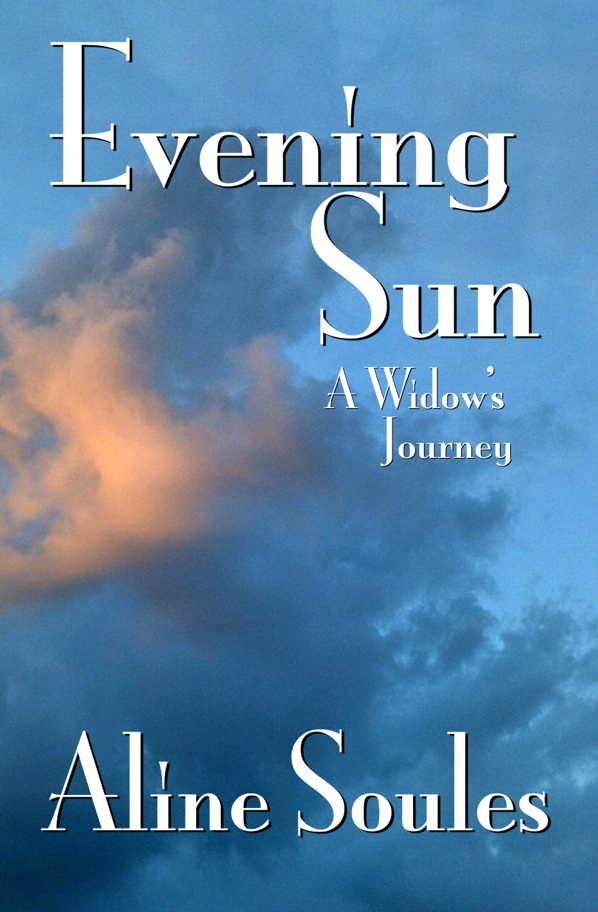
It’s a privilege to have poet and historical fiction writer Aline Soules as my guest today.  Author of Meditation on Woman (bit.ly/meditationonwoman) and Evening Sun: A Widow’s Journey (bit.ly/evening-sun), her poetry has appeared in such publications as Kenyon Review, Houston Literary Review, Poetry Midwest, and the Galway Review.  I thought it would be interesting to see what she’s up to these days and, in particular, to ask about her experience working in multiple genres.

Q. I know you’re a fairly voracious reader.  What are you reading these days? Do you read more for information, amusement, or some other thing?

A. Answer to your last question first:  Yes, yes, and yes—information, amusement, fun, the cereal box, I don’t care.  I read all the time and have several books going at once, depending on where I’m reading—my comfy chair, my outdoor chaise longue, in bed.  Right now, I’m reading the following: The Secret History of SOE, by William Mackenzie and Code Name: Lise: the true story of the woman who became WWII’s most highly decorated spy, by Larry Loftis, both as research for my novel; Lovers and Dancers, by Heather Ingman, for fun; some of the Collected poems of Louis Macneice (always read poetry); conversations with W. S. Merwin, by Michael Wutz and Hal Crimmel (so sad—no more poems from him).  As you can see, anything goes.

Q. Can you share with us some of your favorite poets and novelists?   What’s the appeal for you?  

A. So many poets.  I’ll start with Seamus Heaney, not just for his famous poems, like “The Field,” but also for Beowulf.  I’ve noticed that, in “English” classes, students are often presented with the Iliad or the Odyssey. That’s fine, but why not our English classic, Beowulf?  Heaney’s version is accessible and wonderful.  Gerard Manley Hopkins—I go back to him all the time.  The language, the imagery stun me. Many women poets, like Adrienne Rich, Carolyn Forché, May Sarton, Linda Gregerson, Rita Dove, Lucille Clifton, Elizabeth Bishop, Wislawa Szymborska—I could go on.  But I also like “dead white males,” which isn’t the popular choice these days. I remember the controversy over Robert Bly’s Iron John: a Book about Men, yet it’s proved to be one of his most enduring works, an international best seller and a start to the Mythopoetic men’s movement in the U.S.  There’s a danger in deciding that one’s ethnicity or gender has made one biased, thereby missing out on great language and thought, whether I agree with it all or not.  Today, we have new writers—Ocean Vuong, Sherman Alexie, Amber Tamblyn, Kei Miller, Morgan Parker. I’m trying to understand the appeal of Rupi Kaur, the “Instapoet,” but I admit to struggling with her work.  

Q. You’ve written poetry in the past and now you’re working on an historical novel.  Do you find that any of the skills for writing poetry apply to fiction, or are they very different?

A. Great question.  I use my poetry skills (if “skills” is the right word) in everything I write.  Poetic language is key anywhere—the ability to come up with the right words, the right image, the best phrase to convey a feeling or a thought in a way that resonates with readers and makes what you write memorable.  Writing is an endless struggle (why do we do this, again?), but, somehow, a struggle that’s worthwhile to me. In my current novel, I’m still not at the point of going through my work to struggle with the final language and phrasing, but, when I do (soon), it will be one of the more pleasurable parts of novel writing.  I should add that poetry has also helped in all my writing. During my academic career, I wrote many articles and book chapters, all of which were improved by my poetry practice. In fact, I start all my writing days with poetry, unless I have a pressing deadline.

Q. In an interview, I think Ocean Vuong said that his new novel (On Earth, We’re Briefly Gorgeous) was written, in part, as a letter to his mother.  How do you go about finding the right form (or forms) for a novel, or does it find you?

A. Forms are organic, I think, particularly in poetry, but also in other writing forms.  

front_cover_140503

Even academic writing, with its introduction, method, results, and discussion/conclusion sections enables organic form within the structure.  My novel is historical fiction and I’ve discovered that it’s like a jigsaw puzzle in some ways. I’ve written a full draft (more than once) and I still find myself cutting up the summary of each chapter and moving the pieces around on my table to decide the best order for the story.  I may have a linear approach in my first draft (what happens? what happens next? etc.), but I won’t end up with that.

Q. Are you continuing to write poetry even as you work on a prose project?  If so, do you have any advice for writers on how to balance these two disciplines?

A. I do write poetry—all the time.  As mentioned above, I start with poetry when I sit down to write.  It might be ten minutes or two hours, depending on how the work develops. Then I turn to my novel.  I have no advice for writers on balancing multiple disciplines, other than to suggest that each writer must find his/her/eir path through the process.  When I also wrote academic articles and book chapters, I interspersed those with poetry, too. I’m sure that some writers practice one or the other at any

given time, rather than engaging with more than one at the same time, but starting with poetry gets me in my writing frame.  I’ve also noticed that when I’m “on a roll” with poetry, everything else is “on a roll,” too. The converse is also true.

Q. A sense of Time with a capital “T” seems to be all important in novels.  Even if they’re written conventionally in the past tense, they’re generally supposed to represent the present — or, in the case of historical novels, the “distant” present.  Where is your narrator located in terms of time? Have you encountered any challenges and/or benefits in exploring the notion of time in fiction? 

A. My novel is written in close third, past tense.  I’ve tried other points of view and other tenses, but have decided on this approach.  The idea of “representing the present” is really the idea of engaging the reader so that he/she/ey feels “present” with the main character.  I say character (singular) because I’m working in close third and the story unfolds from her point of view. I’ve never tried omniscient point of view, although the greats in the past used it all the time (Dickens, Thackeray, Trollope).  As for the notion of time in fiction, I’ve never explored this directly, but Alan Lightman has. I particularly love Einstein’s Dream, which I re-read periodically, but any of his books are fabulous.  He engages with physics principles, such as time. After all, who better?  As a physicist and a writer, he’s worked at Harvard and MIT, where he’s currently professor of the practice of the humanities.  

Q. Some writers advise that, once you have an outline, you should write straight through your first draft and not stop for anything, no editing or rewriting at all.  How do you feel about this, and what’s your approach?  

A. Ah, the pantser vs. plotter theme.  The pantser, e.g., Ellen Sussman, goes for what happens?  what happens next? and next? and next? (no outline). After that, she spends a year or two revising. The plotter, e.g., John Grisham, goes for plot everything out before he writes a single word.  After that, he writes. I like a combination. I start with a form of the pantser method, where I write scenes about what comes to me but, not too far into what happens, I make a rough outline. After that, I move back and forth. If I wake up with an idea that excites me, I write the scene while it’s “hot,” whether it’s next in line or not.  Otherwise, I follow and develop my outline and my scenes together.

In the end, what’s important about any method is that your reader makes “discoveries” along with you; otherwise, the reader won’t be engaged.  The action may be too predictable. Of course, some readers like predictability (e.g., romance novels), but, I want surprises. The pantser method leads me to discoveries that surprise me and those are key for my novel because the reader will be surprised, too.  I’m also endlessly amazed at how my characters tell me what to do. They go off on tangents I don’t expect — surprises. And that’s the joy of the written word, isn’t it? To be surprised, expanded, given an emotional journey as well as intellectual stimulation. Reading and writing and the book itself — what a great trio.  What a wonderful world.


aline_black_sweater_2017Find Aline Soules online at http://allinesoules.com,@aline elisabeth, https://www.facebook/com/alinesoulesauthor, and https://www.linkedin.com/in/alinesoules/

For Aline’s Q & A with me, Writing Contemplative Poetry, please visit her blog or the Interview section on this site (see main menu).  


(Note: I’ll be on hiatus from the blog through August, resuming in mid-September.  I hope you’ll join me then.)

News

A Celebration of Lawrence Ferlinghetti

Poets Shauna Hannibal, Fernando Marti, and Zack Rogow will read from their new books, as well as from the poetry of Lawrence Ferlinghetti, who recently turned 100.  “New Poetry and 100 Years of Ferlinghetti” will take place on April 15 at 7pm at Folio Books, 3957 24th Street in San Francisco.  Birthday cake will be served.

American Haiku Archives

According to their website, the American Haiku Archives in Sacramento, California, houses the “largest collection of haiku and related poetry books and papers outside of Japan.”  Founded in 1996, it’s the official archive of the Haiku Society of America.  Current AHA exhibits include a special tribute to Kiyoko and Kiyoshi Tokutomi.  Located in the California State Library Historical Room in Sacramento, CA, the exhibit is open to the public.  To learn more about the archives and their current exhibits, visit www.americanhaikuarchives.org.

Submissions

Reed Magazine, California’s oldest literary journal, will be accepting submissions for their annual contest from June 1 to November 1.  Prizes and publication are offered for fiction, nonfiction, poetry, and art.  www.reedmagazine.org…..Jericho Brown will judge this year’s poetry contest for the Crab Creek Review.  Submit up to 4 poems.  Winner receives $500 plus publication. www.crabcreekreview.org/contests.html ….. Beech Street Review, a quarterly online poetry journal, is accepting poetry submissions through the month of April.  Submit 3-5 poems.  www.beechstreetreview.com

W. S. Merwin

It’s hard to believe W. S. Merwin is gone.  It almost seemed as if his incomparable poems with their unexpected twists and turns would go on forever.  The former U.S. Poet Laureate and Pulitzer Prize winner died March 15thon Maui.  He was 91. In their citation for his 2005 collection, Migration, New & Selected Poems, the National Book Award judges wrote: “The poems in Migration speak from a life-long belief in the power of words to awaken our drowsy souls and see the world with passionate interconnection.”  A conservationist, Merwin and his late wife, Paula Schwartz, restored a former pineapple farm near Haiku, Maui, planting approximately 2700 trees.

Gabriel Okara

Nigerian poet and novelist Gabriel Okara died on March 25th in Nigeria.  He was 98.  His poem, “The Call of the River Nell,” won the Silver Cup for Poetry at the 1953 Nigerian Festival of the Arts and was published in Black Orpheus, the first English language journal of African literature.  Brenda Marie Osbey, editor of his Collected Poems, has written that, “It is with the publication of Gabriel Okara’s first poem that Nigerian literature in English and modern African poetry in this language can be said truly to have begun.”  He also wrote an experimental novel, The Voice (1964), the award-winning collection, The Fisherman’s Invocation (1978), and The Dreamer, His Vision (2005).