New Book Cover

The cover design for Refuge for Cranes is complete and I think it’s a standout. Designed by Melody Stanford Martin of Wildhouse Publications, it features a photograph of Sandhill Cranes in flight by Chris Briggs that evokes the majesty of these amazing birds (pls. see Books section). My thanks to both Melody and Chris for their beautiful work. I’ll post more information about publication when it’s available.

Susan Fenimore Cooper, “America’s First Recognized Female Nature Writer”

When Rural Hours, a natural history diary by Susan Fenimore Cooperwas first published in 1850, it was done so anonymously “by a lady,” the custom for women writers of the Victorian era. Favorably reviewed, it went into nine editions in Cooper’s lifetime, according to Michelle T. Harris, writing in Audubon Magazine (Jan. 8, 2021). One of the first to warn of the dangers of deforestation, Cooper also lamented the loss of wild Passenger Pigeons (extinct by 1900) and the shrinking populations of other birds. The daughter of popular novelist James Fenimore Cooper, she lived in Cooperstown, New York, where she founded an orphanage and wrote for magazines, including The Atlantic Monthly and Harper’s. Rural Hours was reissued in 1998 by University of Georgia Press.
Sandhill Cranes Return to Platte River

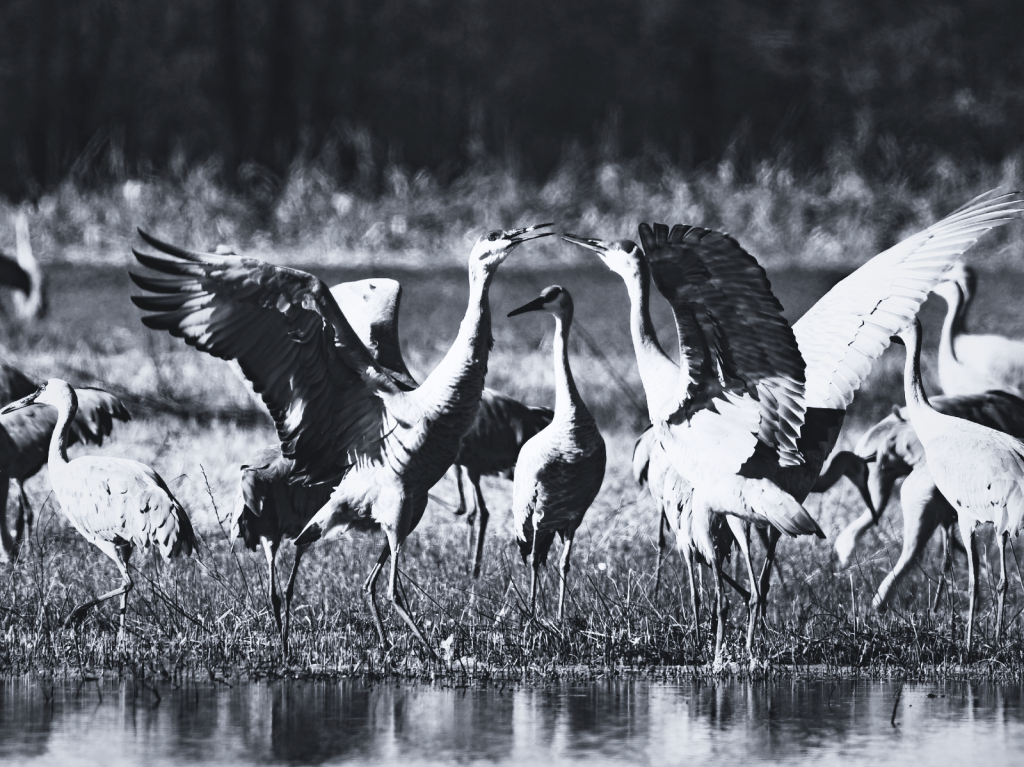
This month thousands of Sandhill Cranes will touch down in the Platte River Valley in central Nebraska, feeding primarily on corn kernels and insects, before moving on to their nesting grounds in Canada, Alaska, and Siberia. Visitors often hear the low, chortling sound of the prehistoric birds before they see them, observes columnist Rick Windham of the Platte River Telegraph. Known as a “rally bugle,” that call “is a sound that moves the spirit,” he says. The Iain Nicolson Rowe Audubon Center in Gibbon, Nebraska, offers guided tours of this annual event. Bird lovers can also observe the cranes in their natural habitat in “virtual tours.” For more information, go to https://www.row.audubon.org/events/.

An Ethics of Wild Mind

Author, poet, and translator David Hinton speaks about his latest book in a recent interview in Emergence Magazine. Drawing on Eastern philosophy, Ch’an, and “an ethics tempered by love,” he discusses the need for a deep relationship between humans and earth. https://www.emergengencemagazine.org

Writing Opportunities

The Annual Permafrost Book Prize in Poetry is open to all writers (including non-U.S. citizens) until March 15th. Winner receives $1000, 50 copies, and publication by the University of Alaska Press.

Passager Journal is now accepting poetry entries for their annual contest issue through April 15th.  An independent press located in Baltimore, MD, it was founded in 1990 for writers over the age of fifty. https://www.passagerbooks.com

The Robert Phillips Poetry Chapbook Prize is open until March 31st. Winner receives $500 and publication by the Texas Review Press.
Writing the New Year Haiku

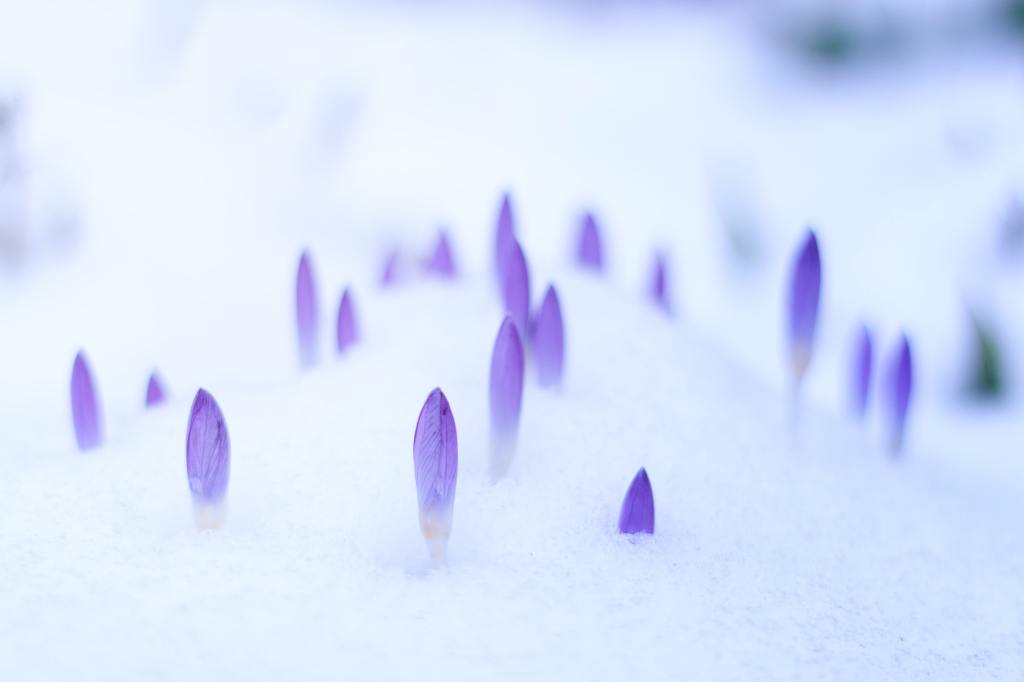
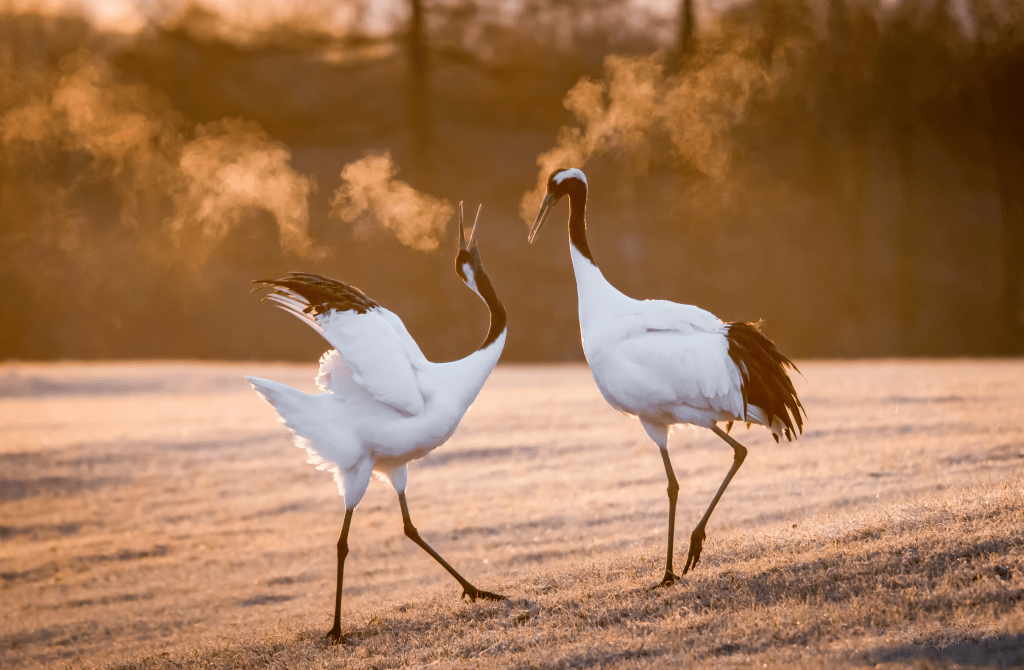
Originally celebrated on the first day of spring per the lunar calendar, the New Year is considered a season in itself in Japan and New Year haiku often depict elements such as blossoms and songbirds. Here’s one by Buson*:

plum blossoms

whether I go north or south —

pink everywhere

This one by Issa may refer to the Buddhist idea of the “dharma ending age”:* 

New Year’s Day —

petals drifting down

in this fallen world

In another year, date unknown, his spirits were up:*

clear blue sky

this New Year’s Day —

glad to be alive

In this haiku from 1689, Basho offers a glimpse of a spring thaw:*

warmth of the sun

on a glistening field — 

New Year’s Day

This last one by Basho, written toward the end of his life, acknowledges a depth of feeling in which beginnings co-exist with endings*:

New Year’s Day

but everything feels like

autumn to me

*versions by jg

Writing Prompt

Writing a New Year’s haiku offers an opportunity to welcome a fresh outlook. This prompt joins mindfulness with images from nature. To begin, make a list of five positive feelings, thoughts, or intentions. Then list several of your recent observations from the natural world. Select one entry from each list and fashion them into a haiku. Here’s an example I wrote recently:

imagining peace,

an end to war — birdsong

from the chimney top

This isn’t the traditional way to write haiku — it’s generally more intuitive, even “accidental” — but I think it’s a good way to widen the lens of attention. You may get one or more effective haiku out of this process; if not, set them aside and try looking at them another day with a fresh eye. Sooner or later, a pearl will show up.

New Collection Slated for 2023

I’m very happy to report that my new collection, Refuge for Cranes: Praise Poems from the Anthropocene, will be the first volume of a poetry series by Wildhouse Publications. Slated for mid-2023, it explores the intersection between inner and outer landscapes, finding refuge in nature, art, and awareness itself. Poems range in topic from climate fires and the demise of bees, to the “transparency of grace” and “the soul’s deep-down unfathoming.” These poems were a way to address my fears about the environment, even as I continue to find beauty all around. Someone used the term eco-grief to describe the psychological effect of the crisis we’re living through — the sorrow at seeing habitats destroyed and species gone forever, and that was part of my impetus. But as the subtitle indicates, they’re also poems of praise. My thanks to everyone at Wildhouse Publications for welcoming this project and for bringing poetry to the forefront during these challenging times. (I’ll post details about ordering, etc., as soon as they’re available.)

Sandhill Crane Conservation

In 1937, conservationist Aldo Leopold warned in his essay, “Marshland Elegy,” that upper Midwest Sandhill Cranes were in danger of extinction. But with the support of farmers, wetland restoration, and changed hunting practices, their  population rose from just 25 breeding pairs in Wisconsin to over 15, 000 today, while the eastern population is around 90,000 (“A Conservation Success Story,” October 26, 2022, www.https://wpr.org). Yet cranes still remain at risk throughout the world, with 10 out of 15 species endangered, including Greater and Lesser Sandhill Cranes of California’s Central Valley. The International Crane Foundation “works worldwide to conserve cranes and the ecosystems, watersheds and flyways on which they depend,” according to their mission statement. To learn more and how you can help visit www.https://savingcranes.org.

Writing Opportunities

Wildhouse Poetry, a new imprint of Wildhouse Publications (WHP), is sponsoring a chapbook contest to launch their new poetry series. Offering publication and $500 to the winner, the contest will be judged by Jane Hirshfield. Based in Boston, Massachusetts, WHP “exists to bring transformative spiritual insights to people for whom traditional resources may not fit,” according to their homepage. The non-profit indie press is also considering full-length poetry, fiction, and non-fiction manuscripts through Submittable (https://www.wildhousepublishing.com/WiPo).

Happy New Year!

(Coming up: Writing the New Year Haiku)

A Place for Joy

The poet Carl Phillips said in an interview recently that, “A place must be made, still, for joy.” That’s probably always been the case but these days the need to cultivate positive feelings and attitudes may seem more critical. May we all find a time and place for joy, now, and in the days to come.

Pushcart Nomination

“Encomium for a Garden” (Spiritus, Fall 2022), was recently nominated for a Pushcart Prize. This is one of those serendipitous poems that practically wrote itself. I may have changed a word or two and then changed it/them back, again. This is my favorite kind of poem to write, one that flows easily from pen to paper. My thanks to the editor, Mark Burrows, for forwarding it.

Winter Workshops

Cassie Premo Steel, author of Earth Joy Writing: Creating Harmony thorough Journaling and Nature, will lead an online writing workshop, Release the Dark, Receive the Light, sponsored by Ashland Creek Press, on January 2, at 11:a.m. www.https://ashlandcreekpress.com

Robin Farr, poet and co-editor of River Heron Review, will lead a four-session online workshop, Poetry Boost: From Title to Publication on Thursday nights from November 10 to December 8. www.https://riverheronreview.com

Writing Opportunities

Emergence Magazine

An online magazine with an annual print edition, Emergence publishes essays, op-eds, films, and audio stories about the “timeless connections between ecology, culture, and spirituality,” according to their homepage. Focusing on “long-form content that is both thought-provoking and evergreen,” they also offer a weekly podcast with interviews, narrated essays, fiction, and more. www.https://emergencemagazine.org

Passager Journal and Books

Dedicated to the work of writers over the age of 50, Passager Journal publishes a twice-yearly print edition and now features a weekly podcast, too. Passager Books focuses on poetry collections, short fiction, and anthologies by writers who’ve been published in the journal and offers the Morgenthau Prize for a first book of poetry by a writer age 70 or older. www.https://passagerbooks.com

The Cincinnati Review is seeking poetry, fiction, nonfiction, and translations through December. (Submissions close once they meet their cap.) A print magazine out of the University of Cincinnati, it pays $30 per page for poetry. www.https://cincinnatireview.com

KAIROS Literary Magazine

Founded in 2016, this online magazine is looking for poetry, creative nonfiction, and op-ed pieces. Published tri-annually, submissions are accepted on a rolling basis. www.https://kairoslit.com
Prairie Schooner is a print quarterly published by the University of Nebraska-Lincoln. They’re seeking essays, interviews, reviews, short stories, and poetry now until May 1st. The Raz-Shumaker Book Prize opens January 15th. www.https://prairieschooner.unl.edu

In Praise of the Natural World

Attention is the beginning of devotion.

– Mary Oliver

Praise seemed to come instinctively to Mary Oliver. One of the most popular late twentieth-century poets, Oliver’s attention was often focused on the woods, ponds, and beaches that she explored in forays around her home in Provincetown, Massachusetts. In Upstream (2016), a collection of essays on nature and literature, she notes that early on she “did not think of language as the means to self-description…” but as a way “to notice, to contemplate, to praise…” One of my favorite poems, from New and Selected Poems Volume One (winner of the National Book Award) is “Little Owl Who Lives in the Orchard.” It captures me from the first line and doesn’t let go until the last line. I could say the same for most of Oliver’s poems, but this one feels as if I’m right there in the orchard listening to a youngish owl “flutter down the little aluminum ladder of his scream.”  

If “attention is the beginning of devotion,” as she wrote, then wonder may be the beginning of praise — for the fox “so quiet — he moves like a red rain,”  for the hawk with “one exquisite foot” attached to a twig, even for “The cracked bones/of the owl’s most recent feast…” For Oliver, attention most often means being in the presence of, whether it’s the owl in the orchard, a hermit crab on the beach, a hummingbird in a trumpet vine, or egrets at the edge of a pond. This attention to wildlife and the environment alerts her to possibility — the possibility of danger, of beauty, of death, of life, or simply of nothing “but the cold creek moving/over the old pebbles…”

Unlike the narrative “I” of Whitman, who she considered a childhood “friend,” Oliver’s “I” enjoys a relative position in the background. From this vantage point, she offers observations rich with detail, color, and music. She’s not afraid to use a well-placed exclamation point occasionally, or just as often, a question mark. “Are you listening, death?” she asks in “The Rabbit.” These kinds of questions don’t always come with answers, of course, but reflect a sense of mystery that permeates her work, a respect for not knowing and for silence.

She had her darker moments, some of them probably attributable to childhood trauma. In “A Visitor,” she struggles to come to grips with her estrangement from her father, a subject she discussed frankly in her later years. In one of her most well-known poems, “Wild Geese,” she writes, “Tell me about despair, yours, and I will tell you mine./Meanwhile the world goes on.” If there’s a secret to her appeal, I think it’s that she comes to the poem with an inclusive love for the world in all its imperfections — that and a willingness to embrace it again and again.

Writing Prompt: Gratitude

For this prompt, make a list of ten things you’re grateful for. They might be ordinary items around you — just-picked tomatoes, a set of salt and pepper shakers, or a glass of water, for instance, or they might be something more personal such as a family member, pet, or a prized possession. After completing your list, select the most promising subject and write continuously about that for at least five minutes, or more. When you’ve run out of steam, take a look at what you’ve come up with. Is there a poem there, or more than one poem? After fine-tuning your work, let it sit for several days. Then go back and have a second look. If it’s redundant, remove the deadwood. If it feels incomplete, you may want to weave in some additional details, or consider posing a question and answering it.

Writing Opportunities

Poetry Northwest is accepting poetry submissions from October 1st to November 30th. https://www.poetrynw.org

The Colorado Prize for Poetry is open for submissions of full-length manuscripts (48-100 pages) from October 1st to January 14th. https://www.coloradoreview.colostate.edu

Haiku as Discovery

Haiku sometimes arrive intact and read just right. But more often than not (at least in my case), they can benefit from revision. This process is the subject of the article, “Haiku as Discovery,” forthcoming in the fall issue of Seashores, #8 (https://www.haikuspirit.org).

Recent Haiku

old pine: Modern Haiku, issue #54.1, Fall 2022

empty swings: Haiku Corner, Japan Society, #34, 2022

walking (under redwoods): Seashores, issue #8, Fall, 2022 

Inquiry as a Poetic Tool

Questions naturally arise in first drafts but they can help during the later stages of composition, too, if we’re stalled, or seeking to develop a theme. The right question can move us from reason to intuition, from the prosaic to the unexpected.The following questions all have one thing in common — they ask “who,” “what,” “when,” “where,” “why,” or “how:”

 “What is the world?”(from Book of a Monastic Life, by Rilke)

“Which side am I supposed to be on?” (from the poem of the same title by W.H. Auden)

“How can you look at the Neva…?” (from White Flock, by Anna Akhmatova)

“Oh, what will I do, what will I say, when…?” (from The Swan, by Mary Oliver)

“What can I say to someone…?” (from The Fire in the Center, by Rumi) 

“Don’t you want God to want you?” (from The Tradition, by Jericho Brown)

 “And what did I do today?” (from Kennedy’s Inauguration, by Robert Bly)

“When did we enter the heartless age?” (from Heartland, by Lisel Mueller)

Writing Opportunities

The Maine Review is open for submissions of fiction, nonfiction, and poetry (including hybrid forms) from September 1st to November 30th. A triannual online journal, MeR “publishes culturally significant writing by writers living in Maine, across the country, and around the world. https://www.mainereview.com

Third Coast Magazine, out of Western Michigan University, will be accepting poetry, fiction, and creative non-fiction from September 15th to October 15th. Work published in Third Coast has gone on to win both O’Henry Prizes and Pushcart Prizes. https://www.thirdcoastmagazine.com

modern haiku is accepting haiku now until November 15th. www.https://modernhaiku.org

Witness in the Poetry ofTed Kooser

Born and raised in Ames, Iowa, Ted Kooser has lived for many years in Garland, Nebraska. A teacher of poetry and nonfiction at the University of Nebraska in nearby Lincoln, the former U.S. Poet Laureate and winner of the Pulitzer Prize also edits a weekly poetry column, “American Life in Poetry” (www.https://americanlifeinpoetry.org). His poetry depicts a fading world as seen in Ektachrome slides — of family, land, pets, antique teacups, old vehicles and tools — and as Brad Leithauser noted in the New York Times Book Review, it “is rare for its sense of being so firmly and enduringly rooted in one locale.” His poems speak of the weather, arbiter of crop futures and human futures — of hoarfrost and blizzards, searing heat and floods. But they also celebrate the small moments of the heart and everyday pleasures. In the poem, “At Nightfall,” the poet describes the flight of a barn swallow bringing back one white feather to her nest in the rafters, and in “A Morning in Early Spring,” he notes, “In the first light I bend to one knee. I fill the old bowl of my hands/with wet leaves and lift them…”

Reaching beyond the boundaries of small town life, his writing reminds us of our common connections. As David Mason observed in Prairie Schooner, this poetry is beyond regionalism — it’s about “perception itself, the signs of human habitation, the uncertainty of human knowledge and accomplishment.” At times, it can seem almost archeological, as in the poem “The Red Wing Church,” which describes a partially deconstructed church, or in “In the Basement of the Goodwill Store,” a place populated by “doll heads, and rust,” and an old man “trying on glasses.,,,” “…through which he looks to see you looking back.” Kooser’a poetry exhibits what, in Hindu philosophy, is called Sakshi, or witness, a neutral perspective of looking at the world. This quality is apparent in several poems from Kindest Regards — in “Old Soldier’s Home,” for instance, and in “A Letter in October,” but there are many other examples. While Sakshi has been described as the witness of the flow of thought and feeling in an ever-changing world, Chitchhaya, is the reflection of the ego or the residue, it might be said, of personality. It resembles “the moon with its bruises,” the “chalk” on the porch post, “the old yellow shell” of a snakeskin, and “a whisper of dust,” to quote Kooser. This quality of witness in his poetry appears as emotion filtered through a frayed screen door, as a face behind a lace curtain, a tenuous separation between inside and out. 

Another aspect of the witness function in poetry concerns the acknowledgment of traumatic events such as those of war or social injustice, and this, too, can be found in his work, although it’s the exception. “Fort Robinson,” for instance, depicts the killing of infant magpies by grounds keepers on the site where the Northern Cheyenne were held captive one “terrible winter,” and “Blackout” describes domestic air raid practices during WWII as seen through the eyes of a six-year old. In “Blizzard Voices” he tells of the devastation of the “Children’s Blizzard” of 1888. Sometimes, the subject involves economic upheaval, as in the poem “Three Steps in the Grass,” which tells how a desperate homeowner bulldozed his house and set it on fire to avoid paying property taxes.

One of his most compelling poems, “Pearl,” describes a visit he paid to a childhood friend of his late mother’s. It evokes not only a sense of loss and the isolation of old age, but a more intimate time when we communicated in person rather than through emails and text messages. It’s this depiction of a fading era that characterizes much of his poetry and has given him a reputation as an elegist. An abandoned tractor, rusty harness bells, a WWI helmet, and “a heap of enameled pans as white as skulls” are a few of the objects from the past that appear in his lines. But, besides a certain wistfulness for days gone by, his work contains a balance of fresh and worn, of young and old, and an abiding wonder at the present moment.

Ada Limon Named 24th U.S. Poet Laureate

Ada Limon, author of six poetry collections and winner of the National Book Critics Circle Award, was recently named the new U.S. Poet Laureate, taking over the position held for three years bv Joy Harjo. A professor in the MFA program at Queens University of Charlotte, Limon called her appointment “an incredible honor” and the shock of a lifetime.” https://www.npr.org

Rumi’s Little Book of the Heart

This inspiring little book, with translations by Maryam Mafi and Azima Melita Kolin, offers an excellent introduction to the life and poetry of 13th-century Sufi poet Mowlana Jallaledin Mohamad Rumi (Hampton Roads, 2016). Born in Persia on September 30th, 1207 (in what is now Afghanistan), Rumi was the son of a renowned Islamic teacher/theologian, a role Rumi himself later assumed. But it wasn’t until the age of thirty-six when he met Shams of Tabriz, a wandering Sufi mystic, that Rumi’s spiritual genius blossomed, notably in the form of his ecstatic, voluminous poetry. In poem after poem he reveals an overwhelming experience of love that “appears on the wings of grace,” and questions, “How can one remain sober drinking Your wine?” Working from Forouzanfar’s edition of Rumi’s The Divan, Mafi and Kolin have created a lively collection that respects it source yet still feels contemporary. Interspersed among the poems are samples of Persian calligraphy by Hassan Behras Shayjani and Rumi’s signature emblem by Nutan Gungorencan. 

The Essential Rumi

At a conference in 1976, Robert Bly handed Coleman Barks some dated translations of the 13th-century Sufi poet Rumi, with the comment that, “These poems need to be released from their cages.” This was the beginning of a lifelong commitment for the former University of Georgia professor, now 85, whose streamlined versions of the great Rumi have now sold well over two million copies.

To say the poems in Barks’s The Essential Rumi (Harper One, 2004) are spiritual may be somewhat misleading. They don’t deal in hope or certainties, or conventional notions of good and bad. What they offer is clarity, openness, and an invitation to share in Rumi’s generous spirit. But there’s also the grief of separation and longing for the beloved — for union, for ecstasy, for the meeting of heaven and earth. In its mature phase, Rumi tells, us, love becomes “oceanic” and “begins to move with the whole” and (there is) “No better love than love with no object.”

Rumi was the son of a Moslem theologian and served in the same capacity for many years, but his poetry isn’t doctrinaire. It stems from a wide knowledge of religion and deep insight into the “living marrow” of being. Coleman Barks’s translations in The Essential Rumi (2004)containnot only Moslem references, but several Christian, Hebrew, Buddhist, and Sufi references, as well. In one poem, “How Finite Minds Most Want to Be,” Jesus, Joseph, and Moses are referenced; in another, “The Well of Sacred Text,” both the Qur’an and the Bible are mentioned in the same line. There are several other examples that demonstrate a kinship of faiths and Rumi’s fluency with their stories. In “A Pilgrimage to a Person,” he says, “Be a pilgrim to the kaaba inside a human being,/and Mecca will rise on its own.” To be “inside the majesty,” to “become a lover,” this was Rumi’s message and the heart of his realization.

I think of these poems almost as living things, as scrapings of DNA from the life of an extraordinary teacher/poet, one whose songs go beyond belief and provide a direct view into “the radiant depth of the self,” as Barks has put it. Jacob Needleman summed up the importance of these translations: “Through Coleman Barks’s inspired renderings, we tired, modern people have come not only to love Rumi, but even — a little — to love who and what Rumi himself loved.” In addition to the poems, which are themselves teaching devices, the introductory comments at the beginning of each section in The Essential Rumi are an education — in culture, history, religion, the use and limits of metaphor, and the fluidity of identity. And if that’s not enough, the volume closes with several savory sounding recipes. Like the poems, they’re guides for living a nourishing life.

Interviews

This interview with poet John Silbey Williams by the editors of the River Heron Review (https://www.riverheronreview.com, July 6, 2022) focuses on craft and offers some of the most practical advice I’ve ever heard from a writer. The author of nine books of poetry and winner of multiple awards, Williams also serves as editor of the Inflectionist Review.

Nicole Vassell interviews poet and playwright Claudia Rankin for The Independent (https://www.independent.co.uk), June 24, 2022.  The author of Citizen, An American Lyric, called one of the most influential poetic works of the 21st century, Rankin speaks candidly here about racism and her new play, The White Card

Writing Opportunities

New Women’s Voices Chapbook Contest, sponsored by Finishing Line Press, is now accepting poetry manuscripts “by a writer who identifies as a woman and has not yet published a full-length manuscript.” Open until September 15th, the contest offers publication and a prize of $1500.

Blue Mountain Review, an online journal out of Athens, Georgia, is currently accepting poetry, fiction, and visual arts (no simultaneous submissions) “What we sing saves the soul,” reads the introduction to their website. https://www.bluemountainreview.submittable.com/submit

Next time: The poetry of Japanese Zen poet Ikkyu (Crazy Cloud), and more.

Versions of Kabir

When the late Robert Bly’s English translations of 15th –century Indian poet-seer Kabir’s poems were first published in the 1970s they caused something of a stir. They didn’t much resemble the earlier translations in English by Rabindranath Tagore and Evelyn Underhill with their staid Victorian diction. In fact, Bly didn’t refer to them as translations at all, but as “versions.” Discarding a plethora of “thous” and “thees” and taking a more direct approach, his versions brought Kabir’s poems into the present day.

Tagore’s translations have their strengths, and they served Bly well as a literal reference. But they barely captured the subversive aspect that makes Kabir so much more than a religious poet (like Mirabai, he’s generally considered a saint in India). Intense, mystical, and beyond dogma, he refused to repeat spiritual truths that he hadn’t experienced himself. He debunked the idea that the soul unites with the ecstatic upon death, for instance, as in this line, per Bly:

“What you call ‘salvation’ is found in the time before death.”

Believed to be the son of a Moslem weaver, Kabir was likely familiar with Sufi texts and, it’s said, was initiated as a young man by Ramananda, an ecstatic Hindu holy man. This cross-pollination of faiths may have prepared him to internalize the underlying wisdom they share. Love in the here and now is what inspires Kabir, an ecstatic love that has him reeling, as in the great circle dances of the bhakti devotees of his day. It comes through clearly in Bly’s words when Kabir says:

“If anyone needs a head, the lover leaps up to offer his.”

And here:

“How lucky Kabir is, that surrounded by all this joy,

he sings in his own little boat.”

Speaking about Bly’s versions with journalist Katy Butler (Poetry as Path), Hindi scholar Linda Hess commented that, “If you want to look at things from a scholarly point of view, they aren’t translations. But you should forget the scholarly point of view and see Bly’s work as picking up an oral tradition and transmitting it, giving his versions with real insight.”

The immediacy of these poems is just as evocative today as it was when they were first published over fifty years ago, and Bly’s contribution to the revival of interest in ecstatic poetry can’t be overstated.

The Kabir Book: Forty-four of the Ecstatic Poems of Kabir, Versions by Robert Bly, Beacon Press, 1971, 1977

Kabir: Ecstatic Poems, by Robert Bly, Beacon Press, 2004

Soul Is Here for Its Own Joy, edited by Robert Bly, Harper Collins, 1995 (anthology)

Mirabai and the Poetry of Bhakti

Born into a royal family in Rajasthan, India, the 16th century poet/saint Mirabai (1498-1547?) followed the path of bhakti. One of the four traditional branches of yoga, bhakti encourages a personal connection to God or deity through the practice of dancing, singing, and recitations of poems and praises. So intense was Mirabai’s religious devotion that her marriage and relations with her in-laws suffered from it. Fleeing persecution, she lived an unconventional life, wandering from village to village and singing praises to Sri Krishna, whom she addressed as “Dark One.” Approximately two-hundred of these bhajans are attributed to her but she may have written as many as six-hundred to a thousand of them. They swing between the poles of presence and absence, at times depicting ecstatic states, at other times loss and the longing for union:*     

“Mira has met the love that ignites stars

and sends bees swirling from the hive.

The fragrance of that love is sweeter than jasmine.”

“Dark One, where have you gone?

Without a word from you I’m desperate

like a fish flopping in a pail.”

“When supreme love has left the throne

of the heart, what good is the world

with all its perfumes and  riches?”

As scholar Holly Hillgardner points out in Longing and Letting Go: Christian and Hindu Practices of Passionate Non-attachment (Oxford Scholarship Online, 2016), “Separation (thus) serves not as a preliminary step on the path to ultimate fulfillment, but as an integral part of the beginning, middle, and end of the path itself”…“and grief cannot be sidestepped.”

A 2009 collection, Mirabai: Ecstatic Poems, translated by poets Jane Hirshfield and Robert Bly, offers a bittersweet taste of this bhakti. Hirshfield brings to the project her experience translating Japanese poems from the 8th and 9th centuries (Ink of the Dark Moon) and a gift for revealing the ineffable in the everyday; Bly demonstrates a deep affinity for the subject matter and the same level of care seen in his earlier translations of Indian poet/saint Kabir. Together, they honor Mirabai’s originals while transporting them sensitively into the 21st century.

Mirabai: Ecstatic Poems, Jane Hirshfield and Robert Bly (Translators), Beacon Press, 2009

The Dance of Bliss: Ecstatic Poetry from Around the World, Edited with Commentary by Ivan McGregor, Poetry Chaikhana

*versions by jg

Opportunities

The Thomas Merton Poetry of the Sacred Contest is open from June 27th to July 31st. Sponsored by the Center for Interfaith Relations, the contest offers $500 and publication of the winning poem in Parabola Magazine. Runners-up will each receive $100. https://www.centerforinterfaithrelations.submittable.com

Santa Fe Literary Review, an annual print and online journal, is accepting submissions now until November 1st. Committed to “promoting a diverse range of writers and artists,” they seek CNF, fiction, poetry, and visual art. This year’s suggested theme is “Myth: Invention, Legend and Lore.” https://www.sfcc.edu/santafe-literary-review

Next time

Versions of Kabir, plus more writing opportunities.