News

Picking Berries

So many of my favorite poems are about picking berries.  I’ve always loved one by Lisel Mueller, Picking Raspberries.  The first four lines are memorable: “Once the thicket opens/and lets you enter/and the first berry dissolves on your tongue/you will remember nothing/ of your old life”  (Alive Together, Louisiana State University Press, 1996, Baton Rouge, LA).  Mary Oliver has written two that I know and admire — Blackberries, and Blueberries (Devotions, Penguin Press, 2017, NY, NY), and there’s Galway Kinnell’s Blackberry Eating, that compares the ripeness of berries to “certain peculiar words/like strengths or squinched,/many-lettered, one-syllable lumps…”  (Collected Poems, Galway Kinnell, Houghton, Mifflin, Harcourt, 2017, Boston, NY).  Then, there’s Seamus Heaney’s Blackberry Picking with its compelling turn at the end (Death of a Naturalist, Faber & Faber, 1966, London).

The Music of What Happens

Reviewing the BBC production of Seamus Heaney and the Music of What Happens (The Guardian, November 18, 2019), Rebecca Nicholson observes that the documentary “stands as an excellent tribute to the man and his work.”  Heaney’s poetry has beguiled readers since the publication of his first major collection, The Death of a Naturalist in 1966, and continues to do so.  Like his countryman, W. B. Yeats, to whom he’s often compared, Heaney has a gift for finding the music in both the somber and the prosaic, especially as it refers the rural life he knew and loved.  In his commentary on the title poem of The Death of a Naturalist, poet Andrew Spacey notes that the “language is typically rich with what has become known as clusters of sound — alliteration and assonance juxtaposed…”   This is poetry that begs to be spoken, not only read.  For Spacey’s line by line analysis — in effect a mini-course in poetic devices, go to www.owlcation.com.

Historic Greta Hall

If you’re in the market for an historic house with a literary pedigree, Greta Hall in England’s Lake District may be just your cup of tea.  The three-story, Georgian style house was variously the residence of poets Samuel Taylor Coleridge and Robert Southey, and has hosted such notables as William and Dorothy Wordsworth, Lord Byron, and John Keats over the years.  Boasting ten bedrooms and a 335 year-old fireplace, it served most recently as a B&B.  Not to be missed: the Venetian window and view of the woods from Southey’s one-time study.  www.mansionglobal.com

Line Breaks and Enjambment

Hannah Huff’s article, Dear Bad Writers: Read This Poetry Line Breaks Guide offers some good tips on the effective use of line breaks and enjambment.  The examples are especially helpful.  www.notesofoak.com

Pushcart Nominations

Three poems that appeared in Rumors of Wisdom have each been nominated for a Pushcart Prize.  The poems are “Looking Out at the Stream,” “Shed,” and “Crow Makes a Scene.”  Many thanks to Concrete Wolf Press and Editor Lana Hechtman Ayers for this recognition.

Poetry and the Contemplative Life

In the article Poetry and the Contemplative Life (Commonweal, July 4, 1947), Thomas Merton wrote:  “It is obvious, then, that contemplation has much to offer poetry.  But can poetry offer anything in return, to contemplation?”  What poetry offers, I think, is an invitation to experience the sacred in our everyday lives, which Merton — himself a poet — likely intuited.  This may also be one reason so many people are instinctively drawn to it, both as readers and writers.

Wishing you all the joys of the season, and a happy and healthy new year!
News

Poetry Contests: Pros and Cons

Every other small magazine seems to have a poetry contest of one kind or another, whether it’s an “editor’s choice” for an individual poem or group of poems, a themed contest, or a competition offering publication for a chapbook or a full-length manuscript.  It’s one way for editors to drum up interest in the magazine and cultivate new subscribers.  Obviously, contests are also an alternative for new poets to attract the attention of editors and get their work published.  From my experience, I’d say that participating in contests has more pluses than minuses.  I’ll address the pluses first.

I’ve found that the prospect of entering a contest has motivated me to compose new work, revise and polish older poems, and to reconceptualize a manuscript.  Recently, I entered a contest that asked entrants to write poems using select words — the one that interested me was “sforzando.”  I didn’t have a clue what it meant but, looking it up, I found that it was a mark on sheet music “to make a strong, sudden accent on a note or chord.”  That one word was enough to inspire a short poem which I gleefully sent out along with the fee (more about those later).  It really wasn’t a very impactful poem and I wasn’t surprised to hear back in short time that it wasn’t a winner.  The good news, though, is that I still appreciated the poem for what it was, and more importantly, for what it might be.  It wasn’t showy, and it wasn’t emotionally riveting like many of the winning poems I’ve read, but with a little more work and a few more lines, it came into focus — much improved I think, and very much on theme for a new collection I’ve been working on.

Winning a contest generally comes with publication and often a cash prize.  But, it can also be a confidence booster.  Winning the Louis Award (Concrete Wolf Press, 2019) for my first full-length volume, Rumors of Wisdom, gave me the boost I needed to tackle a second volume, and a third.  Although I’m still revising and polishing both, I don’t think I would have gotten this far without knowing that someone out there found my work engaging enough to publish it.

One of the downsides to contests is that the entry fees seem to be going up and up.  I recently decided to forgo one that charged forty dollars, and find that it pays to shop around for a suitable contest that doesn’t drain your wallet, or better yet, one that’s free.  (For a list of free writing contests, visit www.https//jerryjenkins.com and www.https//trishhopkinson.com.)  Also, keep in mind that many publishing houses have no cost, open submission periods for manuscripts and don’t require that a writer have an agent.  These “over the transom” submissions may seem like a long shot, but definitely shouldn’t be ignored.  Other firms prefer to see a book proposal first.

The other problem with entering contests is learning how to spot illegitimate ones from the real thing.  The Council of Literary Magazines and Presses (www.https//:clmp.org) discusses the importance of ethical guidelines for literary contests while recognizing that there is a range of ethical models.  Most legitimate contests post their standards along with guidelines — if they don’t, be wary of entering; one of the very real risks is that you may be signing away your future publishing rights by winning.  In her article, “Confessions of a Contest Junkie,” Carolyn Moore discusses the problem of poetry anthology “scams,” but just as valuable is her discussion of how to target your work for the right contest (www.https//winningwriters.com).

New Anthology Praised by American Library Association

The American Library Association’s BOOKLIST Magazine described the recently released anthology, Loon Magic and Other Night Sounds, as “uniquely tuned to the beauty and fear expressed in the night’s symphony…offering unexpected moments of connection and reconciliation.”  Kudos to Editor Whitney Scott of the TallGrass Writers Guild!

News

Joy Harjo Appointed 23rd U.S. Poet Laureate

For Joy Harjo, newly appointed U.S. Poet Laureate, poems are “carriers of dreams, knowledge, and wisdom,” and have the power to change lives.  The author of eight books, including the recently released collection, An American Sunrise, Harjo is the first Native American to serve in the position.  She hails from the Muscogee Creek Nation and lives in Tulsa, Oklahoma.  In her memoir, Crazy Brave, she recalls growing up in poverty, her alcoholic father, and a first, failed marriage.  Poetry, she believes, “is a kind of music” that can “transform experiences that could potentially destroy people, a family, a person, to experiences that build connections and community.”  “Humanizing” and “healing” are two of her goals as poet laureate, Harjo told Lynn Neary in an interview with NPR   “I really believe that if people sit together and hear their deepest feelings and thoughts beyond political divisiveness, it makes connections,” she said.

In Memoriam

New York poet, performer, and artist John Giorno, 82, whose early poetry broke conventional boundaries and whose recent “text art” features graphic phrases against bold backgrounds, has died.  In 1967, he started Dial-a-Poem, a service that presented callers with short poems by Manhattan poets, and went on to collaborate with artist Brion Gysin and writer William Burroughs, among others.  A gay man, he spearheaded efforts to raise funds for people with HIV/AIDS and, in the 1970s, studied with exiled Tibetan teacher Dudjom Rinpoche in India, converting to Buddhism.  A retrospective of his work, organized by his husband, Ugo Rondinone, opened at the Palais de Tokyo in Paris in 2015, later traveling to venues in New York.  “John was filled with extraordinary generosity, presence, and humor, not to mention a deep drive to be part of conversations and collaborations with artists…we may never see the likes of someone like him again,” commented art dealer Elizabeth Dee to Art News.

Submissions

Reed Magazine, “California’s oldest literary journal” is currently open until November 1st for submissions of fiction, nonfiction, poetry, and visual art.  www.reedmag.org/submit…..Emry’s Journal is open until November 1st for submissions in poetry, short fiction, and creative nonfiction.  For more information, visit www.emrys.org…..Crazyhorse, out of the College of Charleston, is open for general submissions until December 31st  and will also be accepting submissions for prizes in poetry, fiction, and nonfiction during the month of January.  www.crazyhorse.cofc.edu…..Allegro Poetry Magazine is currently accepting submissions for poems on the theme of “Home” until October 31.  www.allegropoetry.org   The Haiku Poets of Northern California is sponsoring a contest for haiku, senryu, and tanka (until October 31st), and rengay (until January 31st).  Prizes will be awarded and the winning poems will be published in the organization’s journal, Mariposa; for guidelines, visit www.hpnc.org. 

New Poems

Night Song received the grand prize in the TallGrass Writers Guild Contest and will appear in their anthology, Loon Magic and Other Night Sounds, available this month from Outrider Press (www.outriderpress.net).  My sincere gratitude to Editor Whitney Scott and to the judge, Diane Williams, for this award…..Invisible Ocean will appear in the October issue (volume 19) of The Healing Muse, the nonprofit literary and visual arts journal published by SUNY Upstate Medical University’s Center for Bioethics and Humanities (www.upstate.edu).  Founded by the late poet, BA St. Andrews, the journal focuses on themes of medicine, illness, disability, and healing…..White Camellias in November and Walking Among Redwoods will appear in the fall issue of California Quarterly, 45:4.  Edited by Pearl Karrer, it’s published by the California Sate Poetry Society (www.californiastatepoetrysociety.org)…..After Beauty will appear in the December issue of Linden Avenue Journal.  Founded by poet and essayist Athena Dixon in 2012, Linden Avenue offers a venue for “daughters of the diaspora” as well as others, and seeks work “that highlights the intersections between art and everyday life and gifts us with extraordinary imagery.” (www.lindenavelit.com)…..When it Appears will appear in Spiritus, A Journal of Christian Spirituality, Fall, 2019.  Published semi-annually by John Hopkins University Press, the peer-reviewed journal “covers research on Christian spirituality while fostering creative dialogue with non-Christian traditions.”  (www.press.jhu.edu)…..Thinking About Not Thinking will appear in issue #34 of Urthona, A Journal of Buddhism and the Arts, that includes in-depth essays, art features, and interviews (www.urthona.com).  Thanks to the editors and staff of all of these publications!

News

The Ordinary in Haiku

To practice haiku is to be attentive to the ordinary, as Basho pointed out.  “If you describe a green willow in the spring rain it will be excellent as a renga verse.  Haikai, however, needs more homely images, such as a crow picking mud snails in a rice paddy,” he wrote.  (The Essential Haiku, Versions of Basho, Buson, and Issa, edited by Robert Hass).  Here’s a classic haiku by Basho that depicts the ordinary in nature (translated by Burton Watson):

     “Day by day

the barley ripens,

     the skylarks sing.”

In good times the crops ripen and birds sing, yet sometimes we forget how important these seemingly mundane events are.  Haiku such as these invite us to return our attention to everyday  subjects — the changing of the seasons, the music of tree frogs in the branches, mist enveloping the moon, just-washed leeks in a bucket.

The ordinary isn’t without its surprises, as in this observation by Buson:

a shaft of sunlight

on the sleeve of a paper robe

turns it to brocade *

What could be more unassuming than a paper robe?  Yet, in these lines, Buson reveals the ordinary and the extraordinary as one, related by a trick of light, a matter of perception.

Here’s another by Buson:

at year’s end, walking

along Cherry-Flower river —

garbage floating past *

This haiku might have been written today about any number of our polluted rivers.  While the sight of floating garbage may have been a sorry one for Buson, it nevertheless conveys an eye that isn’t attached to romanticized notions of beauty.

This focus on the ordinary in Japanese haiku can be found in Zen, too, as exemplified by the maxim byojo shin, kore michinari (ordinary mind is the way), attributed  to Zen master Mazu Daoyi.  But not all early haiku poets studied Zen, as Stephen Addiss points out in The Art of Haiku.  Many were followers of other sects such as Taoism, Confucianism, or Shintoism.

In this haiku from 1813, Issa evokes a still-popular form of Buddhism through an ordinary, everyday image, suggesting that the The Pure Land may be with us in this very moment, if we would only recognize it.

The Pure Land —

isn’t it here and now

in the morning dew?

*versions by jg


News

A Celebration of Lawrence Ferlinghetti

Poets Shauna Hannibal, Fernando Marti, and Zack Rogow will read from their new books, as well as from the poetry of Lawrence Ferlinghetti, who recently turned 100.  “New Poetry and 100 Years of Ferlinghetti” will take place on April 15 at 7pm at Folio Books, 3957 24th Street in San Francisco.  Birthday cake will be served.

American Haiku Archives

According to their website, the American Haiku Archives in Sacramento, California, houses the “largest collection of haiku and related poetry books and papers outside of Japan.”  Founded in 1996, it’s the official archive of the Haiku Society of America.  Current AHA exhibits include a special tribute to Kiyoko and Kiyoshi Tokutomi.  Located in the California State Library Historical Room in Sacramento, CA, the exhibit is open to the public.  To learn more about the archives and their current exhibits, visit www.americanhaikuarchives.org.

Submissions

Reed Magazine, California’s oldest literary journal, will be accepting submissions for their annual contest from June 1 to November 1.  Prizes and publication are offered for fiction, nonfiction, poetry, and art.  www.reedmagazine.org…..Jericho Brown will judge this year’s poetry contest for the Crab Creek Review.  Submit up to 4 poems.  Winner receives $500 plus publication. www.crabcreekreview.org/contests.html ….. Beech Street Review, a quarterly online poetry journal, is accepting poetry submissions through the month of April.  Submit 3-5 poems.  www.beechstreetreview.com

W. S. Merwin

It’s hard to believe W. S. Merwin is gone.  It almost seemed as if his incomparable poems with their unexpected twists and turns would go on forever.  The former U.S. Poet Laureate and Pulitzer Prize winner died March 15thon Maui.  He was 91. In their citation for his 2005 collection, Migration, New & Selected Poems, the National Book Award judges wrote: “The poems in Migration speak from a life-long belief in the power of words to awaken our drowsy souls and see the world with passionate interconnection.”  A conservationist, Merwin and his late wife, Paula Schwartz, restored a former pineapple farm near Haiku, Maui, planting approximately 2700 trees.

Gabriel Okara

Nigerian poet and novelist Gabriel Okara died on March 25th in Nigeria.  He was 98.  His poem, “The Call of the River Nell,” won the Silver Cup for Poetry at the 1953 Nigerian Festival of the Arts and was published in Black Orpheus, the first English language journal of African literature.  Brenda Marie Osbey, editor of his Collected Poems, has written that, “It is with the publication of Gabriel Okara’s first poem that Nigerian literature in English and modern African poetry in this language can be said truly to have begun.”  He also wrote an experimental novel, The Voice (1964), the award-winning collection, The Fisherman’s Invocation (1978), and The Dreamer, His Vision (2005).


News

Rumors New Cover

Rumors of Wisdom impressed me throughout with poems about very specific things, or memories, or details; specifics that often metaphorically stand for bigger things.  This collection stands out for its breadth of scope.”

– Timons Esaias, Louis Book Award Judge

author of Why Elephants No Longer Communicate in Greek

“Luminous, lyric, sparkling with wit and the kind of subtle wisdom that comes from a

long, slow, generous looking at life… these poems are simply irresistible in their appeal.”

– Mark S. Burrows, Ph.D

Poetry Editor of Spiritus, author of Meister Eckhart’s Book of the Heart:

Meditations for the Restless Soul, with Jon M. Sweeney

Book Release

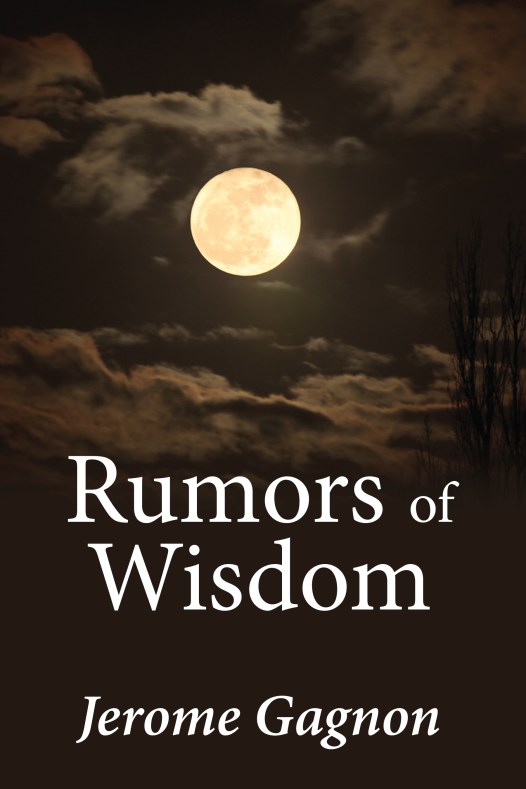
I’m happy to report that Rumors of Wisdom has just been released.  This full-length, perfect bound collection consists of fifty-eight poems and received the 2018 Louis Book Award from Concrete Wolf Press.  My sincere gratitude to Editor/Publisher, Lana Hechtman Ayers, for her commitment to this ongoing series, to the judge, Timons Esaias, and to Tonya Namura for her handsome cover design.   Rumors can be ordered from selected retailers via the publisher’s website at Concrete Wolf Press or click on the photo, above.

Contest Announcements

Hidden River Arts will award $1,000 plus publication by Sowilo Press to a woman fiction writer over the age of forty for a collection of stories, a novella, or a novel.  Submit by March 15th……Bellingham Review will award three prizes of $1,000 each for poetry, fiction, and nonfiction (including CNF).  Submit by March 31st……River Styx is offering a $1,500 prize in the River Styx International Poetry Contest.  Oliver de la Paz will judge.  By May 31st…..The Crab Creek Review Poetry Prize offers $500 plus publication for the best poem.  “All entries are considered for submission.”  By May 15th.

Writing Prompt:

Expressing Another Person’s Struggle

“Write a poem about someone you know in a way that helps you to become more keenly aware of their struggle or difficulty.  Find sounds, rhythms, details and images to describe what this person is going through.  What does this person’s experience tell you about yourself?”  (from Poetic Medicine, The Healing Art of Poem Making, by John Fox, Jeremy P. Tarcher/Putnam)

News

Haibunwater-1246669_1920

These days, haiku is a relatively familiar poetic form to readers and writers around the world.  Less well known is haibun, which pairs haiku with prose.  In its more traditional style, haibun often serves as a kind of travel diary, with commentary about the journey leading up to, and/or following, a haiku.  Some contemporary approaches more closely resemble prose poetry, while others may use haibun as a means for contemplation.  Patricia Donegan, author of haiku mind, describes the practice of combining hai (haiku) with bun (sentences) as “a springboard for the contemplation of a specific theme, be it adversity, nowness, or compassion.”  It addresses “the story or reflection behind the poem,” she writes.  Here’s a haiku by poet Elizabeth Searle Lamb, one of the founders of the Haiku Society of America and a former editor of their journal, frogpond:

pausing

half-way up the stair —

white chrysanthemums

Haiku such as this invite us “to slow down and tune in to this fleeting moment, to appreciate what’s right in front of us,” Donegan observes.  They offer a pause in our routines, and an opportunity to foster deeper awareness.  While some readers may be struck by the transience of the moment described here, some may focus on the beauty of the image of white chrysanthemums, or their sheer presence.  Still others may be drawn to explore the position of the subject “half-way up the stair,” poised in mid-life, or the symbolism of white chrysanthemums which, in Japan, are often used at funerals.  In this way, a particularly rich haiku may prompt exploration of issues in our own lives; at the same time, it can point to the commonality of our stories through the writing of haibun.  (haiku mind, 108 Poems to Cultivate Awareness & Open Your Heart, Patricia Donegan, Shambala, 2008).

Workshop

Bottle Rockets Press is planning a day-long Haibun Workshop on May 4th, 2019, in Hartford, Connecticut, to be conducted by Stanford S. Forrester, editor of the press.  Participants are “encouraged to bring their own work,” although it should be noted that the traditional 5-7-5 formula won’t be used “when discussing the haiku component of haibun.”  The fee is $75.  If you can’t attend the workshop, check out the video featuring six of Forrester’s haiku at www.bottlerocketspress.com 

New Poems 

Spring Breeze, a haiku, will appear in hedgerow: a journal of small poems, #126.   I remember “experiencing” this haiku back in the late 1990s, so it’s not really new.  Sometimes, haiku write themselves, and this was one of those happy accidents.

Blue Jay Way is slated to appear in in the spring issue of Pinyon, out of Colorado Mesa State University.

Haibun Writing Prompt

Select a haiku from one of the many anthologies, collections, or journals that are available, or one you’ve written yourself.  Jot down some observations about your choice, line by line.  These can be in the form of sentences or simply word associations at this point.  You should have at least one sentence or three or four word associations for each line.  Now, which of these responses to the haiku suggest further development?  Which of them is “magnetized,” in other words, which of them calls to you?  Select the first sentence or word that comes to mind and write about that, exploring both the said and the unsaid elements of your chosen haiku.  Repeat this process for each line.  Consider writing your work in longhand, in a dedicated journal, with haiku on one side and haibun on the opposite side.

News

In the Marketplace

img_0182-2.jpgI remember running into poet Michael Palmer in San Francisco’s Civic Center Plaza one afternoon, back in the day when people weren’t glued to their cell phones and walking around the city like zombies. He was offering hand-written poems for a penny each. I wish I still had that poem, but like so many things, it disappeared into the biosphere from which it came. What remains for me, though, is the memory of a friendly street encounter, and the notion that poetry can be much more than a solitary pursuit.

Writing in the Atlantic, Bhavna Patel looks at street poetry around the country, noting that it can sometimes serve a therapeutic purpose (“A Verse to Go, Please: Poets and the Lives They Touch”). Patel tells the story of Neal Ewald, who asked poet Jacqueline Suskin for a poem at the Arcata Farmer’s Market in Northern California where she’d set up a folding chair and was balancing “a manual typewriter on her knees…. A small sign next to her read, ‘Poem Store — Your Subject, Your Price.’” What Ewald wanted was “a five-dollar poem about being underwater,” Suskin said. Rereading the impromptu poem while sitting in his car, memories of his late wife, Wendy, came “flooding” back to him, Patel writes. Eventually, he commissioned Suskin to write a longer poem to honor his wife’s memory.

San Francisco resident Mc Allen dedicates one day a month to “free-range poetry,” writes Caillie Millner in the San Francisco Chronicle (“Taking Time for a Line of Rhyme”). Standing at a favorite spot on Cole Street in front of the Reverie Café, Allen can be heard calling to passersby, “Would you like to hear a poem? It’s completely free.” One afternoon he read Tom Wayman’s, “Did I Miss Anything?” to a bicyclist and Mary Oliver’s “Humpbacks” to a group of “tech bros,” Millner notes. “I’d say that one in every dozen or so people will stop,” said Allen, who brings a trove of poetry books along with him in a toolbox and recites from a variety of poets. “You never know who needs a poem in their life at that moment.”

“Entangle”

“Sometimes I prefer not to untangle it,

I prefer it to remain disorganized,

because it’s richer that way,

like a certain shrubbery I pass each day…”

– Tony Hoagland

(1953 – 2018)

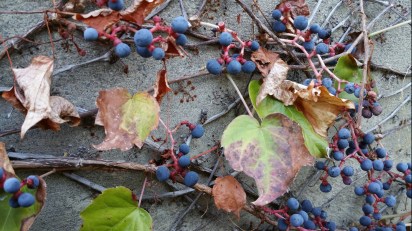
Plumbago, grape ivy, and morning glory vines have taken over a largely untended corner of the yard. At sundown, the blue flowers of the plumbago take on an electric glow against the faded violets and purples of the morning glories. When I consider this rampant mix, I think of the late Tony Hoagland’s poem, “Entangle,” which first appeared in the Paris Review. It’s a beautiful, wrenching work. It’s not just about the confluence of branches and flowers, of course, but memory and mortality, and our deep connections to each other. In his poem, “Lucky,” Hoagland” tells us… “If you are lucky in this life,/ you will get to help your enemy/the way I got to help my mother…you will get to raise the spoon /of pristine, frosty ice cream/ to the trusting mouth of your old enemy/because the taste buds at least are not broken/because there is a bond between you/and sweet is sweet in any language.” These are poems that draw you back for a closer look, to savor their details and the way they convey our foibles and frailty.

Calls for Poetry and More

Nowhere Magazine is sponsoring a travel writing contest for a poem, short story, or essay “that possesses a powerful sense of place.” The prize is $1,000 and publication. Submit online by December 31. http://www.nowheremag.com/contests

Quercus Review Press out of Modesto Junior College has announced their annual Poetry Book Award. The prize is $1,000, publication, and fifteen author copies. Deadline, December 28th. For details, visit http://www.quercusreviewpress.com

Willow Books is offering two prizes of $1,000 and publication for “a book of poetry and a book of fiction or creative nonfiction by writers of color.” Submit by December 15th. http://www.willowlit.net/willowbooks-literature-awards

Bayou Literary Magazine will award two prizes of $1,000 each for a poem and a short story. Submit by January 1st. http://www.bayoumagazine.org

Applications for the James Merrill House Writer-in-Residence Program in Stonington, Connecticut will be accepted until January 8th, 2019. Writers of all genres, including translators, are eligible for the four to six week residencies that come with a stipend. For more information, visit http://jamesmerrillhouse.org/residency/writer-in-reseidenceprogram

News

The Curlew, out of Wales, is a non-profit journal that supports conservation projects and offers “art, photographs, essays, poems, and short stories with a connection to the natural world.”  My thanks to the editor, Dr. Lynn Parr, for selecting “Pulling Weeds” for the latest issue. www.the-curelew.com

In celebration of National Poetry Month, the Academy for American Poets is sponsoring a poster contest for grades 9 through 12.  Opening September 1st, the contest will be judged by award-winning poet Naomi Shihab Nye and designer Debbie Millman.  The winner will receive $500, and the winning poster will be distributed to approximately 100,000 schools, bookstores, and libraries across the U.S.  www.academyforamericanpoets.org

I’ll be taking a hiatus from the blog for the rest of the year, returning in early 2019 with a new direction.  This should give me time to finish up a couple of projects. I hope you’ll rejoin me then. Meanwhile, let me leave you with the last stanza from Martin Espada’s wonderful poem, “The Republic of Poetry”:

“In the republic of poetry,

the guard at the airport

will not allow you to leave the country

until you declaim a poem for her

and she says, Ah! Beautiful.”