News

I’m happy to announce that Rumors of Wisdom was selected for the Concrete Wolf Louis Book Award and is slated to be published early in 2019.  My gratitude to the judge, Timons Esaias, and to Lana Hechtman Ayers, Managing Editor of Concrete Wolf Press, for their belief in this project (www.concretewolf.com).  Named in honor of Ayers’ grandfather, who inspired her love of poetry, “the award is for a first full-length book by a poet age fifty or over.”  Rumors was approximately three years in the making, although a few of the poems go back farther than that.  It went through several versions and various titles, as I continued to revise and add new poems. In the process, I learned a lot about what makes a cohesive collection.  Like Spell of the Ordinary, Rumors is essentially about mindfulness.  It suggests that deep attention to the moment offers a portal into the “enduring mutable,” that nature and the human spirit are salvageable.

Just received my copy of Arts, jointly published by the United Theological Seminary of the Twin Cities and the University of St. Thomas.  The visual arts are represented here by photographs, drawings, and paintings, along with in-depth articles that explore the work of Frida Kahlo, the making of mandalas, and art as ministry in an immigrant detention center.  An article on The Mount Tabor Ecumenical Center for Art and Spirituality (Villa Via Sacra) in Barga, Italy, traces the Center’s origins and the connection between creativity and religious faith, while poetry and reviews round out the selections.  This is an inspiring and visually inviting issue. www.societyarts.org

Standing at the Edge: Finding Freedom Where Fear and Courage Meet, by Joan Halifax (Flatiron Books, 2018), offers insight into the “bivalent qualities” of what she terms Edge States, including altruism, empathy, and engagement.  Citing experiences from the Civil Rights and Antiwar movements, as well as from her work as a medical anthropologist and Buddhist leader, Halifax describes what can happen when good intentions lead to despair and burnout, and what we can do about it.  Standing at the Edge is a wise and practical guide for navigating challenging times, and a valuable resource for teachers, caregivers, and those in the helping professions.

The Summer Writing Program at the Truro Center for the Arts on Cape Cod, Massachusetts, offers workshops in a variety of genres, including poetry, memoir, travel writing, and playwriting.  Some of the poets scheduled to participate this year are Robert Pinksy, Lorna Blake, Rebecca Fost, and Peter Campion. Be sure to bring your sunscreen. www.info@castlehill.org

Hannah Aizenman, poetry coordinator for the New Yorker, addresses the questions: “From a craft standpoint, what causes you to accept a poem?” “What advice do you have for new poets who are submitting work?” and “How many rejections have you faced and how do you deal with them?”  www.frontierpoetry.com

The Edith Wharton Writer-in-Residence Program offers residencies in March, 2019, to three women writers at Wharton’s former estate in Massachusetts, the Mount.  Included are a stipend of $1,000, lodging, and work space. www.edithwharton.org/visit/the-edith-wharton-writer-in-residence-program

News

Poets Illya Kaminsky, Bruce Beasley, and Alexandra Teague are among the faculty of the Centrum Port Townsend Writers’ Conference, which will take place July 15 – 23 at Fort Worden State Park in Washington.  Scholarships are available. For more information, visit www.centrum.org/theport-townsend-writers-conference.

It was fun returning to SFSU to attend the Creative Writing Student Awards Reading and Reception, and to share my memories of Kay Boyle.  The campus never looked better, just the way a bustling urban campus should look: the expanded library sparkles in its glass skin and the new humanities building adds a note of verticality.  My thanks to Paul Hoover and Maxine Chernoff of the Poetry Center for making me feel so welcome, and congratulations to all of this year’s graduates and honorees. I thought that all of the students who read were amazing, and everyone showed the kind of originality and attention to detail that can make a writing life.       

The Southern Humanities Review is sponsoring the Auburn Witness Poetry Prize, open through June, to honor the late Jake Adam York…WaterWood Press is sponsoring the Carolyn Forche’ Prize for Humanitarian Poetry, open through mid-August…The Spokane Prize for Short Fiction offers an award of $2,000 and publication, open until June 15th…Information on hundreds of writing grants and awards can be found at www.pw.org.

Reading Reynolds Price’s preface to his Collected Poems (1997), I came across a reference to Poetry as a Means of Grace, by C.G. Osgood.  “Conceived in the 1940s as lectures to young Princeton theologians, Osgood’s still keenly provocative chapters propose that, in a hectic and book-filled world, a thoughtful person might well choose a single inexhaustible poet and fix upon that poet’s work as a lifelong spring of refreshment in the driest times.”  Price’s choice, early on, was Milton, but he also had a special kinship with Dickenson. When I met him, Price was fresh from his first literary success and teaching a class in fiction writing. At the time, I had no idea he wrote poetry, that you could do both, but it’s clear that poetry remained for him a saving grace through youth and old age, health and disability.  In “Pears,” he depicts the ephemerality of experience and memory with quick brushstrokes, and in “Neighbors,” inhabits his dilemma in the form of inquiry:

“My name is Edward Reynolds Price,

So here on the ward, I’m Edward Price.


Last night I looked at my new neighbor’s door.

He’s Edward Reynolds, plain as ink.


Which one is the other’s doppelganger?

Scapegoat?  Porter of an alternate fate?”

News

the-golden-gate-bridge-1956459_1920“The Beat Goes On: Celebrating the Bay Poetry Collection” is the title of an exhibit at California State University East Bay (Hayward, CA), featuring publications from the library’s special collections.  Highlighting the work of “Beat” luminaries such as Lawrence Ferlinghetti, Allen Ginsberg, and Gary Snyder, it traces the development of contemporary poetry in San Francisco and the Bay Area. While Ferlinghetti’s City Lights Publishing has played a pivotal role on the local literary scene since the early 1950’s, contributions by others such as Panjandrum Press and Sixteen Rivers Press are also featured.  (Runs through December.)

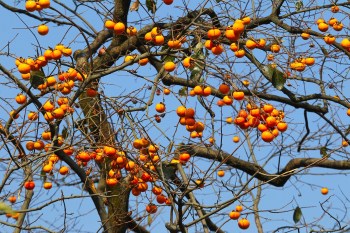
“Cherries, After,” a sense-memory poem that pulls together images from my visit to a small farm near Dartmouth, Massachusetts, was selected for the 2018 Robert Frost Poetry Prize, sponsored by the Frost Foundation.  Many thanks to the judges for this honor, and my gratitude to Executive Director Jessica Sanchez and President Jim Knowles for their efforts in promoting this annual contest in celebration of Frost’s poetry. Like a lot of people, the first time I encountered his work was in a high school English class.  We were studying “The Road Not Taken” and “Stopping by Woods on a Snowy Evening.” Although I admired both poems, it was “Snowy” that held me with its imagery, the resonance of its rhyme scheme, and the tinkle of harness bells.

Poet, translator, and founder of Copper Canyon Press, Sam Hamill, “died on April 14th at his home in Anacortes, Washington,” according to an obituary by Daniel E. Slotnik of the New York Times.  He was seventy-four years old. As a teenager in Utah, Hamill ran away from an abusive environment and made his way to San Francisco where he met poet Kenneth Rexroth who “helped him give up drugs and taught him about poetry — kindnesses that Hamill said changed his life,” Slotnik wrote.  Known for his sensitive translations of poets such as Wang Wei and Matsuo Basho, Hamill went on to publish several collections of his own poetry and initiated a national protest by poets and others against the Iraq war. In his poem, “True Peace,” he wrote, “Not for me, Nirvana./ This suffering world is mine,/ mine to suffer in it’s grief.”  Recipient of PEN’s Freedom to Write First Amendment Award, among other honors, his most recent collection, After Morning Rain, will be published later this year by Tiger Bark Press, according to the Times.    

“Longing has its own quiet place

in the human heart, but love

is sometimes rapturous, noisy,

almost uncivilized, and knows

no boundaries, no borders.”

from After Morning Rain,

          by Sam Hamill

Headlands Center for the Arts is now accepting applications through June for residencies in 2019.  Poets, fiction and creative nonfiction writers, and other artists are eligible. Located on the scenic coast of Marin County, CA, just outside of San Francisco, “Headlands” offers airfare for qualified applicants, a private room in a shared house, studio space, five meals per week, and a monthly stipend of $500.  Residencies are for periods of from four to ten weeks. For details, visit www.headlands.org.

News

Just received the Spring/Summer issue of The Journal of the Academy of American Poets.  In addition to poems by Kwame Dawes, Marie Howe, and Aimee Nezhukumatathil, there are essays by Jane Hirshfield and Jenny Xie, a conversation, “Why Poetry, Why Now?” between Elizabeth Alexander and Maria Popova, and a selection of “Books Noted” by Major Jackson.  A good read and one of the best resources for becoming better acquainted with the range of contemporary American poetry. If you’re not already a subscriber and want to learn more, visit www.poets.org.

Congratulations to Kim Reyes, winner of the first annual Kay Boyle Poetry of Witness Award for her poem, “The Body.”  The contest was judged by Paul Hoover, Acting Director of the Poetry Center at San Francisco State University. Reyes, who is completing her MFA in Creative Writing at SFSU, has “just received an offer of her first book publication by noted Bay Area publisher, Omnidawn Publishing,” according to Hoover.

The National Association for Poetry Therapy will take place April 26 – 29 in Chaska, MN.  This year’s theme is “Poetry Therapy in a Changing World: Pathways to Growth, Healing, and Social Justice.”  Visit www.poetrytherapy.org.

News

“Spell of the Ordinary” was mailed the first week of February, so everybody who ordered should have received their copies by now.  Thanks, again, to Editor Christen Kincaid, the staff at Finishing Line Press, and to Tony and Mary Sanchez for their help with the cover and the blog.

Natalie Goldberg discusses haiku as a spiritual practice at https://www.upaya.org.

The Andres Montoya Poetry Prize for work by a Latinx poet offers $1,000 plus book publication. For more publishing opportunities, see https://entropymag.org.

News

natural-880069_1280

Sent off the final galleys of “Spell of the Ordinary” to Finishing Line Press on January 11th.  It looks good and I’m glad to have it under wraps.  Well, almost.  Word is that it’s being sent directly to the printer but will be delayed a few weeks.  My guess is that it will be out sometime in February.  I’m told that any questions or concerns about orders can be addressed to missingbookorders@finishinglinepress.com (please include the title, author name, purchase date, and your name and shipping address).  My apologies to those of you who were kind enough to order.   I’ll keep you posted on progress as I hear more.

My thanks to David Dragone, Editor of Crosswinds, for selecting “White Poppies” for their spring issue, to Richard Smyth, Editor of Albatross, for selecting “Looking out at the Stream” for an upcoming issue, and to Lynn Parr, Editor of Curlew (Wales, U.K.) for selecting “Pulling Weeds” for their June issue.

Appreciated Editor Jonathan Heinenen’s introductory note to the Fall 2017 issue of Crazyhorse (out of the College of Charleston in South Carolina).  Commenting on the “fevered tempo” of bad news recently, he asks, “…how much making art matters when so much seems so grim.”  His conclusion bears repeating:  “Art isn’t some frivolous reflection or aimless escape.  It’s a way for us to understand each other, to imagine experiences we would never have first hand, and empathize with someone other than ourselves.  It’s something we need.  It’s the light that shines so brilliantly and helps us make sense of the world we inhabit.  It’s truth.”  This is a remarkable issue with standout work by Gary Soto, Wendy Chen, Wesley Rothman, Emily Skaja, and others.  I look forward to reading more.

News

freewinter

“Scene from an Untended Garden,” “Christmas in the Yard,” and “December Mushrooms” appeared December 1st in Dodging the Rain (IE). 

https://dodgingtherain.wordpress.com

“It’s impossible to consider the landscape of the last 50 years of American poetry without Kinnell,” Craig Teicher writes in the Los Angeles Times of Galway Kinnell’s posthumous “Collected Poems” (Houghton Mifflin Harcourt, 2017).  Citing the well-known, “After Making Love We Hear Footsteps” and “Blackberry Eating,” Teicher says that, at their best, Kinnell’s poems evoke intimacy with nature, self, and other, yet he wonders if younger readers will accept such “secular spiritualisms” as the line, “everything flowers, from within, of self-blessing.”  My guess is that many will, especially when such a line is read in context.  Citing “When the Towers Fell” (regarding 9/11), Teicher suggests that we need more poems like this one “which ache to understand others’ suffering.”

Many of the selected poems in Mary Oliver’s “Devotions,” (Penguin Press, 2017) will be familiar to followers of her work.  What I like about this volume is that the voice in the newer poems is informal, even conversational.  “Do Stones Feel?” (from Felicity, 2015), for instance, has a lightheartedness to it, and yet it has depth, too.  Like the koan, “Does a dog have Buddha nature or not?,” it invites the reader to go beyond the limitations of opposites and enter a world of delight.  As Oliver writes in “Three Things to Remember”: “As long as you’re dancing, you can/ break the rules/ Sometimes breaking the rules is just extending the rules./ Sometimes there are no rules.”              

Wishing you all the joys of the season, and a happy and healthy new year!


News

old-rustic-shed-1636419_1920

The latest issue from Poet Lore arrived and it was well worth the wait. Have been dipping in and out of “The Poetics of Liquid,” by Terrance Hayes, “Mysterious Me, a Brief Meditation on Personae,” by Leah Souffrant, and “Making it Real in the Time of Trump,” by Annie Kantar. These thoughtful essays explore the personal and public aspects of writing poetry, of living in an uncertain world. Not to be missed, Robert Schreur’s “Leaving Baltimore” and Barb Reynolds’ “March 10, 2016.” Grateful that my poem, “Pieces, Some Blue,” was included here.

Dodging the Rain is an innovative “blogazine” out of Galway, Ireland with quality writing and some amazing visuals. If you haven’t seen it yet, visit https://dodgingtherain.wordpress.com. “November Turning” appeared November 1st.

The Creative Writing Department at San Francisco State University recently established the Kay Boyle Poetry of Witness Award. A longtime writing professor at SFSU (and two-time O. Henry Award winner), Boyle was active for many years in Amnesty, while much of her fiction and poetry focused on the need for political awareness. Available to students of SFSU, the award offers a prize of $500. For writing contests open to the general public, see https://pw.org.

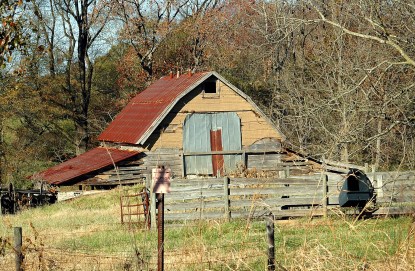
Each of the twenty-two poems in Ted Kooser’s final volume, “At Home” (The Comstock Writers Group, 2017), demonstrates his finely-honed powers of observation. “That Kooser often sees things we do not would be delight enough, but more amazing is exactly what he sees. Nothing escapes him; everything is illuminated,” says the Library Journal. Selections reflect the Nebraska farm life he knew and loved — a squirrel’s nest, a meteor shower, a barn door, a bat, a croquet ball, an owl, a milk jug — and each reveals the universal in the particular. Describing the cracks around an aged croquet ball as “rings on a planet,” he suggests, “…perhaps it is a planet, and not even one of the lesser ones, but something worth our full attention…”  Kooser’s poetry offers nothing less.

News

After The Book Shop closed its doors for good, former manager Renee’ Rettig raised $70,000 through Indiegogo to open a new store across the street.  Dubbed Books on B, the independently owned store in Hayward, California, is a light-filled space that’s a testament to Rettig’s dedication and the generosity of booklovers.  You can read more at www.sfgate.com.

Pleased to hear that my new poem, “Pilgrimage,” was selected by editor Mark S. Burrows for the journal, ARTS.  Along with Jon M. Sweeney, Burrows is co-translator of “Meister Eckhart’s Book of the Heart, Meditations for a Restless Soul” (Hampton Roads, 2017).  These are short, sometimes ecstatic meditations that speak directly to the heart.

Photographer Fred Lyon’s visual essay, “San Francisco Noir” (Princeton Architectural Press) was released earlier this month and it’s a joy to take in.  But just as evocative as the after dark images of The City, lit by neon and shrouded in fog, are Lyon’s photos of San Francisco by day — an old man playing a harmonica on the sidewalk, rickety backstairs, and wash hanging out to dry.        

Reading Lawrence Ferlinghetti’s, “San Francisco Poems” (City Lights Foundation), I came across “They Were Putting Up a Statue (of St. Francis),” which originally appeared in “Coney Island of the Mind.”  It was recorded on Fantasy records back in the day and can now be heard on You Tube.  Still rocks.

Poet Aline Soules (Meditation on Woman) writes about her recent visit to Seamus Heaney’s Home Place, a small museum in Ulster devoted to the Irish poet’s life and work, and provides links to podcasts and videos.  If you haven’t heard Heaney’s poems, pour yourself a cup of tea (or something stronger) and settle in.  https://alinesoules.com